Yes, households can stay home through a repipe, because the water is off only during the cutovers. The new piping is run while the old system keeps working, and the water goes off when a section is switched from old pipe to new. The quote should name the working days and the water-off windows before work begins, so they can be planned around.
Chicago Lake Repiping offers and manages whole-house repiping and two-flat repiping across Chicago and nearby Cook County suburbs, with the work done by licensed and insured plumbing contractors. This guide explains how a repipe is staged around the people living in the building and what to ask before the first day.
Why the water doesn’t have to be off for the whole job
A repipe is mostly building new routes: running the main along the basement joists, carrying risers up through closets and chases, making each branch to a fixture. None of that needs the old pipe out of service. The old system keeps feeding the house while the new one goes in beside it.
The water goes off when a part of the system changes over. At a cutover, the main shutoff is closed, the old section is drained, and the new section is connected in its place. A house can have one cutover or several, depending on how the work is divided: all at once at the end, or one floor or one bathroom at a time. More cutovers mean shorter windows each time but more of them; fewer mean less disruption overall but longer windows. Which plan fits depends on the building, the fixtures that have to stay in use and the people living there.
What matters for planning is that the windows are known in advance. The quote should say how many cutovers there will be, on which days, and how long each one leaves the water off. The cost guide notes that staging around an occupied building can add days to the job, which is part of the price.
The main shutoff decides how cleanly the house isolates
Every cutover starts at the main shutoff, the valve near the meter where the service line enters the building. The first visit starts there for that reason. An old valve that will not close fully, or that is seized open, means the building cannot be isolated cleanly, and in that case replacing the shutoff becomes part of the scope. Work on the meter itself, or on the connection to it, needs a separate water permit in Chicago and is planned before the interior cutovers.
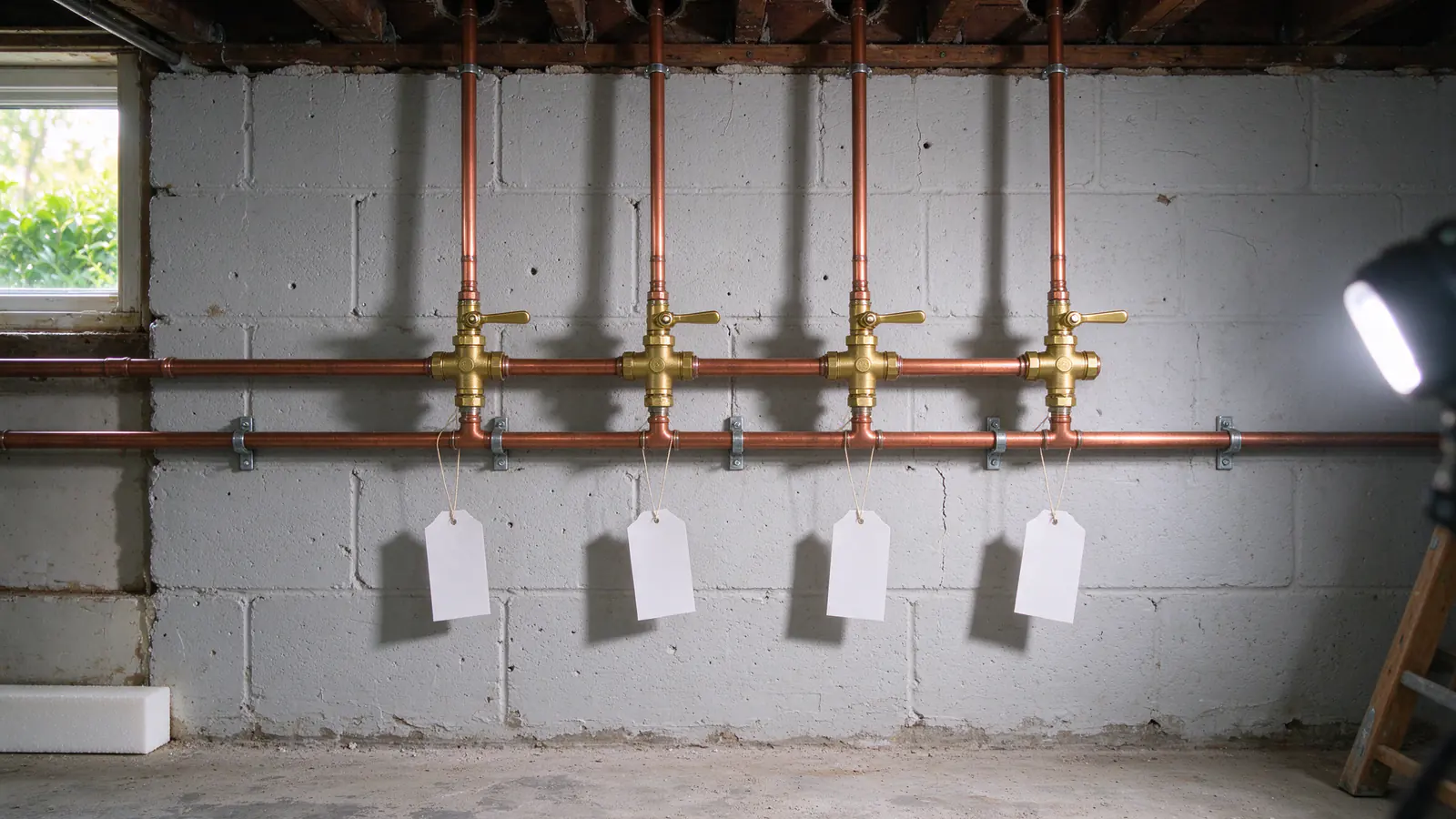
At the end of the job, the new shutoffs are labeled so anyone in the house can find and close them later: the main, each branch valve and the stops under each fixture.
What changes in daily life
Between cutovers, the kitchen, bathrooms and laundry work as usual. The things that change are access, noise and the rooms where walls are open.
- Access. The work needs clear paths to the basement, the meter, the water heater, closets on the riser routes and the space under sinks. Clearing them before day one saves time.
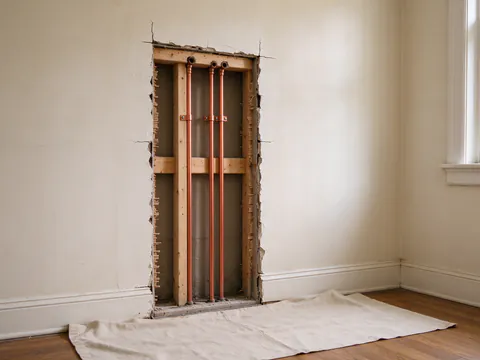
- Open walls. Openings are cut at fittings and turns and stay open until the new piping is pressure tested and inspected. Furniture against those walls has to move. The plaster walls guide explains where openings go and how they are closed.
- Hot water. Reconnecting the water heater is one of the cutovers, so hot water is off for that window too.
- Dust and debris. Cutting plaster makes dust. Ask before work starts how each opening is protected and cleaned up, and plan to cover or move what is near the openings.
It helps to keep some drinking water on hand for each water-off window and to schedule laundry and dishwashing around the days in the quote.
After each cutover
When a new section comes into service, it is flushed to clear debris from the work. Scale knocked loose from old valves and galvanized pipe can travel to the first faucet downstream, so aerators and fixture screens are cleaned after the cutover. A burst of discolored water or air in the lines right after a cutover is debris and trapped air working out, and it is expected to clear as the lines are flushed. If it does not, say so.
The Chicago repiping permit guide covers the City inspection, which happens before the work is covered.
Planning a repipe around your household?
The quote names the working days and the water-off windows before the first day of work.
Two-flats with a rented unit
In a two-flat, one basement main can feed both units, so the cutover of that shared main takes water from both households at once. That window has to be named in advance and agreed with whoever lives in the other unit. The upstairs riser may or may not have its own valve; where it does, some cutovers can be limited to one unit. Homeowners who rent out one floor ask whether the work can be done without affecting them. Not entirely, but with the windows planned and shared ahead of time, the disruption is limited to the cutovers.
Plan the shutoff windows with the household in the rented unit and check what notice your lease and the City’s rental housing rules require before a planned shutoff. The two-flat repipe cost guide covers how staging around two households affects the scope.
In a condo building, riser shutoffs reach every unit on the stack, and the association plans them with the contractor. Express permit work on condominium property needs the association’s approval letter, so that conversation starts before the permit; see riser replacement.
When moving out for a few days makes sense
Being away for the heaviest days can make sense for a family with an infant, for someone working from home in a room with open walls, or in a one-bathroom house on the day its only shower is cut over. That is a choice, not a requirement of the work. Ask which days carry the most openings and the longest water-off windows, and decide from there.
Where to start
List the fixtures that have to stay in use, the days that are hardest to be without water, and anyone else in the building who needs notice. Bring that to the first visit. Call the number on this page or use the estimate form to set up a walk-through; the galvanized pipes guide covers the bigger decision of what the repipe should include.