Yes. Replacing the water piping inside a Chicago building needs a Department of Buildings permit. When the job replaces existing piping without changing the layout, it goes through the Express Permit Program as “Plumbing Work,” at $150 per dwelling unit. The permit names a Chicago-licensed plumbing contractor, or the owner of a detached single-family home doing their own work, and a City inspector checks the result.
Chicago Lake Repiping offers and manages whole-house repiping in Chicago and nearby Cook County suburbs, with the work done by licensed and insured plumbing contractors who pull the permit for the address. This guide explains which permit a repipe falls under, what the application asks for and what changes the path.
What the Express “Plumbing Work” permit covers
The Department of Buildings launched the Express Permit Program on November 6, 2023, replacing the older Easy Permit and short-form plumbing permits. Its Plumbing Work type covers repairing or replacing existing plumbing piping inside a building, supply or drain, along with existing risers, fixtures and water heaters. A repipe that takes out old galvanized or copper supply pipe and puts new copper on the same routes to the same fixtures fits that description.
The application is online. For a house, no architect’s drawings are needed: the upload list is an existing-condition photo and an energy and water efficiency form. The work must be done by the Chicago-licensed plumbing contractor or the homeowner named on the application, and the contractor has to accept the job electronically before the permit issues. The permit cannot be transferred to another contractor, so a change of plumber partway through means a new permit.
What pushes a repipe out of Express
The line is drawn at changing the system. “Altering, reconfiguring, or extending an existing plumbing system” is not eligible for Express. Moving a kitchen to the other side of the house, adding a bathroom, or running new fixture branches where none existed are alterations. The City allows some limited alterations to go through as a Nonstructural Interior Alteration permit; larger ones go through standard plan review, which begins with a $600 non-refundable deposit, with the total set by the scope.
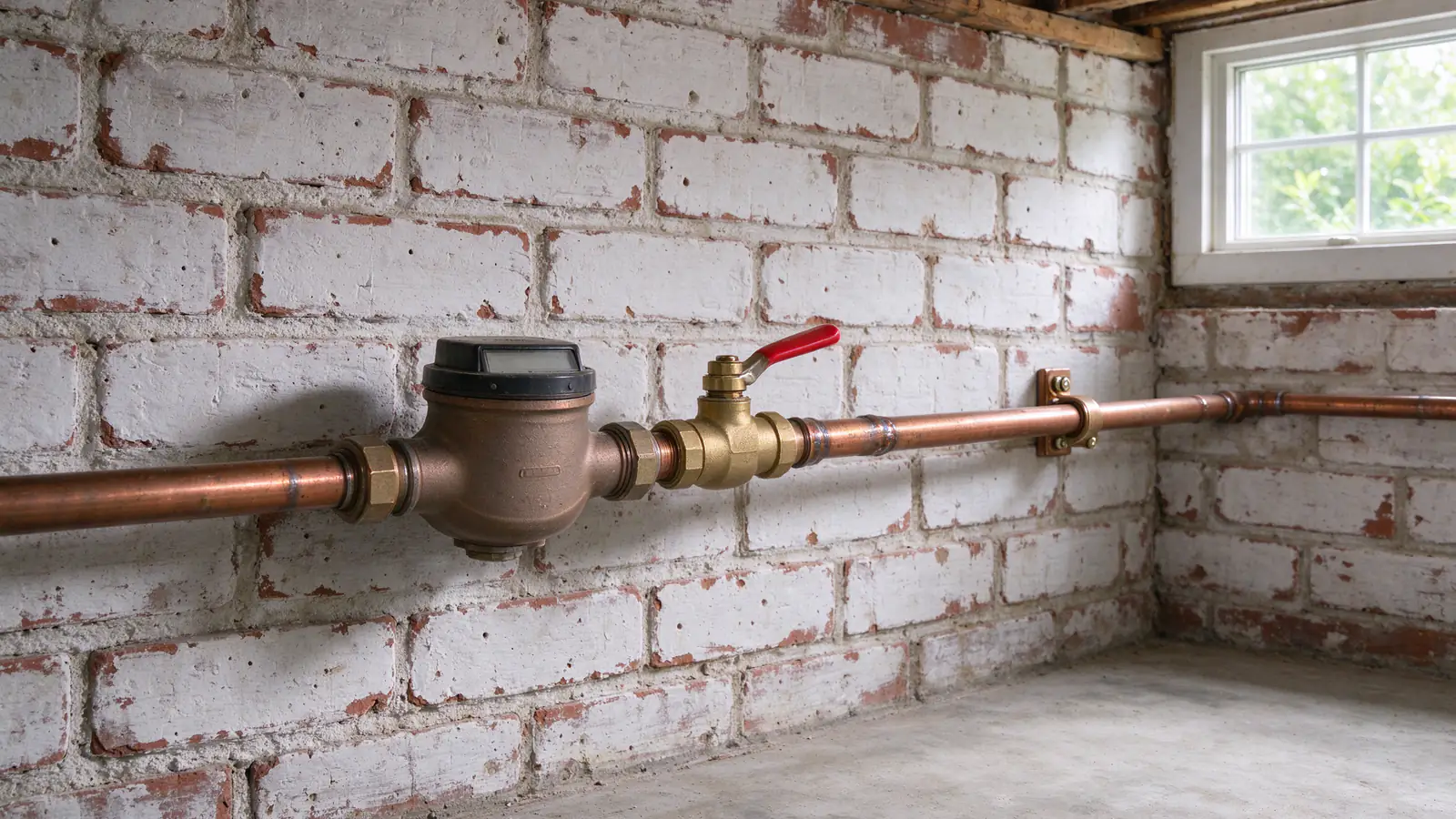
Two other boundaries matter for repipes. Express does not cover any work involving the water meter or a connection to it, and it does not cover work more than 5 feet outside the foundation. Relocating the meter, replacing the main shutoff where it connects to the meter, or replacing the service line under the yard all need a water permit through the Department of Water Management. A repipe that starts at the existing main shutoff and works inward stays clear of that.
A repipe that also replaces a lead service line is two permits. The City’s Homeowner-Initiated program waives the permit fees for a standalone full lead line replacement, so confirm with the Department of Buildings how to file the two before bundling them.
Documents for risers, condos and owner-performed work
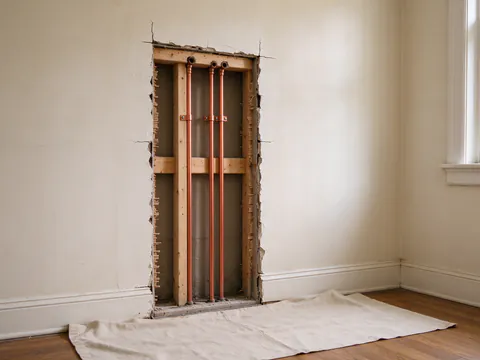
Risers. Replacing risers in an existing chase is covered by Express, but the application needs a drawing from the plumbing contractor: a 2-D or isometric diagram of the entire riser showing size and material. That applies in two-flats as much as high-rises. Express work cannot create new or larger penetrations in walls or floors that separate dwelling units, corridors or stairways, and firestopping is required where new pipe passes through existing openings. A route that needs a new hole through a unit separation has to be permitted another way. The riser replacement page covers multi-unit stacks.
Condominiums. Work on condominium property, including inside an individually owned unit, needs an approval letter from the association, signed by a person authorized to approve it. Without it the Express application stops.
Owners doing their own work. The owner, occupant or lessee of a detached single-family home may do their own plumbing. The Express application then needs the City’s Form 401 and identification. That exemption does not extend to hiring anyone other than a licensed plumbing contractor, and a two-flat owner has no such exemption; who can repipe in Chicago explains the license rules.
Permit fees
| Permit | Fee | When it applies |
|---|---|---|
| Express Plumbing Work, piping repair or in-kind replacement | $150 per dwelling unit | Replacing existing supply piping inside the building |
| Express, risers in an existing chase | $150 more per dwelling unit served | Multi-unit buildings and condo stacks |
| Express, water heater | $75 more per dwelling unit ($150 each for a heater serving several units) | Only when the heater is replaced |
| Standard plan review | $600 non-refundable initial deposit | Work that alters, reconfigures or extends the system |
| Water permit | Set by the Department of Water Management | Any work on the meter or the service line |
A two-flat repipe on Express comes to $150 for each unit, $300 for the building, before risers or a water heater. The fees come from the City’s permit fee tables, and the Department of Buildings publishes a permit fee calculator for checking a specific job. The Chicago repipe cost guide shows where the permit sits in the full price.
Starting without a permit
The Department of Buildings says a stop work order for work without a permit carries a penalty of $1,000 or more, and the permit fee after a stop work order is in most cases tripled. There are practical costs too. Walls closed over uninspected work may have to open again for the inspector, and a sale or refinance can turn up the missing permit later. Homeowners report that permit rules and fee waivers are confusing, with no single person to ask; the answer for a repipe is to have the permit issued, with the contractor named on it, before the first cut.
Want the permit handled as part of the job?
The licensed contractor files the permit for your address and the quote shows which one applies.
Which code edition applies
The permit follows the code in effect when the application is submitted. Chicago’s Phase 3 construction codes ordinance, passed by the City Council on June 17, 2026, changed several plumbing provisions, including the pressure-reducing valve rule. The Department of Buildings made the new provisions optional from October 1, 2026 and mandatory for permit applications started on or after December 1, 2026. Under the new rule a pressure-reducing valve is required where static pressure exceeds 80 psi; the Chicago water pressure guide covers what that means at the meter.
The inspection
Express work has to begin, and the inspection has to be requested, within 365 days of the permit. A City plumbing inspector checks the work, and the result is posted online, where an owner can see it. Before any wall or ceiling closes, the new piping is pressure tested so a weak joint shows on a gauge rather than behind new plaster; that matters for the inspection and for the plaster openings that follow. Water-off time around the inspection and cutovers is covered in living through a repipe.
The suburbs have their own permit offices
Outside the city limits, the City of Chicago’s permit does not apply. Each suburb runs its own permit office, fees and inspections under its own plumbing code.
- Oak Park. Village of Oak Park Development Services. Its construction fee schedule lists $100 per unit for plumbing alteration, repair or replacement and $175 per system for a new or replacement plumbing system, and work started without a permit is charged twice the permit cost, at least $300. The Village confirms which line applies. See the Oak Park page.
- Evanston. The City of Evanston’s Building and Inspection Services Division issues plumbing permits; see Evanston.
- Park Ridge. The Building Division requires a permit for the addition, alteration, replacement or relocation of water supply piping, and a certificate of inspection before the system is used; see Park Ridge.
- Skokie. The Village’s Building and Inspection office handles plumbing permits; see Skokie.
Permit requirements and the allowed pipe material are confirmed per address before work starts. The material question differs too: Oak Park and Skokie follow the Illinois Plumbing Code, which lists PEX, while the City of Chicago’s code does not; see whether PEX is allowed in Chicago.
Where to start
Find out whether the job is a straight replacement or a change to the layout, because that decides Express or plan review. If the meter, the main shutoff at the meter or the service line is involved, plan for the water permit too. Then call the number on this page or use the estimate form to set up a walk-through; the quote will name the permit, the fee and the licensed contractor who files it.