The water service line is the buried pipe that runs from the City’s water main under the street to the meter inside the building. In Chicago, Lead-Safe Chicago says these lines were made mainly from lead until 1986, and that a house or two-flat built before then is likely to have one unless it was replaced during a renovation. Chicago Lake Repiping offers and manages full lead service line replacement in Chicago and nearby suburbs, carried out by licensed and insured plumbing contractors who hold the City of Chicago plumbing contractor license. The first question is not the price. It is whether one of the City’s free programs fits.
The scale is large. An analysis of the City’s service line inventory by Grist and Inside Climate News found that about 84% of Chicago’s service lines are confirmed or suspected to contain lead, an estimated 412,000 of about 491,000. The City’s replacement plan, as reported by Grist, targets completion in 2076, so an owner with a lead line is deciding whether to wait for a program or pay for a private replacement sooner.
Start with the City’s free programs
The City of Chicago, through Lead-Safe Chicago and the Department of Water Management, runs several programs that replace a lead line at no cost to the owner. Checking them first can save the whole price of the job.
The Equity program offers a free full replacement, main to home, plus a free water meter, to owner-occupants of a house or two-flat whose household income is below 80% of the area median income. The City gives priority to households with children 18 and under or with elevated lead results, and it processes applications in the order received while funding lasts. Programs like this open and close with funding; the post on Chicago’s lead line application window describes the pattern. In a two-flat, one service line feeds both units, so a replacement under the owner-occupant’s application brings new water to the rented unit as well. The Breaks and Leaks program replaces both the public and private sides for free when a lead line leaks or breaks; the City says calling 311 is now mandatory to report it. A Daycare program replaces lead lines at licensed daycares in prioritized neighborhoods, with the City reaching out to eligible sites, and a Block-Long program replaces lead lines affected by scheduled water main work.
None of these programs pays for the piping inside the building. The City’s Breaks and Leaks page excludes interior piping more than two feet from where the service enters the house. Homeowners report waiting, sometimes for a leak, so that the City pays for the line. The trade-off is time: the City cannot say when a given street will come up.
The Homeowner-Initiated program, as the City describes it
An owner who does not qualify for a free program, or does not want to wait, can hire a contractor for a private full replacement, and the contractors who carry out Chicago Lake Repiping’s work can be hired for that. The City’s Homeowner-Initiated program changes what that costs. As the City describes it, a residential homeowner hires a plumbing contractor licensed in Chicago to remove the full existing lead line, the contractor tells the Department of Buildings the job is eligible, the City waives the permit fees, and the City connects the new line to the main and provides a free meter if the building has none. Fees charged by other agencies may still apply.
The program has conditions. The City states that commercial and mixed-use buildings are not eligible, so a storefront with apartments above pays the fees (see commercial repiping). The replacement must be standalone, not part of a renovation or expansion. Homeowners report that permit rules and the waiver are confusing, that some plumbers could not explain how the waiver works, and that owners who upsized their line during the replacement did not qualify for it. Whether a given job qualifies is the City’s decision, made on the application, so the plan is confirmed with the Department of Buildings before work starts.
Repiping at the same time: the standalone condition
The standalone condition matters most to owners who also have galvanized pipe inside. A new copper service feeding a house full of corroded steel is a strong reason to think about a repipe, and doing both at once looks efficient. But the waiver is described for a standalone replacement, and bundling it with an interior repipe may affect it. The safe order is to ask the Department of Buildings how the two jobs should be permitted before signing either contract. One option to raise with the Department is keeping them as separate jobs, with the service line under its water permit and the interior work under its own Express plumbing permit at $150 per dwelling unit.
Either way, the two jobs should be planned together even if they are permitted apart, because the service line decides where the meter and main shutoff sit and what the interior piping connects to. The guide to repiping after a lead line replacement covers that decision, and whole-house repiping covers the interior work.
What happens on the first visit
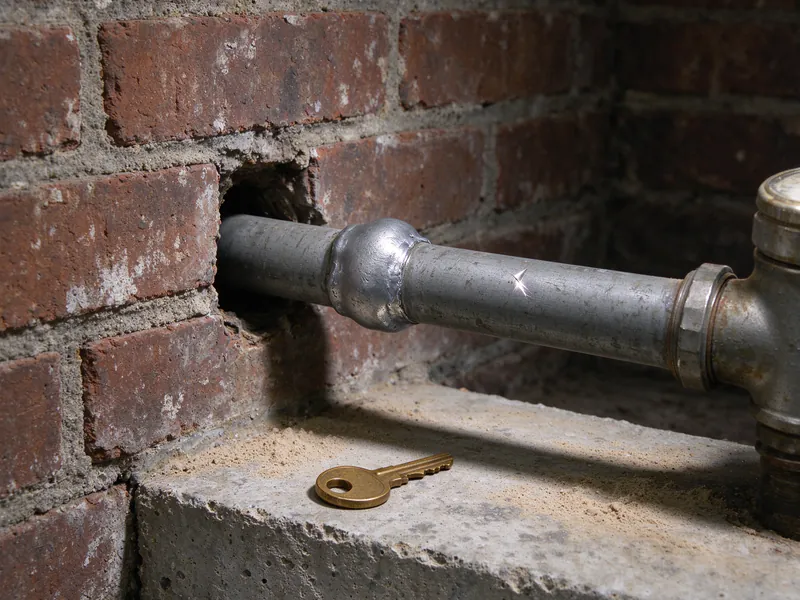
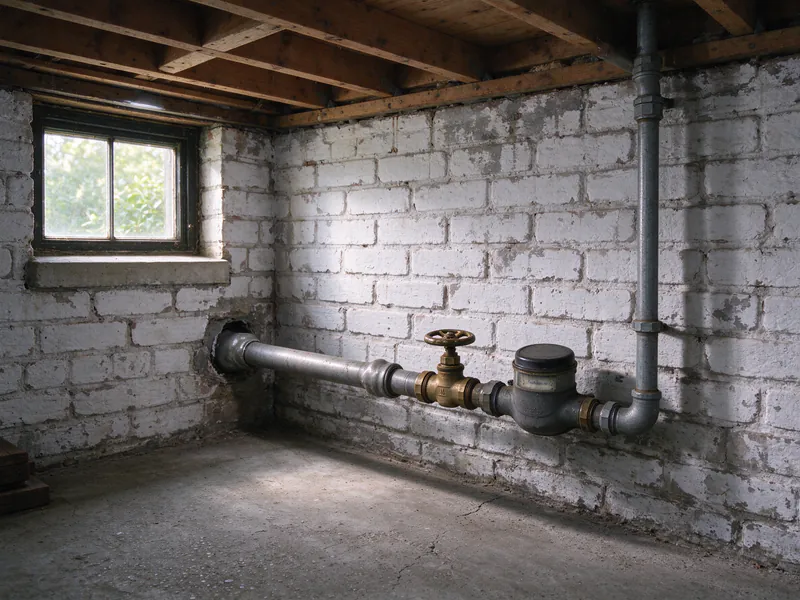
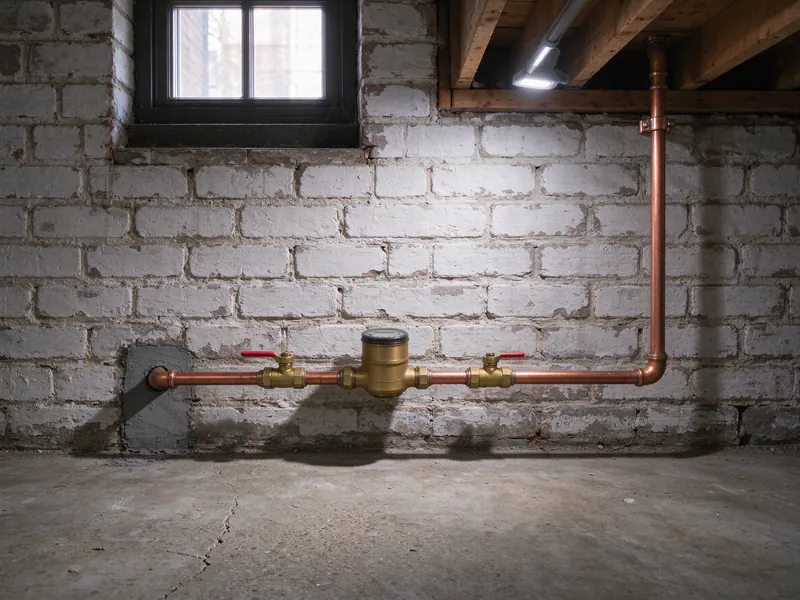
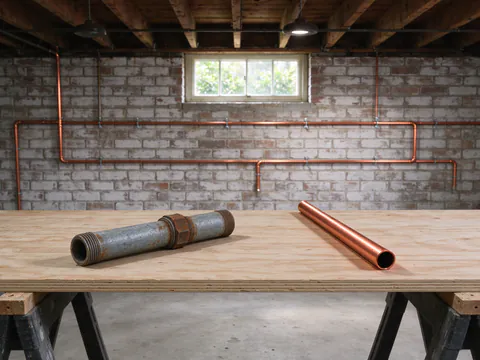
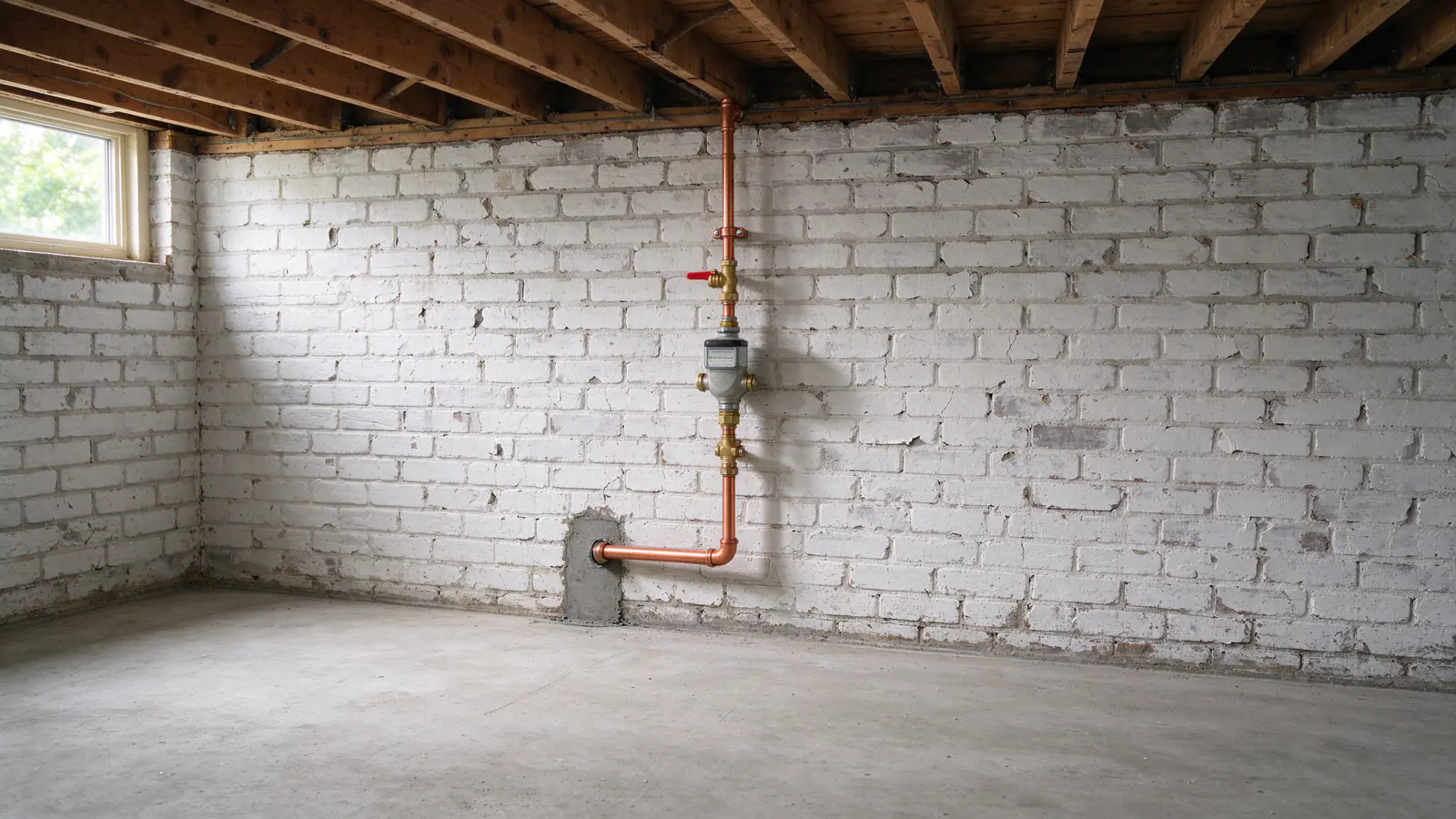
The visit starts at the meter and main shutoff in the basement, where the service line comes through the foundation wall. The section of pipe between the wall and the meter is where its material can be seen: lead is dull gray, soft and shows a shiny silver mark when scratched gently with a key, while copper is the color of a penny. The EPA’s Protect Your Tap quick check shows the same test, and the guide to identifying your water pipes covers the pipe inside. A galvanized section between the main and the house can count as requiring replacement too; the guide to “galvanized requiring replacement” explains what that label means.
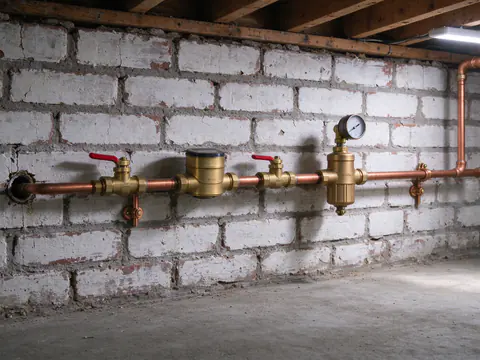
The visit notes the line’s size, the meter and valves, where the line enters and whether that point can be reused, and what pipe it feeds inside. Static pressure is read at a hose bibb or test point, and flow is compared at the lowest and highest fixtures, because a narrow old service can be the real cause of low pressure upstairs; the low-pressure guide explains how the causes are separated. The Chicago Plumbing Code sets 1 inch as the minimum service size, and a lead line smaller than that is one reason owners consider upsizing, with the waiver question above in mind.
What happens inside the basement
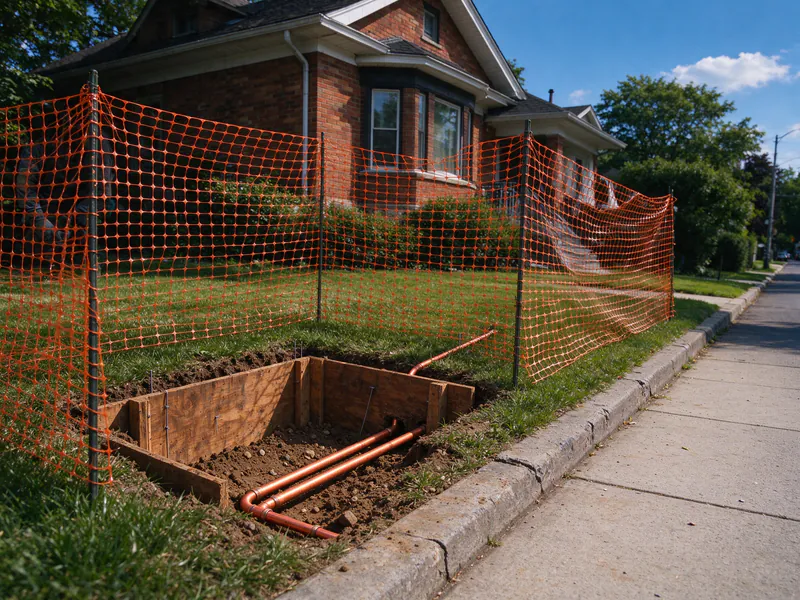
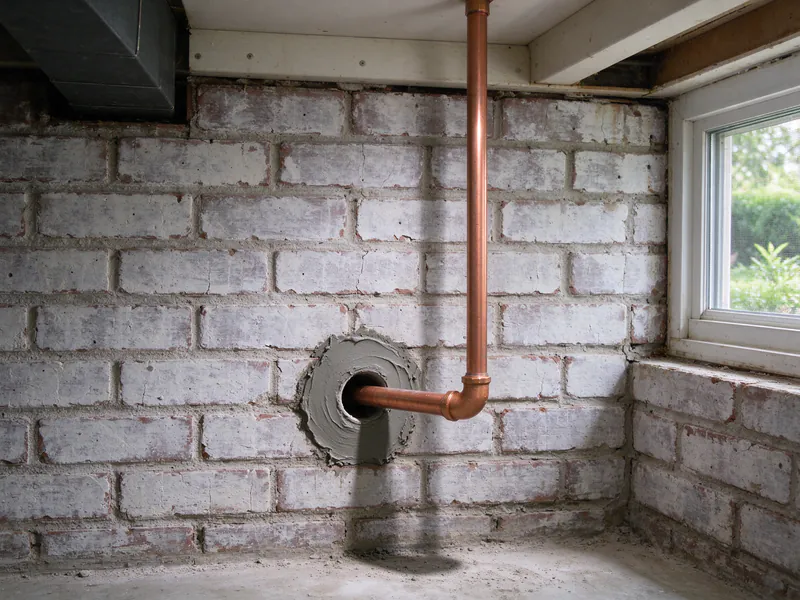
Outside, the new line is copper, laid by open trench or by a trenchless method, from the main to the building. Inside, the work is about where the new line ends and what it meets. If the old entry point can be reused, the new copper comes through the same opening. If not, it comes through a new entry in the foundation wall, sealed around the pipe, and the meter and a new main shutoff are set there.
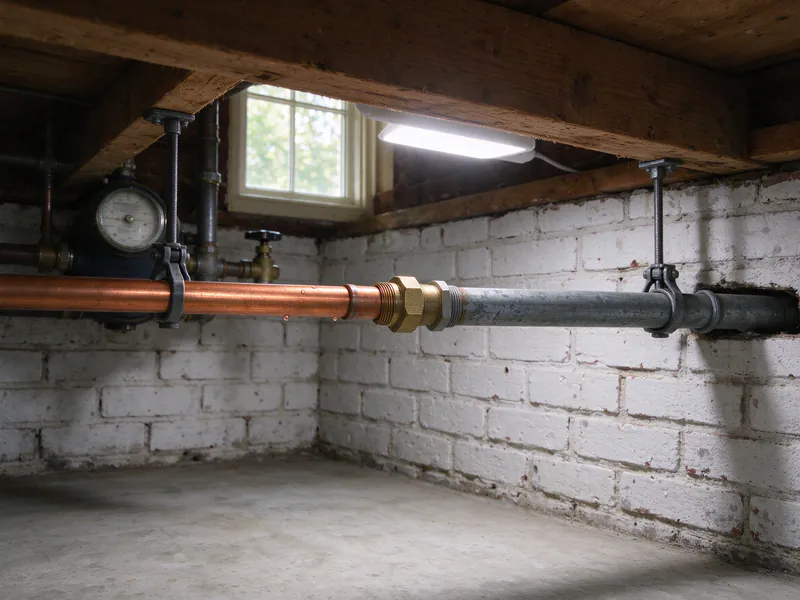
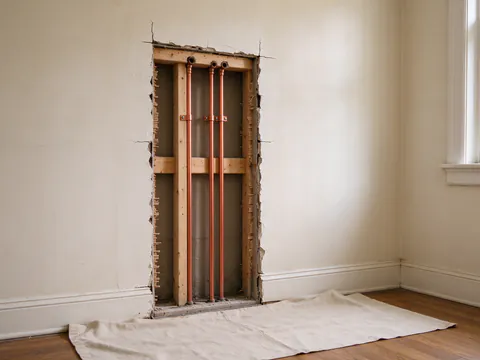
The building’s piping then has to reach that point. Where the interior is copper, the tie-in is short. Where it is galvanized, the new copper meets steel at a brass or dielectric transition fitting so the two metals do not corrode each other at the joint, and the galvanized stays in service until it is replaced (see galvanized pipe replacement). Homeowners report that after a City replacement, the crew connected the new line to copper they had ready in the basement, and that interior rerouting, plaster repair and landscaping were left to them. After the new line is connected, the piping is flushed and the aerators and screens are cleaned, because the work can knock scale loose. The main water line and shutoff page covers the valves at the meter.
Full replacement only, since January 2023
Illinois law has required full replacement of a lead service line, public and private sides, since January 2023. Replacing only the owner’s side and leaving lead under the parkway is no longer allowed, and neither is the reverse. This is one reason a private job is more than a basement repair: the replacement runs the full length to the main, with the City making the connection at the main under the Homeowner-Initiated program.
Not sure what your service line is made of?
A look at the line where it enters the basement, and a check of the City's programs, comes before any price.
What a replacement is worth
The City of Chicago describes a free Equity replacement as a $16,000 to $30,000 value, and that is the clearest public figure for what a full replacement involves. A private replacement’s price depends on the length of the run, the depth and the surface over it, whether a trenchless method suits the lot, where the line enters, the meter work and what has to be restored afterward. Under the Homeowner-Initiated program, the permit fees are waived. The lead service line replacement cost guide explains the parts of the price.
Lead line programs in nearby suburbs
Suburban programs follow their own rules, and each is confirmed for the address before work starts. Evanston runs a private-side incentive pilot that reimburses $2,500 and waives the City’s permit fees for replacing a lead or galvanized service line, limited to 50 participants on a first-come basis; under its homeowner-initiated approach, the City replaces the public side while the owner’s plumber completes the private side. Skokie caps a property owner’s cost for the private side at $3,090, adjusted each year, and lets it be paid over 15 years on the water bill. Park Ridge says all lead services in the city must be replaced by 2044. Wilmette’s Village Board minutes describe a policy of Village-funded full replacements, with long-term funding to be revisited, so owners there should ask the Village for the current terms. See the Evanston, Skokie and Park Ridge pages for the local detail.
Lead in the water while you decide
Owners living with a lead line ask whether hot water, showering or a pitcher filter changes the risk, and whether past exposure has harmed their family. Those are health questions, and the sources to ask are public health agencies, not a plumbing contractor. Lead-Safe Chicago has the City’s guidance on water, testing and its programs, and the U.S. EPA’s lead service lines page explains how lead gets into water. The City adds corrosion control that coats pipe interiors to help keep lead from dissolving into the water. The galvanized pipes guide covers the separate question of the steel pipe inside the house.