A whole-house repipe of a single-family home in the Chicago area typically runs $5,000 to $15,000+, a two-flat runs $8,000 to $18,000+ for the whole building, and the City of Chicago adds a $150 Express plumbing permit per dwelling unit. Fully finished two- and three-story homes can run past the top of the single-family range. These are planning ranges, not quotes; a price for a specific building comes after someone has walked it from the meter up.
Chicago Lake Repiping offers and manages whole-house repiping across Chicago and nearby Cook County suburbs, carried out by licensed and insured plumbing contractors. This guide explains what sits inside those ranges, which parts have a public figure you can check and which parts only a walk-through can price.
Typical ranges around Chicago
| Work | Typical range | What the range covers |
|---|---|---|
| Whole-house repipe, single-family | $5,000 to $15,000+ | Hot and cold supply piping from the main shutoff to the fixtures. Fully finished two- and three-story homes run higher. |
| Two-flat, whole building | $8,000 to $18,000+ | Both units and the shared basement piping. Larger or fully finished buildings run higher. |
| City of Chicago Express plumbing permit | $150 per dwelling unit | Repair or in-kind replacement of existing piping, set by the Department of Buildings. |
The ranges are open at the top on purpose. A three-story frame house with plaster on every floor, tile bathrooms on two levels and a finished basement is a different job from a one-story house with open basement joists, even when both have the same number of fixtures. The two-flat cost guide goes further into buildings with more than one unit, and riser replacement covers condo stacks, where the association’s own scope decides much of the price.
What moves a repipe price
| Factor | Why it changes the price |
|---|---|
| Fixture count | Every sink, tub, toilet, laundry box and hose bibb is a branch to run, a connection to make and sometimes a wall to open. |
| Floors the pipe climbs | Each story adds riser length and another set of openings between floors. |
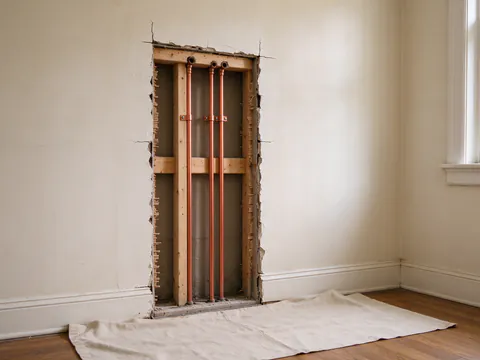
| Plaster, tile and cabinets | Finished surfaces in the way of a route take more time to open and more to close. Tile is the hardest. |
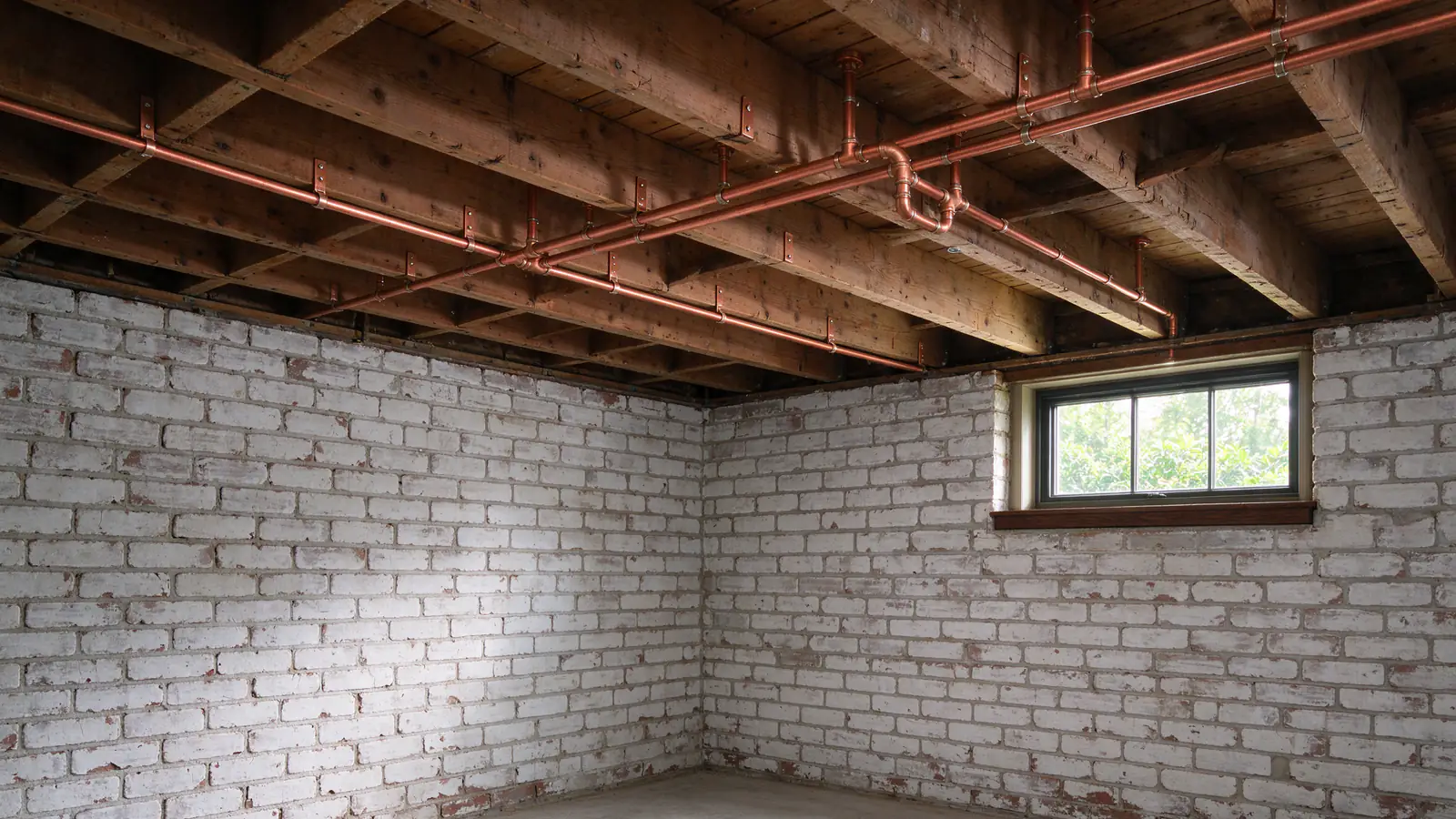
| Basement and chase access | Open basement joists, stacked closets and existing chases let pipe run without opening finished walls. |
| Pipe material | Copper inside Chicago; PEX only where a suburb’s code allows it. Copper is the more expensive pipe. |
| Main shutoff and pressure valve | A seized main shutoff or a pressure-reducing valve adds parts and labor at the start of the system. |
| Water heater connections | Reconnecting is part of the job; replacing the heater adds equipment and a $75 permit line in Chicago. |
| Restoration scope | Rough patch, finished plaster or drywall, and paint are three different prices; see repiping plaster walls. |
| People in the building | Staging shutoffs around an occupied house or both units of a two-flat adds days and cutovers. |
| Old fixtures and valves | Homeowners report that threaded galvanized fused to old faucets and stops can turn a pipe job into fixture and valve replacements as well. |
What’s inside a Chicago repipe price
Some parts of a repipe have a public figure behind them. Others have none, and those are the ones to pin down in writing.
| Part of the price | What sets it | Local figure |
|---|---|---|
| Labor | Hours on site, set by fixtures, floors and access | Plumbers in the Chicago metro earn a mean $46.36 an hour against $34.70 nationally, about 34% higher; the medians are $49.70 and $30.67 (Bureau of Labor Statistics, Chicago metro; national) |
| Pipe and fittings | The material the code lists for the address | Inside Chicago the code’s water distribution table lists copper and no PEX. Copper is the higher-cost material, and its price moves with the metals market, which the BLS producer price index for copper and brass mill shapes tracks |
| City permit | Dwelling units, risers, water heater | $150 per dwelling unit; $150 per unit served for risers; $75 for a water heater (Department of Buildings) |
| Plan review, if the work changes the system | Work that alters or extends the piping rather than replacing it | $600 non-refundable initial deposit, with the total set by the scope |
| Work without a permit | Starting before the permit is issued | A stop work order carries a penalty of $1,000 or more, and the permit fee after one is in most cases tripled (Department of Buildings) |
| License | Who may do the work | A City of Chicago plumbing contractor license is required on top of state licensing; no public cost figure applies to the homeowner |
| Wall and ceiling restoration | Number of openings, plaster or drywall, paint | No public figure. Scope to check on the quote |
| Main shutoff, pressure-reducing valve, water heater | Condition found at the meter and the heater | No public figure. Scope to check on the quote |
| Service line | Material and condition of the line from the street | A separate lead service line project with its own permit; the City values a free full replacement under its Equity program at $16,000 to $30,000 |
A wage is not a billing rate. The rate a contractor charges also carries insurance, licensing and bonding, vehicles, tools, permit time and overhead, so a billed hourly rate cannot be compared with these wages. The wage gap is still the clearest public reason a Chicago repipe costs more than a national average suggests.
Permit fees for a repipe
| Permit | Fee | Where it applies |
|---|---|---|
| Chicago Express permit, piping repair or in-kind replacement | $150 per dwelling unit | Replacing existing water piping inside a building |
| Chicago Express permit, risers in an existing chase | $150 more per dwelling unit served | Two-flats, multi-unit buildings and condo risers |
| Chicago Express permit, water heater | $75 more per dwelling unit ($150 each for a heater serving several units) | Only when the heater is replaced |
| Chicago standard plan review | $600 non-refundable initial deposit | Work that alters or extends the system |
| Chicago water permit | Set by the Department of Water Management | Any work on the water meter or the service line |
| Oak Park plumbing permit | $100 per unit for plumbing alteration, repair or replacement; $175 per system for a new or replacement plumbing system | Village of Oak Park (fee schedule); the Village confirms which line applies |
In a two-flat, the Express permit comes to $150 for each unit, or $300 for the building. The Chicago repiping permit guide explains what the Express application asks for, and who can repipe in Chicago covers the license that has to be on it.
Want a number for your building?
A walk-through from the meter turns these ranges into a written scope and price.
Programs and what they pay for
| Program | What it pays | Covers interior piping? |
|---|---|---|
| Interior repiping (City, state or federal) | No program found | No |
| Chicago Homeowner-Initiated lead service line replacement | Permit fees waived when the owner replaces the full lead line as a standalone job (Lead-Safe Chicago) | No |
| Chicago Equity lead service line replacement | Free full replacement for income-qualified owner-occupants of a house or two-flat; the City puts its value at $16,000 to $30,000 | No |
| Evanston private-side lead service line pilot | $2,500 reimbursement and waived City permit fees of about $450, for a limited number of participants | No |
The Homeowner-Initiated waiver applies to a standalone service line job. Bundling it into the same permit as an interior repipe may not qualify, so plan the two together and confirm with the Department of Buildings how to permit them before filing. The lead service line replacement cost guide covers that side in full.
Illustrative budgets
These examples are illustrative only. They show how the published ranges and fees combine; they are not quotes and do not describe real jobs.
Illustrative: a brick bungalow in Chicago, one bathroom, basement laundry. The repipe itself would fall in the $5,000 to $15,000+ single-family range, toward the lower part if the basement joists are open and the bathroom wall backs onto a closet. Permit: $150, plus $75 if the water heater is replaced at the same time. Wall restoration: priced on the quote.
Illustrative: a two-flat on the West Side, one kitchen and one bathroom per unit. The building would fall in the $8,000 to $18,000+ two-flat range. Permit: $150 per unit, $300 for both, plus $150 per unit if the risers are replaced in their chase. Both households are planned around during cutovers, which can add days.
Illustrative: a two-story house in Oak Park with plaster throughout. The single-family range applies, with finished plaster on two floors pushing toward the top or past it. The Village permit comes from its own fee schedule rather than the City’s, and the owner can choose between copper and PEX, since Oak Park follows the Illinois Plumbing Code.
Reading a quote line by line
Two quotes for the same house can differ by thousands because they describe different jobs. Put them side by side and check whether each one names the material and the pipe type, lists every fixture connection, includes the main shutoff and any pressure-reducing valve, includes the permit, lists the wall openings and says who closes them, and says when the water will be off. Homeowners report that some quotes leave out wall cutting and patching altogether, which makes them look cheaper than they are.
The cornerstone guide to galvanized pipes in Chicago homes covers how to tell whether the house needs a repipe at all. The repipe cost estimator works from the same published ranges, and a call or the estimate form gets a walk-through started.