Galvanized pipe replacement in Chicago starts with a finding: a home inspector’s note, a brown first draw after a weekend away, a top-floor shower that fades when someone opens the kitchen tap. Chicago Lake Repiping takes steel supply pipe out of service in houses, two-flats and small multi-unit buildings across Chicago and nearby Cook County suburbs and replaces it with copper, or with the material a suburb’s code lists. Licensed and insured plumbing contractors do the work.
Finding galvanized is not the same as finding a failure. One steel line still carries decent flow; another has closed to a fraction of its bore behind an outside that looks fine. This page covers how the condition is judged, how new copper is joined to steel that stays, why the days after a cutover can send rust to the faucets, and where the line falls between the pipes inside and the service line the City labels. For how galvanized ages in older Chicago homes, start with the galvanized pipes guide.
What happens on the first visit
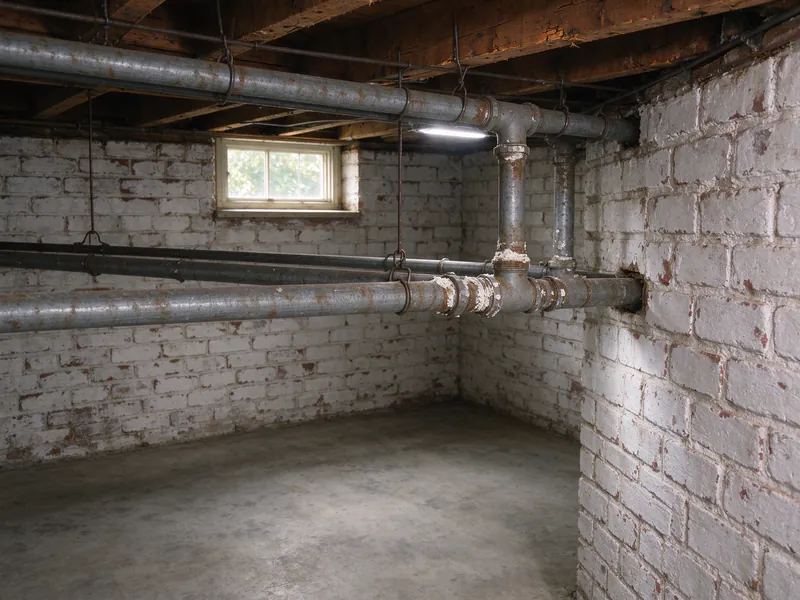
The visit begins where the water enters: at the meter and the main shutoff in the basement. The first job is to tell the service line apart from the house piping, because both can be steel and both can choke flow. The pipe coming through the foundation wall, the valve on it and the first few feet past the meter are identified by material before anything else is judged. The pipe identification guide shows what lead, galvanized and copper look like at that spot.
Two measurements carry the diagnosis. Static pressure is read at a hose bibb with nothing running. Flow is then compared at the lowest and highest fixtures with two taps open at once. Healthy static pressure with a top-floor shower that collapses when the basement sink opens puts the restriction in the house piping, and galvanized is the first suspect. Low static pressure points upstream instead: the service line, the valve at the meter, a pressure-reducing valve stuck partly closed, or the street. Replacing interior pipe would not touch any of those, and homeowners report paying for an interior repipe only to find the pressure unchanged because the buried line was the bottleneck. The low pressure guide for older Chicago houses walks through the sequence.
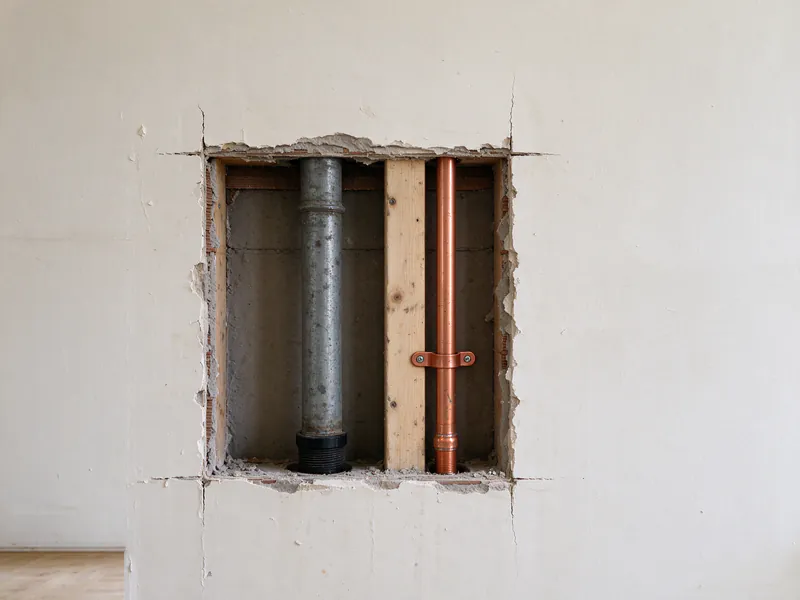
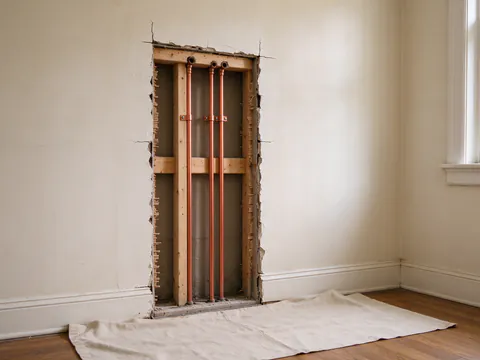
The walk-through then follows each run upward. It notes where earlier repairs already switched sections to copper, where steel threads straight into fixture valves, and which walls, ceilings and tile stand between the basement and each bathroom.
Why steel supply pipe closes from the inside
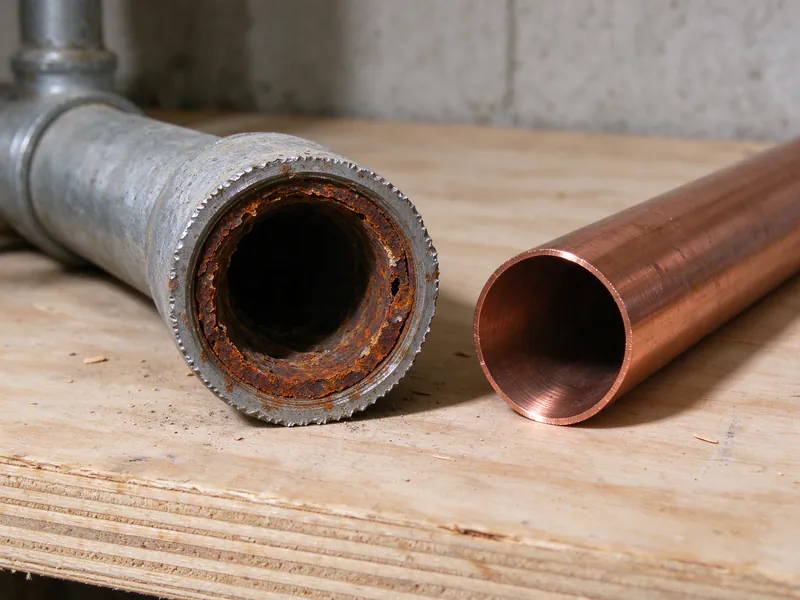
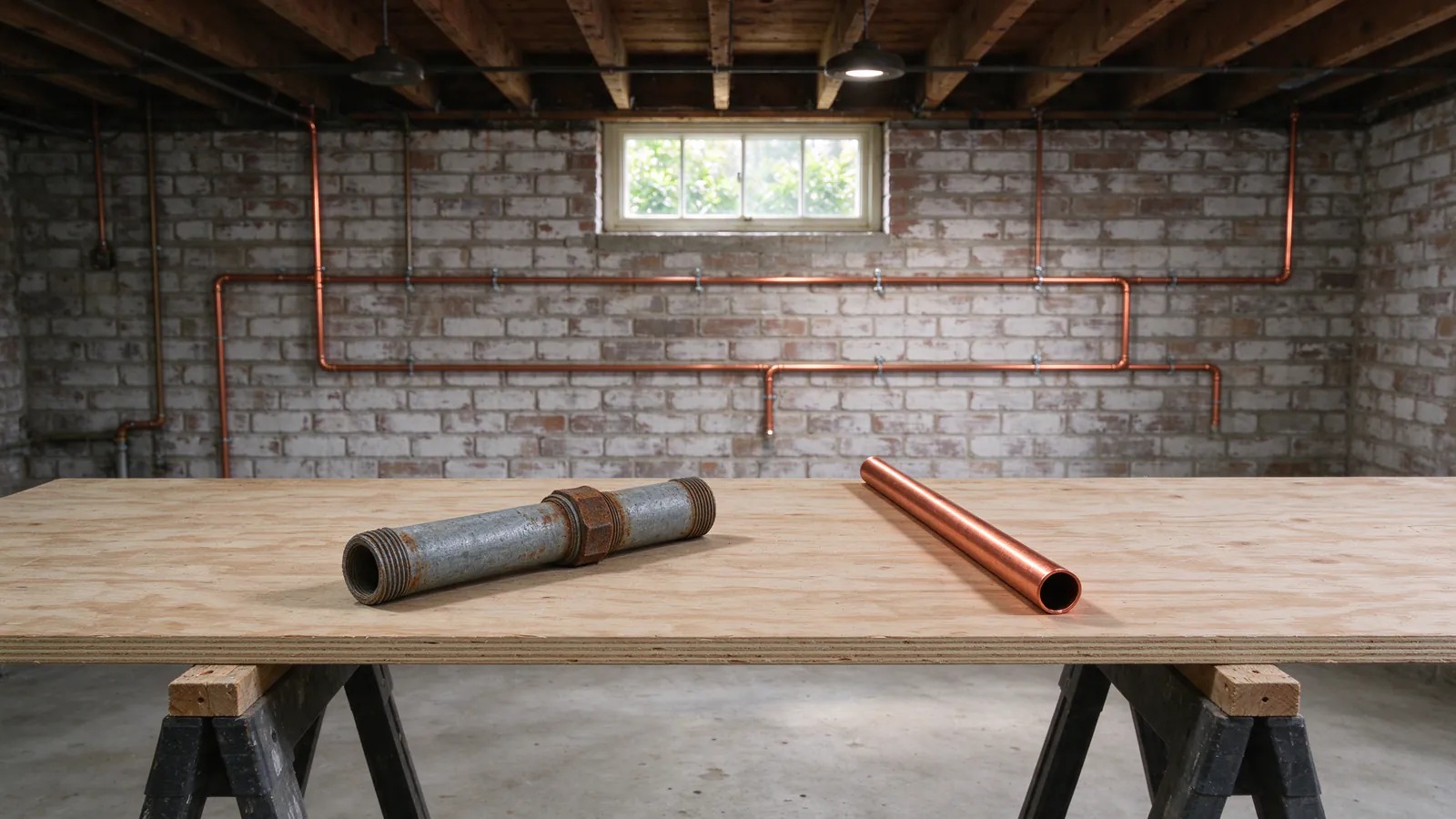
Galvanized pipe is steel with a zinc coating. Water slowly consumes the zinc, and once it is gone the steel underneath rusts. The rust does not wash away cleanly. It builds into a rough, lumpy scale of iron oxide and minerals that grows inward, so the pipe keeps its outside diameter while the opening the water uses shrinks. A line can look sound from the basement and still be badly restricted. Flow falls off before leaks appear, and the far, high fixtures feel it first because they sit at the end of the longest narrowed path.
The hot side can run worse than the cold, because warm water speeds the corrosion. That matters for scope. Where the hot lines are clearly the worse of the two and the budget forces a choice, replacing the hot distribution first is a defensible first stage, with the cold side planned for later. It is still a partial repipe, with steel left in service and a transition at every boundary, and the quote should call it that.
Threaded joints are the other weak point. Cutting threads removes part of the pipe wall, so the thinnest steel in the system sits at every fitting. A joint rusted tight can crack the next one when a wrench turns it, which is how fixing one drip on galvanized turns into replacing the run it sits on.
Joining copper to the steel that stays
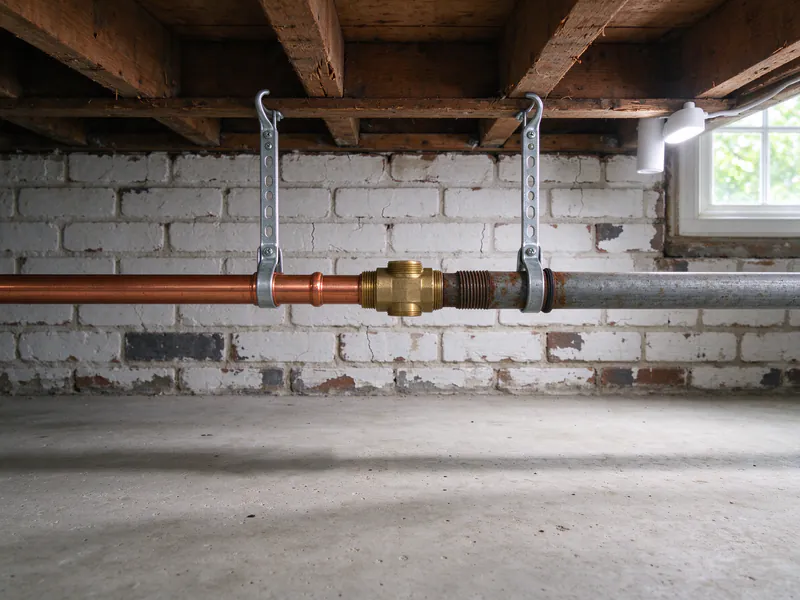
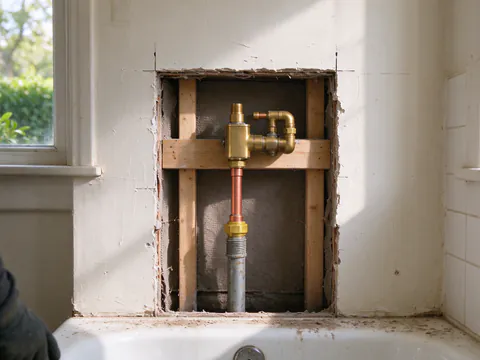
Hardly any galvanized replacement happens in a single cut. New copper has to meet old steel at least for the hours between one section’s cutover and the next, and on a staged or partial job some steel stays for years. Copper and steel touching in water form a galvanic pair, and the steel corrodes faster at the joint. Chicago’s plumbing code deals with this directly: section 18-29-605.21.1 requires a brass converter fitting or a dielectric fitting between copper and galvanized pipe.
A dielectric fitting separates the two metals with an insulating gasket and sleeve, breaking the electrical path between them. A brass converter puts a brass piece between them instead, threaded to the steel on one end and joined to copper on the other. Either way, the transition is a point worth checking in later years, so its location belongs on the quote and on a label at the pipe. A dielectric fitting also interrupts the metal pipe’s electrical continuity. Where the building’s electrical bonding runs through the water piping, an electrician should confirm the bonding after the work.
Every new pipe, fitting and valve that carries drinking water must meet NSF 372, a weighted average lead content of 0.25% or less, which Chicago’s code adopts. Old brass stops and valves were made before that limit existed, which is one argument for replacing the fixture shutoffs along with the pipe.
Cutover, flushing and the scale that comes loose
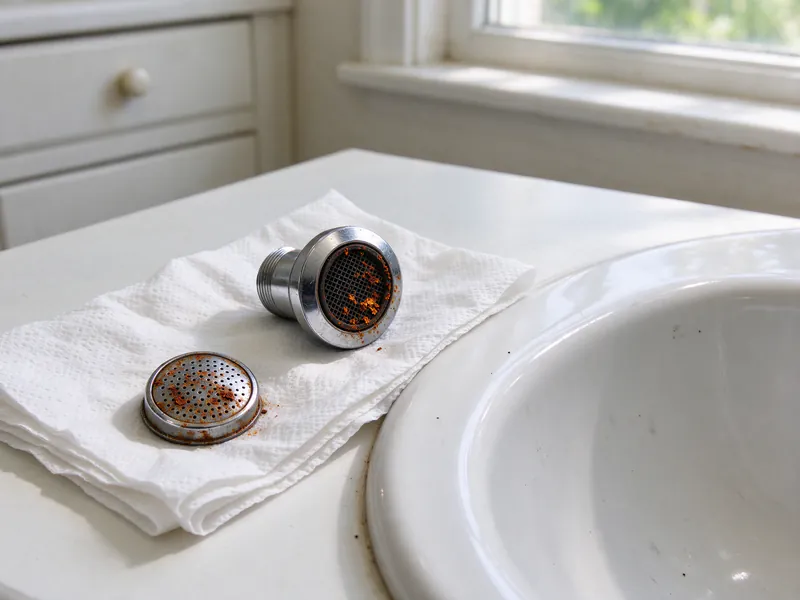
The day a section of galvanized is cut out is the day its scale gets disturbed. Cutting, shutting the water off and turning it back on all knock rust flakes loose from old pipe that is still connected. Those flakes travel to the first place they can lodge: faucet aerators, showerhead screens, toilet fill valves, washing machine inlet screens and the cartridges in single-handle faucets. A burst of brown water or a toilet that suddenly keeps running after work on old steel is a known effect of disturbing scale, not proof the new pipe is bad.
The job is set up for it. After each cutover the new lines are flushed to clear debris from the work, and the aerators and fixture screens are cleaned. Before walls close, the new copper is pressure tested with the fixtures isolated, so a weak joint shows on a gauge rather than inside a finished wall. Water is off only during the cutovers themselves; between them the house runs on whatever piping is still connected. On a staged job, where steel stays upstream or alongside, the flushing matters again at the next stage, and the fixtures still fed by steel can keep giving a brown first draw. The rusty water guide covers the other sources of discolored water, from the water heater to street work.
Steel threaded into fixtures adds a wrinkle. Homeowners report that galvanized nipples rusted into old faucet bodies, toilet supplies and tub valves turn a pipe job into valve and fixture-connection work too, because the nipple cannot come out without damaging the fixture. The walk-through flags those connections so they are priced in rather than discovered halfway through.
Not sure whether it is the pipe or the service line?
Static pressure at a hose bibb and flow at the top and bottom fixtures tell the two apart.
The service line label is a different pipe
Chicago’s service line inventory sorts addresses into lead, suspected lead, galvanized requiring replacement and non-lead. That label describes the service line, the buried pipe from the water main to the building. A galvanized service line is flagged when it may have sat downstream of lead, because lead particles can lodge in the rough inside of steel and come loose later. The guide to the galvanized requiring replacement label explains how to read a listing.
The interior pipes are a separate decision. A house can have a flagged service line and copper inside, or a new copper service line feeding galvanized on every floor. The City’s lead service line programs bring a new copper line into the building; they do not pay for interior piping, and the Breaks and Leaks program excludes interior piping more than two feet from where the service enters. When both are steel, plan them together, because the new service line decides where the main shutoff sits, and a repiped interior still gets only what a narrow old service line delivers. Since January 2023, Illinois law has required full, not partial, replacement of lead service lines. See lead service line replacement and the guide to repiping after a lead line replacement.
Copper inside the city, a choice in some suburbs
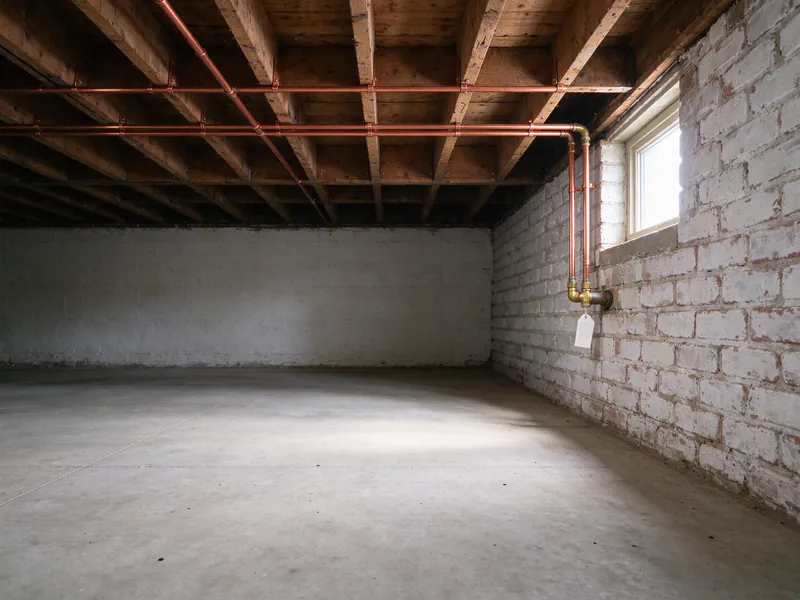
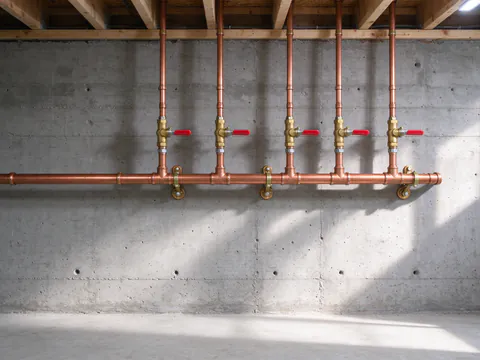
Inside Chicago, the replacement is copper. The Chicago Plumbing Code’s water distribution table lists copper, brass and galvanized steel, with no entry for PEX, and new steel is not a practical choice for new work. The City’s permit records show the pattern: from January 2019 through October 23, 2026, 109 permit descriptions explicitly replaced galvanized water piping with copper. The copper repiping page covers tube weights and joining methods.
In the suburbs, the code at the address decides. Oak Park and Skokie follow the Illinois Plumbing Code, which lists PEX, so an owner there can weigh PEX repiping in the suburbs against copper. Evanston’s code lists copper for new water distribution and Park Ridge’s requires Type L copper above ground. Those rules are what each code says, and they are confirmed for the address before work starts.
Permit, price and what the quote should list
Replacing existing galvanized piping in kind inside Chicago goes through the Department of Buildings’ Express Permit Program: $150 per dwelling unit, and $150 more per unit when risers are replaced. The work is done by the Chicago-licensed plumbing contractor named on the permit, or by an owner doing their own work on a single-family home they occupy, and a City inspector checks it. Changing the layout rather than replacing in kind moves the job to plan review, which starts with a $600 non-refundable deposit. The Chicago repiping permit guide covers the application.
Replacing galvanized throughout a house is a whole-house repipe, and it is priced the same way: $5,000 to $15,000+ is a typical Chicago-area range for a single-family house, with fully finished two- and three-story homes running higher. The Chicago repipe cost guide breaks down what moves the number. Whatever the scope, the quote should list the wall and ceiling openings and who closes them, where old steel is cut, capped and left behind, where any steel stays in service and which transition joins it, and the working days and water-off windows.