Copper repiping in Chicago is less a choice among materials than the one the code leaves standing. Chicago Lake Repiping manages copper repipes in Chicago houses, two-flats and small multi-unit buildings, and in suburbs whose codes call for copper or where an owner prefers it. Licensed and insured plumbing contractors do the work. With the material settled, the decisions that remain are real ones: which weight of tube goes where, how the joints are made, how the pipe is held and protected, and where the rigid runs can travel through a finished building.
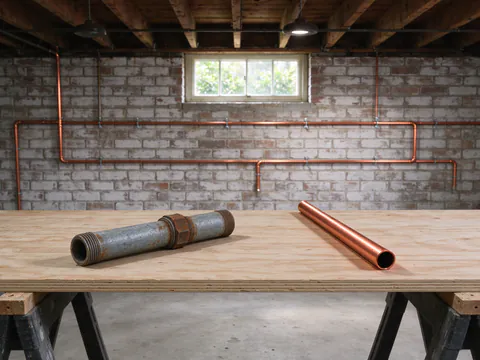
Those decisions change the price, the number of wall openings and how the system behaves for decades. This page goes through each one. If the question is why PEX is off the table inside the city, the guide to whether PEX is allowed in Chicago covers the code and its history; if the house is still steel, see galvanized pipe replacement.
What happens on the first visit
The visit starts at the meter and the main shutoff in the basement, because the main sets the size of everything downstream. From there it traces the existing piping on every floor. Copper from earlier repairs gets a close look: green crust at joints can mean flux left behind or a slow weep, and the colored stripe on the tube, where it is still readable, tells whether a previous plumber used Type L or Type M. Sound copper from a recent repair may be worth keeping and tying into; copper with a history of pinholes is not.
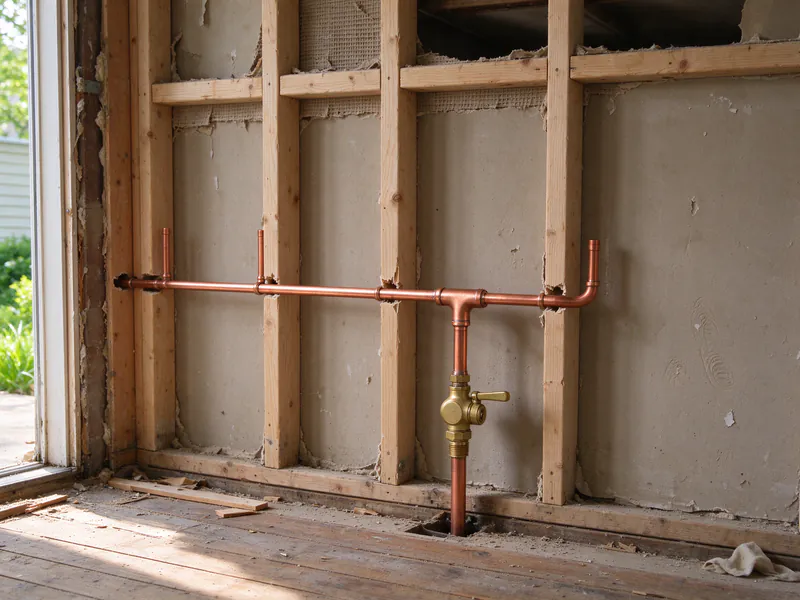
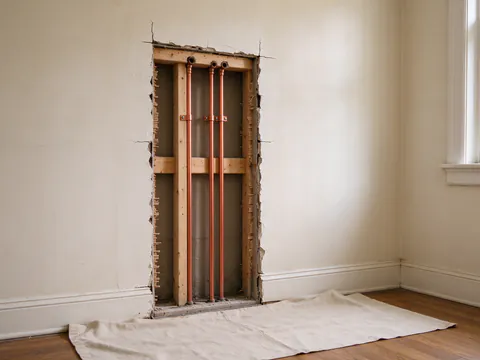
Static pressure is read at a hose bibb, and flow is compared at the lowest and highest fixtures with two taps running, so a restriction in the old piping can be told apart from low supply. Then comes the routing question that matters most for copper. Rigid tube runs straight and turns only at fittings. Every change of direction inside a finished wall is a place that has to be reached, so the walk-through maps open joists, stacked closets, chases and the backs of cabinets where turns can happen out of sight.
Why Chicago repipes are copper
The Chicago Plumbing Code’s table of water distribution materials, Table 18-29-605.5, lists brass pipe, copper and copper-alloy pipe, copper tube in Types K, L and M, and galvanized steel. CPVC, polypropylene and PVDF appear only for secondary water in process applications. PEX has no entry, and the code requires new and replaced water supply pipe to be of the listed materials. Chicago’s 2021 amendments expanded PVC for drain, waste and vent piping in low- and mid-rise residential buildings, but did not add a plastic water pipe.
Homeowners report holding off on a repipe in the hope that the City will allow PEX. Nothing in the City’s recent code work points that way, and the City’s own permit records include a 2022 permit to “correct plumbing code violations” by replacing PEX piping with new copper. The PEX vs copper guide compares the two where both are legal.
Type K, L or M
The three types share an outside diameter at each size and differ in wall thickness. Type K has the heaviest wall, and Chicago’s code lists Type K copper, or ductile iron, for water service pipe, the buried line from the street. Type L is the middle weight. Type M is the thinnest of the three. Chicago’s distribution table lists all three for the inside of a building, so the choice falls to the design.
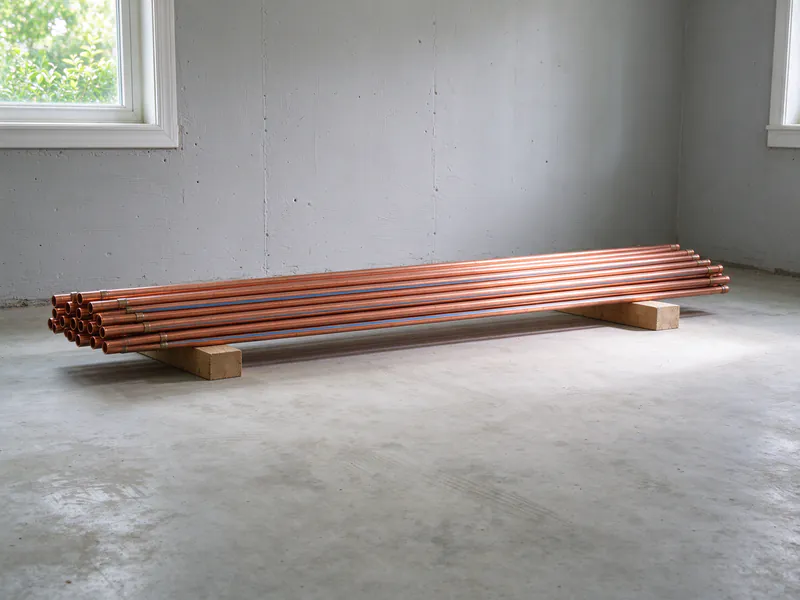
A thicker wall gives corrosion and abrasion more metal to work through and stands up better to handling in tight framing. A thinner wall costs less and weighs less. Where the pipe runs, how hot it gets, how fast water moves through it and the local code all bear on the choice, and no single weight is right for every run. Each type is marked with a colored stripe, green for K, blue for L and red for M, so the tube delivered to the job can be checked against the quote.
Soldered, press-connect or push-fit
Since the 2021 amendments, Chicago allows copper water tube to be joined by soldering with lead-free solder and flux to NSF 61, brazing, mechanical and threaded joints, press-connect fittings pressed with a tool certified by the fitting maker, and push-fit fittings listed to ASSE 1061.
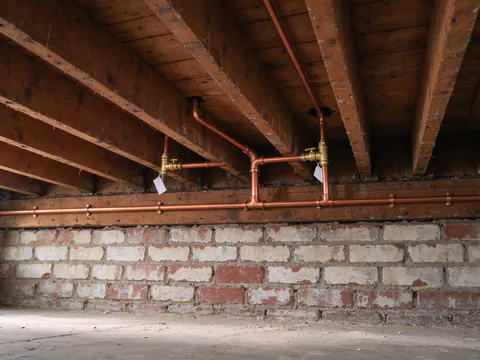
Soldering is the old standard. The tube and fitting are cleaned, fluxed and heated with a torch until solder flows into the joint. It needs an open flame at every joint, which matters inside the walls of an older building where the framing behind the plaster has been drying for a century. Press-connect fittings carry a sealing ring and are crimped onto the tube with a powered tool. There is no flame, and a joint takes seconds, which shortens the time walls stand open. The tool and jaw set have to be the ones the fitting maker certifies for that system. Some press systems are designed to leak visibly when a fitting has been left unpressed, so the pressure test finds a missed joint. Listed push-fit fittings grip the tube with a toothed ring and seal it with an O-ring; they suit a repair in a spot where neither a torch nor a press tool fits.
Workmanship is where joint failures start, whatever the method. Too much flux left inside a soldered joint keeps working on the copper after the job is done. A burr left on a cut end throws turbulence into the fitting and can wear the wall downstream. A press fitting slid on short of full depth seals poorly. These are installation defects, not material defects, and they are why the joints get flushed and pressure tested before anything is closed.
Want to see where your copper would run?
A walk-through maps the routes, the turns that need access and the joints each route requires.
Supports, expansion and protection
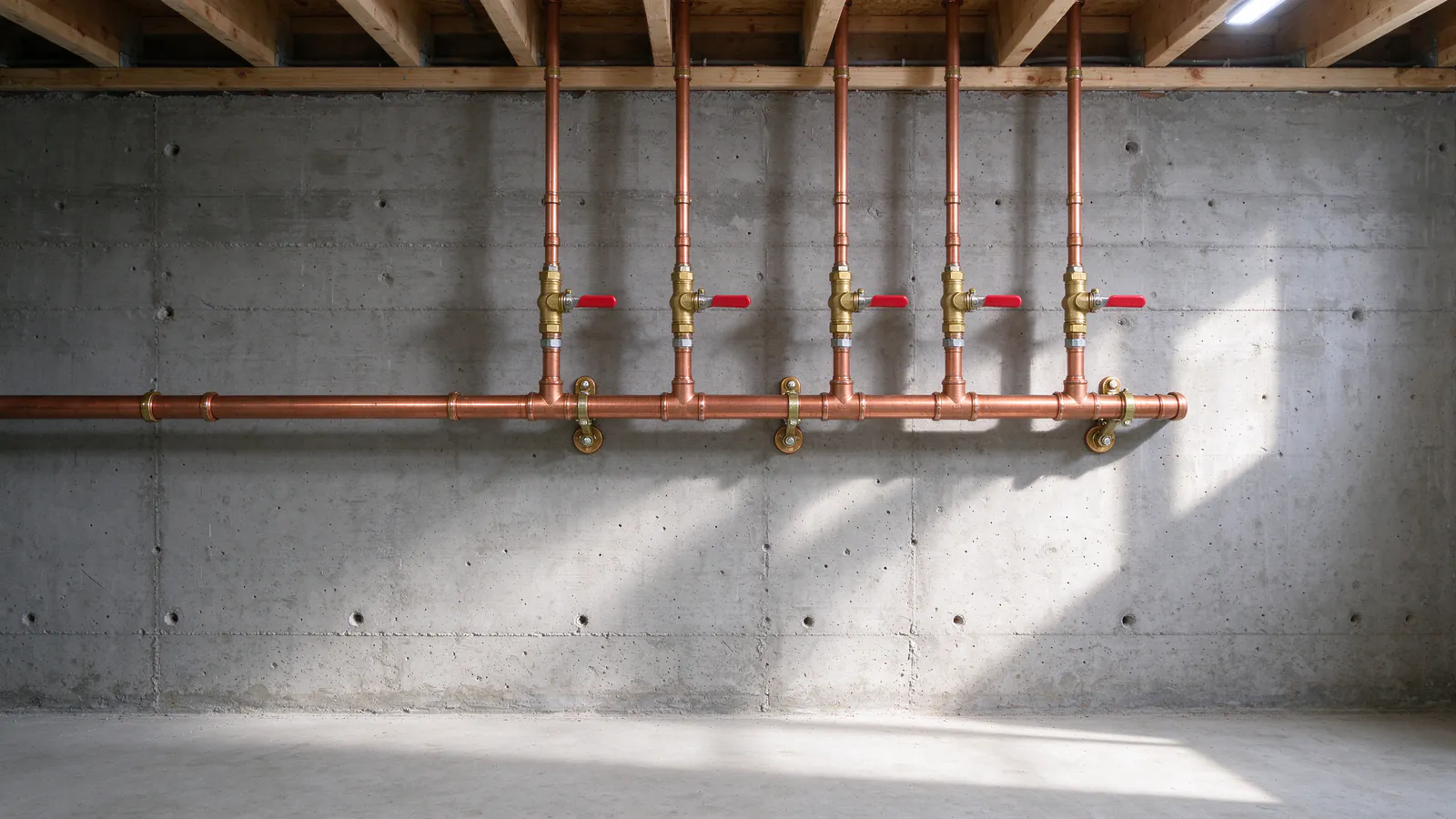
Copper needs to be held, but not pinned. Hangers go at the spacing the code and the fitting maker set, and where copper rests on steel straps or touches steel pipe, the contact is isolated or the hanger is copper-coated, because two metals touching set up the same galvanic corrosion the code guards against at a copper-to-galvanized joint. Hot lines grow in length as they heat and shrink as they cool. A long hot run strapped tight at both ends, or jammed through a snug hole in a joist, ticks and creaks as it moves and puts strain on the nearest fittings. Room to move at turns and through framing prevents that.
Chicago’s code requires new concealed water pipe and any pipe exposed to low temperatures to be protected from freezing, so runs near exterior walls, in unheated porches or over crawlspaces are insulated or rerouted. Where new pipe passes through existing openings in fire-rated walls or floors, Express Permit work has to be firestopped. Brass belongs in this system too: valves, adapters and the converter fittings that join copper to any steel that stays are brass, and every one that carries drinking water has to meet NSF 372, a weighted average lead content of 0.25% or less.
Pinhole leaks and what copper does not promise
Copper is not immune to failure, and a repipe should not be sold as if it were. Pinhole leaks have more than one cause. Water chemistry can attack the inside wall. Water moving too fast through undersized or overworked lines can erode it, especially at elbows on the hot side. The workmanship defects above, flux and burrs, leave their own marks. No single cause explains every pinhole, and the copper pinhole leak guide covers how to read the pattern of leaks in an existing system.
Chicago’s treated Lake Michigan water works in copper’s favor: the City adds corrosion control that coats pipe interiors to limit lead and copper leaching. That lowers the odds of internal attack but does not remove every cause, which is why the sizing and joint practice matter as much as the metal.
Copper outside the city
The copper rule is Chicago’s, and some suburbs share it. Evanston’s amended plumbing code lists copper for new water distribution, with Type L as the minimum above grade and Type K underground, and treats brass and galvanized as repair materials only. Park Ridge’s code bars CPVC, cross-linked polyethylene and polybutylene for water distribution and calls for Type L copper above ground. Those are what each code says, and the rule is confirmed for the address before work starts.
Oak Park and Skokie follow the Illinois Plumbing Code, which lists PEX alongside copper. Owners there can choose, and PEX repiping in the suburbs covers that option. Copper costs more than PEX as material, and rigid runs can need more openings, so the decision turns on price, access and preference rather than on one material being better.
Permit and price
Inside Chicago, an in-kind copper repipe of existing piping goes through the Express Permit Program at $150 per dwelling unit, with $150 more per unit when risers are replaced, and a City inspector checks the work. It has to be done by the Chicago-licensed plumbing contractor on the permit, or by an owner on a single-family home they occupy. Price follows scope: $5,000 to $15,000+ is a typical Chicago-area range for a single-family whole-house repipe, and a two-flat repipe of the whole building runs $8,000 to $18,000+. The Chicago repipe cost guide explains what moves those numbers, and the plaster walls guide covers the openings rigid copper needs.