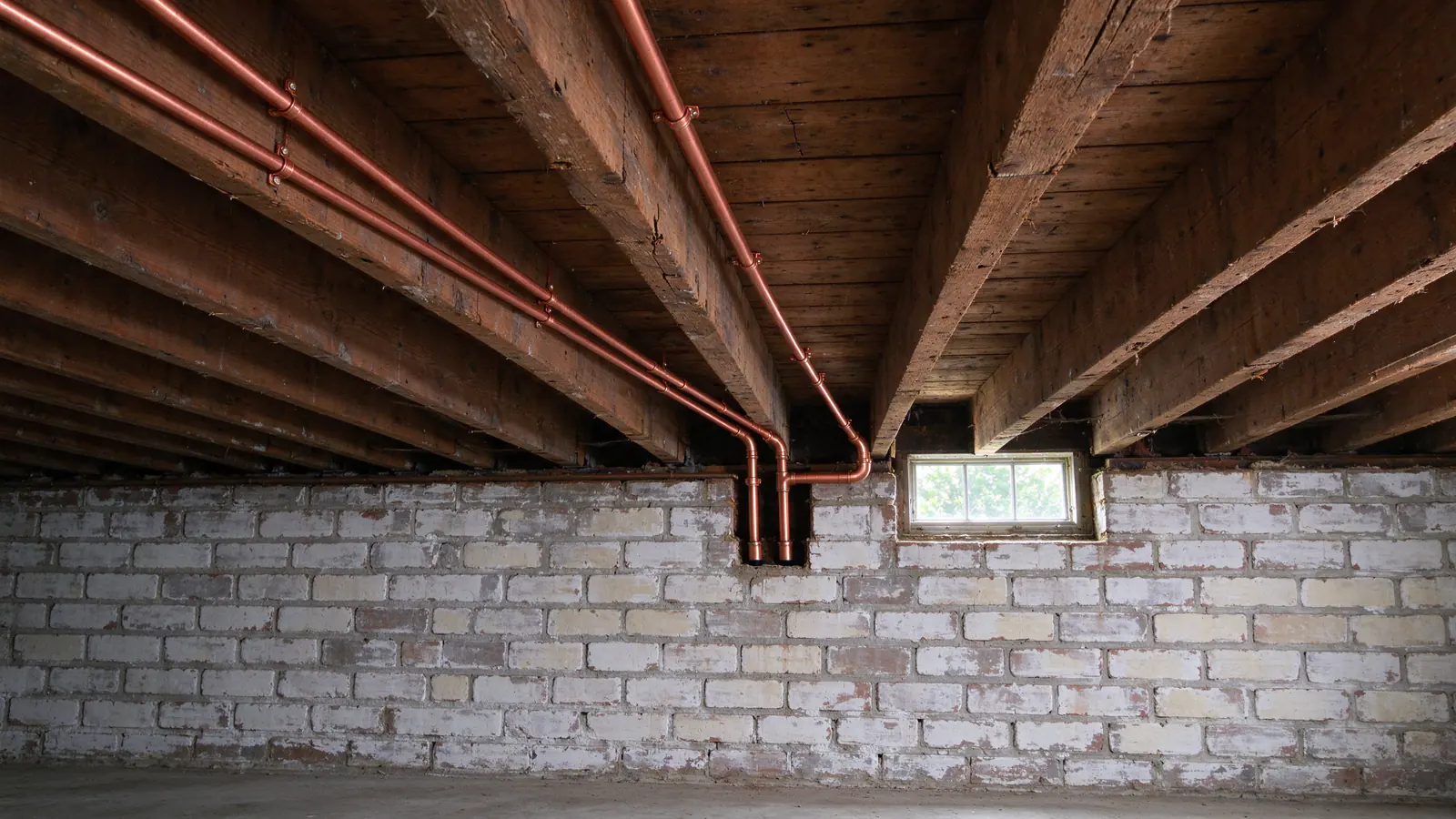
Where is your water slowing down?
Any of these four findings is a reason to look at the piping. None of them proves the cause on its own, which is why the first visit traces the piping from the meter up.
Pressure fades upstairs
The second-floor shower drops to a trickle when someone runs the kitchen tap. Galvanized pipe narrows as it corrodes inside, though a partly closed valve, the service line or street pressure can cause the same thing.
Brown water after it sits
Rust-colored water at the first draw, or only on the hot side. Corroding galvanized pipe can cause it, but so can a water heater or work on the street main.
A notice about your service line
Chicago's service line inventory lists addresses as lead, suspected lead, galvanized requiring replacement or non-lead. A replacement brings new copper to the basement wall; the piping inside is a separate decision.
An inspection or a remodel found it
A buyer's inspection notes galvanized supply pipe, or a bathroom gut opens a wall and finds it. While the walls are open, the old lines are easier to reach than they will be again.
Copperis the water distribution pipe Chicago's plumbing code lists. PEX is not on the list.
$150City of Chicago Express plumbing permit for repiping, per dwelling unit
38.8%of Chicago homes were built before 1940, by the Census Bureau's count
80 psiChicago's pressure-reducing valve threshold, for permit applications from December 1, 2026
Repiping services in Chicago
Chicago Lake Repiping offers and manages repiping and lead service line replacement across Chicago and nearby Cook County suburbs. The work is done by licensed and insured plumbing contractors, and every job starts at the meter and main shutoff, where the house piping begins.
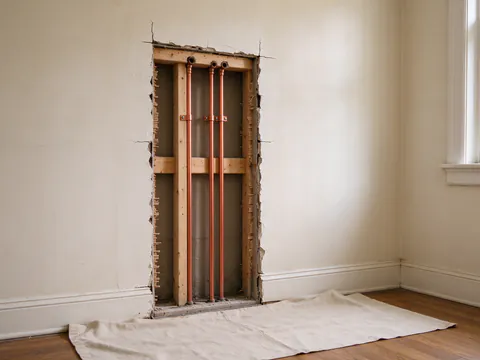
Whole-house repiping
Whole-house repiping replaces every hot and cold supply line from the main shutoff to the fixtures in the material the local code lists, then pressure tests it before the walls close.
Meter to every fixture
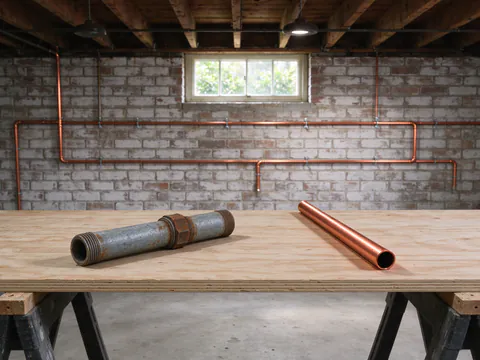
Galvanized pipe replacement
Galvanized pipe replacement swaps restricted steel supply pipe for copper, with code-listed transitions wherever old pipe stays and a flush after every cutover to clear loosened scale.
Risers and branches
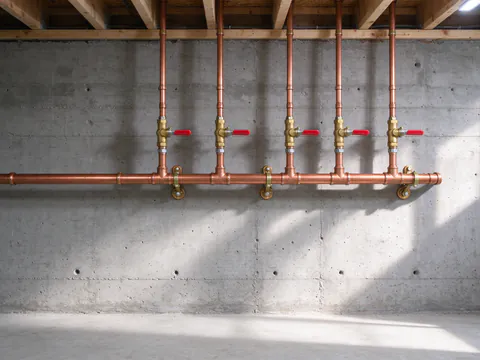
Copper repiping
Copper repiping replaces water supply piping in tube of the weight the design and local code call for, joined by an approved method and supported so it can move as it heats.
Risers and branches
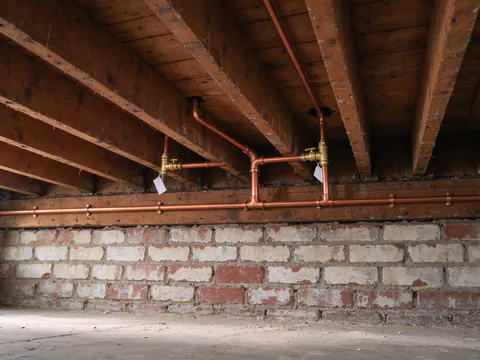
Two-flat repiping
The shared basement main, both units' risers and branches, and a shutoff in each apartment, planned around two households and one cutover.
Whole building
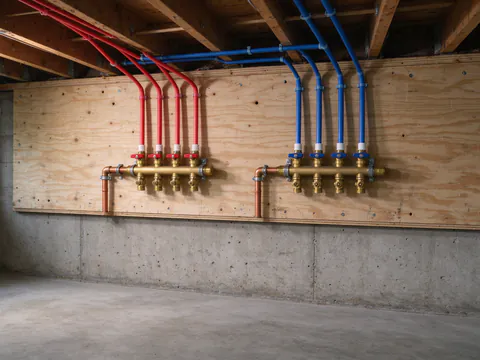
PEX repiping (suburbs)
PEX repiping for Chicago suburbs whose plumbing code lists it: a manifold or trunk-and-branch layout, joined to the copper service at the main shutoff.
Suburbs only
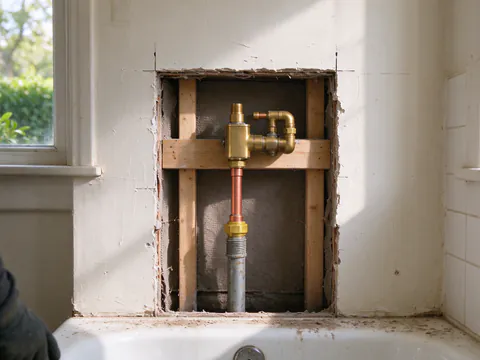
Partial repiping
A partial repipe replaces a defined part of the supply piping, such as one bathroom, one riser, the hot side or one floor, with every joint to the pipe that stays named on the quote.
Risers and branches
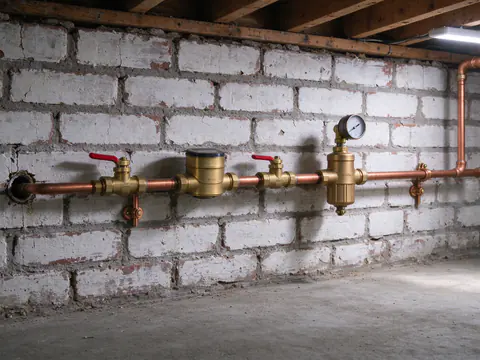
Main shutoff and basement main
Main water shutoff valve replacement covers the valve and the basement main from the meter to the first branch, sized for the building, with a pressure-reducing valve where pressure runs over 80 psi.
Meter and main shutoff
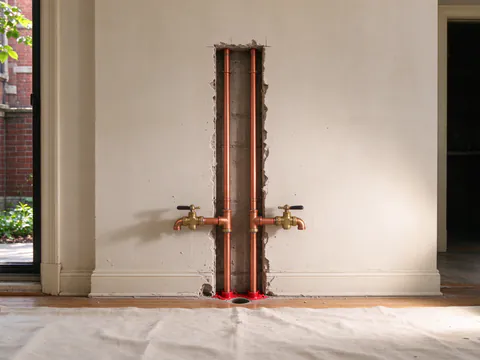
Riser replacement
Plumbing riser replacement in condo and apartment buildings, stack by stack in copper, with each unit's tie-in, the association's approval and the City permit planned before the first shutoff.
Risers and branches
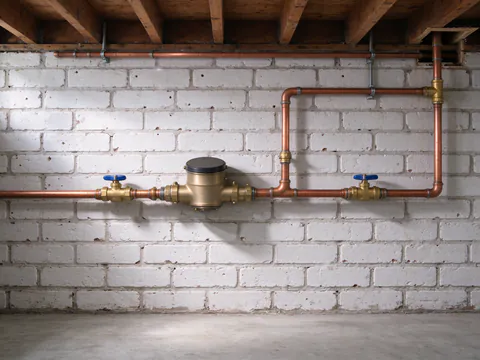
Commercial repiping
Commercial repiping for mixed-use buildings, small offices and restaurants, in copper, with the permit path, the shutoff windows and the business's hours settled before work starts.
Whole building
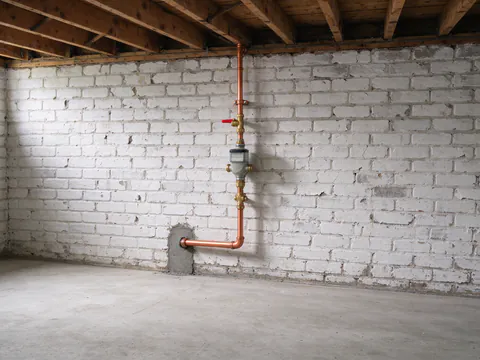
Lead service line replacement
A full replacement of the buried water service from the main to the building, with the City's free programs checked first and the new line's basement tie-in planned with the piping it feeds.
Service line
Why the work is planned this way
The code decides the pipe
Inside Chicago, the plumbing code's table of water distribution materials lists copper, brass and galvanized steel, and no PEX. The suburbs differ: Oak Park and Skokie follow the Illinois Plumbing Code, which lists PEX, while Evanston and Park Ridge require copper by local ordinance. The material on a quote follows the code for the address.
Every permit on the page
Replacing existing piping in kind in Chicago goes through the City's Express Permit Program: $150 per dwelling unit, plus $150 per unit when risers are replaced and $75 when a water heater is. Work on the water meter needs a separate water permit.
Service line and house piping, planned together
The City's lead service line programs bring a new line to the house but do not pay for the piping inside. Planning both at once settles where the new line enters, where the main shutoff goes and what the new copper connects to.
Openings and boundaries in writing
Plaster, tile and cabinets decide where walls open. The quote lists the openings and who closes them, and on a partial repipe it shows exactly where new pipe meets old.
How a repipe runs
The same stages on a bungalow, a two-flat or a stack of condo risers.
First call
What you are seeing, the building type, how many units and fixtures, and any inspection, sale or City notice.
Walk-through from the meter
The service line material, the main shutoff, the pipe on each floor, and where walls, floors and ceilings can open.
Permit and repipe
The permit filed for the address, new lines run and connected, then pressure tested and flushed before anything is closed.
Inspection and closing up
The City or village inspection, labeled shutoffs, and the openings closed as the quote describes.
What a repipe costs around Chicago
These are ranges for planning, not quotes. Fixture count, stories, wall finishes and the pipe material move a building within them, and a fully finished two- or three-story house can run past the top of the single-family range.
What moves the price
- How many fixtures there are and how many floors the pipe climbs
- Plaster, tile and cabinets in the way of the routes
- Copper, or PEX where a suburb's code allows it
- Risers, water heater connections and a pressure-reducing valve
- How much patching the quote includes
- Working around people living in the building
Try the repipe cost estimatorRead the Chicago repipe cost guide
| Item | Range |
|---|---|
| Whole-house repipe, single-familyHot and cold supply piping from the main shutoff to the fixtures. Fully finished two- and three-story homes run higher. | $5,000 to $15,000+typical Chicago-area range |
| Two-flat, whole buildingBoth units and the shared basement piping. Larger or fully finished buildings run higher. | $8,000 to $18,000+typical Chicago-area range |
| City of Chicago Express plumbing permitRepair or in-kind replacement of existing piping. Replaced risers add $150 per unit served; a replaced water heater adds $75. | $150 per dwelling unitDepartment of Buildings fee |
Not a quote. The price for a building comes after the walk-through.
Low pressure upstairs or brown water at the tap?
Start with a walk-through that follows the piping from the meter and main shutoff to the top floor.
Repair, partial or whole-house, and which pipe
The scope depends on how much of the old pipe is still in service and how it is performing. The material depends first on where the building is.
| Spot repair | Partial repipe | Whole-house repipe | |
|---|---|---|---|
| When it fits | One leak or fitting on pipe that is otherwise sound | One bathroom, one riser or the hot side shows the trouble and the rest performs well | Galvanized supply throughout, or leaks and low flow on several floors |
| What stays | All the old piping around the repair | Old pipe outside a written boundary | No old supply piping left in service |
| Walls opened | At the leak | In the rooms the new section serves | Along the routes to every fixture, planned around the finishes |
| Pressure | Unchanged | Better only where the new pipe runs | Better throughout when the old pipe was the restriction; street pressure and the service line still count |
| Chicago permit | Express Permit for the repair | Express Permit | Express Permit, with added fees for risers or a water heater |
| Copper | PEX | |
|---|---|---|
| Where it is allowed | Chicago and every suburb served | Suburbs on the Illinois Plumbing Code without a local ban, such as Oak Park and Skokie; not Chicago, Evanston or Park Ridge |
| How it is joined | Lead-free solder, brazing, press-connect or push-fit fittings | Listed crimp, clamp, expansion or push-fit fittings, installed to the maker's instructions |
| How it runs | Rigid lengths with a fitting at each turn | Flexible runs that bend around framing, from a trunk line or a manifold |
| Material cost | Higher material cost | Lower material cost |
| Watch for | Water chemistry, joint quality and freeze exposure | Sunlight, heat sources and freeze exposure |
Where the work happens
Chicago community areas permit through the City's Department of Buildings and use copper, the material the City's code lists. Oak Park, Skokie, Evanston and Park Ridge have their own building departments, and their PEX rules differ: Oak Park and Skokie follow the Illinois Plumbing Code, which allows PEX, while Evanston and Park Ridge require copper.
| Area | Where | Water pipe the code lists | Homes built before 1940 | Water-piping permits, Jan 2019 to Oct 2026 |
|---|---|---|---|---|
| Austin | Chicago, West Side | Copper (Chicago Plumbing Code) | 49.5% | 32 |
| Lake View | Chicago, North Side | Copper (Chicago Plumbing Code) | 34.7% | 15 |
| Greater Grand Crossing | Chicago, South Side | Copper (Chicago Plumbing Code) | 53.2% | 41 |
| Auburn Gresham | Chicago, South Side | Copper (Chicago Plumbing Code) | 38.9% | 26 |
| Roseland | Chicago, Far South Side | Copper (Chicago Plumbing Code) | 33.0% | 26 |
| South Shore | Chicago, South Side | Copper (Chicago Plumbing Code) | 46.1% | 30 |
| Near North Side | Chicago, north of the river | Copper (Chicago Plumbing Code) | 12.5% | 49 |
| Oak Park | Village of Oak Park | Copper or PEX (Illinois Plumbing Code) | 59.3% | n/a |
| Evanston | City of Evanston | Copper (Evanston ordinance) | 40.3% | n/a |
| Skokie | Village of Skokie | Copper or PEX (Illinois Plumbing Code) | 6.3% | n/a |
| Park Ridge | City of Park Ridge | Copper (Park Ridge bans PEX) | 16.2% | n/a |
Housing age: U.S. Census Bureau American Community Survey, via CMAP Community Data Snapshots. Permits: City of Chicago building permits whose descriptions name water supply piping repair or replacement. The suburbs do not publish comparable permit data.
Repiping questions, answered
Is PEX allowed in Chicago?
No, not for the water pipe inside a building. The Chicago Plumbing Code's table of water distribution materials lists copper and copper alloy pipe and tube, brass and galvanized steel, and it has no entry for PEX. Plastics such as CPVC are limited to secondary process water. The suburbs differ: Oak Park and Skokie follow the Illinois Plumbing Code, which lists PEX, while Evanston and Park Ridge require copper for water distribution.
How much does it cost to repipe a house in Chicago?
A typical Chicago-area range for a single-family whole-house repipe is $5,000 to $15,000+, and fully finished two- and three-story homes run higher. For a two-flat, the typical range is $8,000 to $18,000+ for the whole building. The City's Express plumbing permit adds $150 per dwelling unit. The price for a specific building comes after a walk-through.
Do I need a permit to repipe in Chicago?
Yes. Replacing existing water piping needs a permit from the Department of Buildings, through the Express Permit Program when the work replaces existing piping without extending the system, and the work has to be done by a Chicago-licensed plumbing contractor or by the owner of a single-family home doing their own plumbing. Work on the water meter or the service line needs a separate water permit.
Will repiping fix low water pressure?
Only if the old pipe is what restricts the flow. Galvanized pipe narrows as it corrodes inside, and replacing it can restore flow at the upper fixtures. A partly closed valve, a failing pressure-reducing valve, an old service line or low street pressure can cause the same symptom, so the walk-through checks those as well.
How can I tell if my pipes are galvanized?
Galvanized steel pipe is dull gray, threaded at the joints, and a magnet sticks to it. Copper is reddish brown and a magnet does not stick. Lead service pipe is also gray and nonmagnetic, but it is soft, and a light scratch shows shiny silver metal. The best place to look is where the water line comes through the basement wall.
Does the City's lead line program cover the pipes inside my house?
No. Chicago's lead service line programs replace the line from the water main to the house and connect it, but the piping inside is the owner's responsibility. The City's Breaks and Leaks program, for example, does not cover interior piping more than two feet from where the service enters the building.
What does lead service line replacement cost in Chicago?
It depends on the length of the line, the street and sidewalk work, and the permits. The City describes a free full replacement under its Equity program as worth $16,000 to $30,000, and for a homeowner-initiated replacement it waives the permit fees. Income-qualified owners living in a house or two-flat may qualify for the Equity program.
Can we stay at home during a repipe?
That depends on how the work is staged. The water is shut off while the plumbing is cut over from old pipe to new, and the quote should say when that happens and for how long. In a two-flat or a condo building, the shutoffs are planned around every unit the piping serves.
Will my plaster walls be opened?
Expect some openings. Basements, chases and closets can carry part of the routing, but the pipe has to reach each fixture, so walls and ceilings open where a route has no other way through. The quote should list the openings, say who patches them and say whether paint is included.
Should I replace galvanized pipe before it leaks?
No rule requires it while the pipe still carries water well. Reasons to replace it sooner include walls already open for a remodel, a pending sale, or flow that has started to fade on the upper floors. Galvanized pipe corrodes from the inside, so how it looks on the outside says little about its condition.
Does a repipe include the drain pipes?
No. A repipe replaces the water supply: the pressurized pipe that carries hot and cold water to the fixtures. Drain, waste and vent piping and the sewer line are separate systems, with their own condition and their own scope of work.
Are two-flats and condo buildings handled differently?
Yes. In a two-flat, one basement main can feed both units, so a repipe covers the shared piping and each unit's branches. In condo buildings, a City permit for riser replacement needs a drawing of the whole riser and an approval letter from the association.
Who does the work?
Chicago Lake Repiping offers and manages the work, and it is done by licensed and insured plumbing contractors. Inside Chicago, installing or replacing water piping for someone else requires a City of Chicago plumbing contractor license.
Get a repiping estimate
Tell us about the building and what you are seeing, by phone or with the form. A call is the quickest way to start.
Call (872) 270-5522Chicago Lake Repiping2243 S Throop St, Chicago, IL 60608
office@chicagolakerepiping.com