No. A repipe replaces the water supply piping: the pressurized pipe that carries hot and cold water from the main shutoff to the fixtures. Drain, waste and vent piping and the sewer line are separate systems with their own materials, failures and trades. A repipe quote should say where its scope starts and stops, and drains are outside it.
Chicago Lake Repiping offers and manages whole-house repiping and lead service line replacement across Chicago and nearby Cook County suburbs, with the work done by licensed and insured plumbing contractors. Its scope is the water supply. Drain, waste, vent and sewer work is a separate trade and not part of what it offers. This guide explains the difference so a quote, a symptom or a City notice can be matched to the right system.
Three systems in one building
The water supply. Water arrives from the main under the street through the service line, passes the meter and the main shutoff in the basement, and is then distributed through the building: a main along the basement, risers between floors, branches to each fixture, and a split at the water heater into hot and cold. Every part of it is under pressure all the time, which is why it is small-diameter pipe with sealed joints. In older Chicago homes, that pipe may be galvanized steel; new supply pipe inside the city is copper, because the plumbing code’s table of water distribution materials has no entry for PEX.
Drain, waste and vent. After water is used, it leaves by gravity. Each fixture has a trap that holds a little water to block sewer gas, a drain line that slopes downhill, and a connection to a vent pipe that lets air into the system so water flows smoothly and traps are not siphoned empty. Drains collect into stacks and a building drain in the basement. These pipes are larger, because they carry solids and run only partly full, and their joints are not built for pressure.
The building sewer. Outside the foundation, the building drain becomes the building sewer, which runs under the yard to the public sewer. Its problems are its own: roots, settling, breaks and backups.
The water service line is worth naming too. It is part of the supply, not the drains, but it runs underground from the main to the meter and is a separate project with its own permit, covered in lead service line replacement.
Why they are separate jobs
Pressure versus gravity changes everything about how the pipe is built. A supply system is sized for flow at the far fixtures, joined to hold pressure and pressure tested before the walls close. A drain system is sized for the load it carries, sloped so water and waste move, and vented. The materials differ, the fittings differ, and the way each one fails differs. Galvanized supply pipe narrows from the inside with rust; a drain line fails by clogging, cracking or losing its slope.
The code treats them differently as well. Chicago’s 2021 interim plumbing code amendments expanded the use of PVC for drain, waste and vent pipe in low- and mid-rise residential buildings, but did not add any plastic pipe for water distribution. So a Chicago building can, under the current code, get plastic drains and copper supply in the same renovation.
Chicago’s Express permit for Plumbing Work covers repairing or replacing existing piping inside a building, supply or drain. The City’s permit records include jobs that replace both together. That a single permit type can cover both does not make them one scope: each system is still its own piece of work, and a supply repipe does not include the drains unless the quote says so.
What a repipe quote covers
A whole-house repipe replaces the supply piping from the main shutoff to the fixtures. A complete scope names:
- the main shutoff, replaced or kept and why;
- the basement main and trunk lines, hot and cold;
- the risers to each floor and, in a two-flat, to each unit;
- branches to every sink, tub, shower valve, toilet, dishwasher and laundry box;
- the connections at the water heater;
- hose bibbs;
- shutoff valves at the main, the branches and each fixture;
- any pressure-reducing valve;
- transitions where new pipe meets anything staying in service;
- the wall openings and who closes them.
What it does not include: drains, traps, stacks and vents, the building sewer, the water service line unless it is scoped as a separate job, and the fixtures and water heater themselves, which are connection points. The Chicago repipe cost guide covers how that scope is priced.
Want the scope written out for your building?
A walk-through from the meter shows what the supply repipe would replace, floor by floor.
Where the systems meet
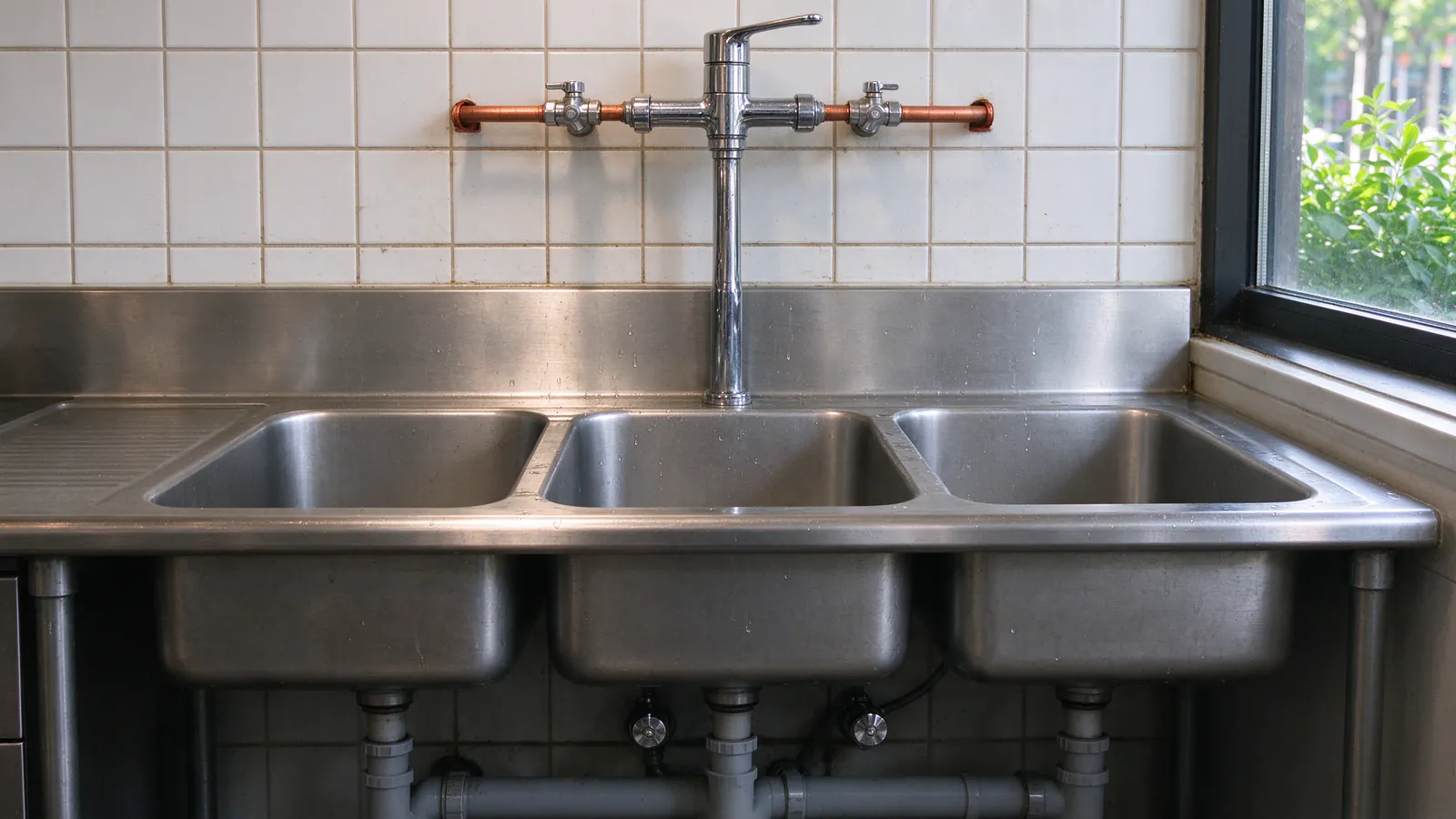
Every fixture is a meeting point: supply in through a stop valve and connector, drain out through a trap. That is where a repipe touches the drain system without replacing it. When a sink’s supply is reconnected, its trap and drain stay as they are.
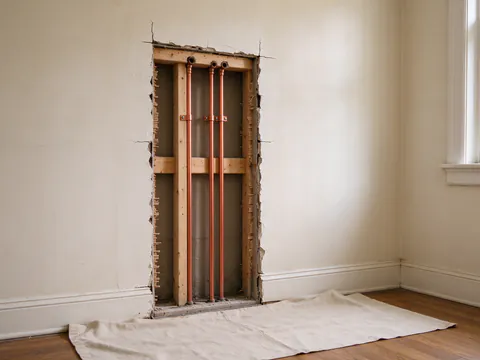
Openings are the other meeting point. When walls open for new supply pipe, the drain and vent lines inside the same cavities come into view. If they are in poor shape, that is useful to know while the wall is open, and the owner can bring in a drain contractor before the opening closes. The plaster walls guide covers how openings are planned and who closes them, and the permit guide explains the Express permit both kinds of work can fall under.
Matching a symptom to the system
| Symptom | System it points to |
|---|---|
| Weak flow upstairs, low pressure | Supply, or the service line; see the low water pressure guide |
| Brown or rusty water from the tap | Supply, the water heater or work on the street; see the rusty water guide |
| A leak that drips with nothing running | Supply, which is under pressure all the time |
| A leak only when a tub drains or a toilet flushes | Drain |
| Slow drains, gurgling, sewer smell | Drain, waste and vent |
| Backups in the basement floor drain | Building drain or sewer |
City work on the street
Homeowners report confusion over what City crews are replacing on the street and where the City’s responsibility ends. A water main project replaces the public water pipe under the street, which is supply. A lead service line replacement replaces the line from the main into the building, which is also supply, and the City’s programs stop at the house. Sewer work under the street is a different system altogether. None of them replaces the piping inside the building; the guide to repiping after a lead service line replacement covers how a new service line connects to the interior.
Where to start
Sort the symptom first: pressure, color or a constant drip points to the supply; slow drains, smells or a leak that appears only when water goes down point to the drains. If it is the supply, call the number on this page or use the estimate form to set up a walk-through. The galvanized pipes guide covers how old supply pipe fails and what a repipe involves.