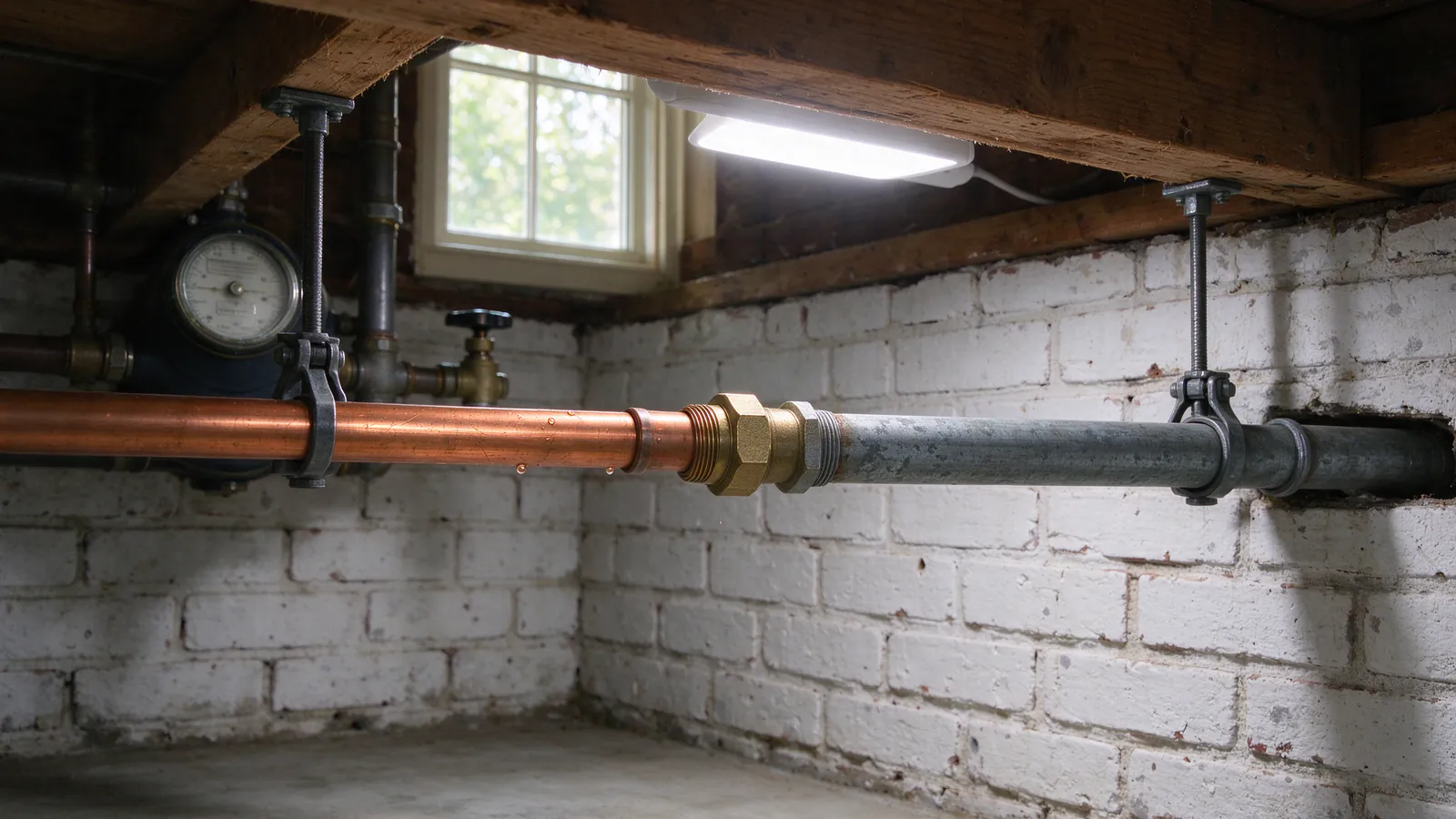
If the house still has galvanized steel supply pipe, a new copper service line feeds old, narrowed pipe, and a repipe is worth planning. If the interior is already copper in good condition, it may need only a clean connection at the new entry. Either way, the City’s programs stop at the basement wall. The interior is the owner’s to plan, on its own permit.
A lead service line replacement is a project from the street to the meter. Chicago Lake Repiping offers and manages both halves: lead service line replacement and whole-house repiping across Chicago and nearby Cook County suburbs, with the work done by licensed and insured plumbing contractors who hold a City of Chicago license for work inside the city. This guide is for owners whose service line has just been replaced, or is about to be, and who are deciding what to do with the pipe on the other side of the wall.
What a new service line changes, and what it does not
The service line is the buried pipe from the water main under the street to the building. Since January 2023, Illinois law has required that a lead service line be fully replaced, public and private sides, and Chicago’s replacements are copper. When it is done, water arrives at the basement through new pipe, with a meter installed if the building had none.
Everything after that point is the house’s own system. If the supply piping inside is galvanized steel, it still has the rust and scale that narrowed it over decades, and it still has the threaded joints where the wall is thinnest. A new service does nothing to that. The cornerstone guide to galvanized pipes in Chicago homes explains how that pipe fails.
There is a lead question as well, covered in the galvanized requiring replacement guide. EPA treats a galvanized service line downstream of lead as needing replacement because its rough inside wall can hold lead particles and release them later, even after the lead pipe is gone. The federal rule applies to service lines, not to interior plumbing, so this is an inference rather than a rule: the galvanized pipe inside a house that was fed by a lead service for decades was exposed to the same water. A water test, free from the City through 311, shows what reaches the tap. After any service line work, the City recommends flushing the lines and using filters certified to NSF/ANSI 53 for lead for the first three months.
A new entry point, meter and shutoff
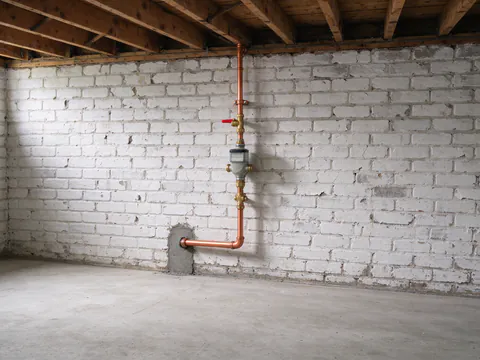
The new line does not always come in where the old one did. Homeowners report the City or a contractor bringing a new copper line through the foundation at a different spot, and older houses can show an old, cut-off intake next to the new one. Where the entry moves, three things follow:
- A new main shutoff and meter setting at the new entry, which become the starting point of the interior system.
- A reroute from the new entry to wherever the old interior main begins, which is new pipe in the basement.
- A decision about the old intake, which should be cut and capped so that nothing is left connected to it.
Homeowners report that the City brings the new line in and that the reroute, along with any wall, floor and landscaping repair, is left to them. One owner whose leaking line was replaced free said all they had to do was have the new copper ready in the basement to connect to. The main water line and shutoff page covers the valve and the interior main.
Upsizing the service line
Chicago’s plumbing code sets a minimum water service of 1 inch nominal. An old lead line can be smaller, and narrowed inside, so a replacement is the natural moment to think about size. A larger service helps when the house needs it: a two-flat, a second bathroom, or upper floors that lose pressure when another fixture runs. It does not fix narrowed pipe inside the house, which is why a new service and an old galvanized interior can leave the top floor no better.
Size also touches the money. The Homeowner-Initiated program waives the permit fees for a standalone full replacement. Owners in Hyde Park reported, in Inside Climate News coverage, that they did not qualify for the waiver because they upsized the line, and described the requirements as extremely confusing. Before choosing a larger size, ask the Department of Buildings how it will treat the application, and keep the answer in writing. In Oak Park, the Village asks for a water service upgrade worksheet with permit submittals and requires a new meter for an upgraded service.
Who pays for what
| Work | Who pays under City programs |
|---|---|
| Service line from the main into the building | Free under Equity or Breaks and Leaks; the owner’s contractor under Homeowner-Initiated, with City permit fees waived |
| Connection to the main | The City connects it under Homeowner-Initiated |
| Water meter | Free from the City if none is in place |
| Restoration outside | Agreed with the contractor before work starts; the City advises reviewing how much restoration will be performed |
| Reroute from a new entry to the old main | The owner |
| Interior piping | The owner; no City, state or federal program found pays for it |
| Wall, floor and finish repair inside | The owner |
The City’s Breaks and Leaks page draws the line plainly: leaks in interior plumbing, the piping more than two feet from where the service enters the house, are not covered by City programs. The lead service line cost guide has the full program details.
New service line, old pipes inside?
A walk-through from the new meter sets out the reroute, the interior pipe and the order of the two permits.
Sequencing two permits
These are two projects with two sets of permits. The service line runs through the City’s water permit process, and the Homeowner-Initiated waiver requires the fee waiver request to be standalone, not made with a home renovation or expansion. The interior repipe goes through the Department of Buildings’ Express Permit Program at $150 per dwelling unit for repair or in-kind replacement; any work on the meter needs a separate water permit. The Chicago repiping permit guide covers that application.
Three orders are possible:
| Order | Works well when | Watch for |
|---|---|---|
| Service line first, then repipe | The entry point and meter location may change | The interior stays galvanized until the second job |
| Repipe first, then service line | Interior pipe is failing now and the service line date is unknown | The new interior main must meet the future entry; agree the connection point first so nothing moves twice |
| Both close together, separate permits | One plan, one set of basement openings | Confirm with the Department of Buildings that the interior permit does not affect the waiver |
Whichever order you choose, plan both before starting either. The new service decides where water enters, and the interior design decides what it connects to.
When a repipe is worth it and when it is not
A repipe after a service line replacement makes sense when the interior is galvanized, when the upper floors lose flow with another fixture running, when rusty water shows up at the first draw, or when the house is about to be opened anyway. The low water pressure guide covers the static pressure and flow tests that tell interior restriction from service problems, and the rusty water guide sorts out discoloration.
It may not be needed when the visible interior pipe is copper, flow holds at the top floor, and the only work is connecting the new service cleanly. In between sits a partial repipe: the basement main and the first stretch of pipe from the new entry, leaving copper branches that are already sound. A Chicago homeowner’s account shows the risk of skipping the question: after a new line was connected to a triplex with old steel inside, the upper units lost water, and the building was replumbed the next week in 3/4 inch Type L copper.
Start with what is on the far side of the meter. The guide to identifying your water pipes shows how to check it, and a walk-through from the new meter to the top floor turns it into a scope. Call the number on this page or use the estimate form.