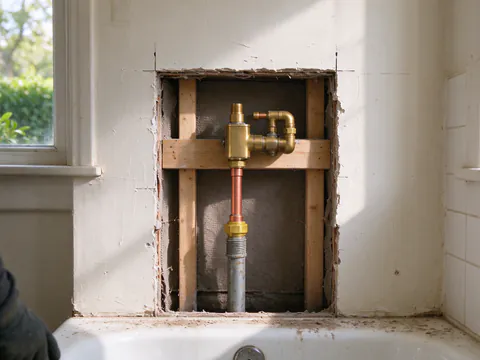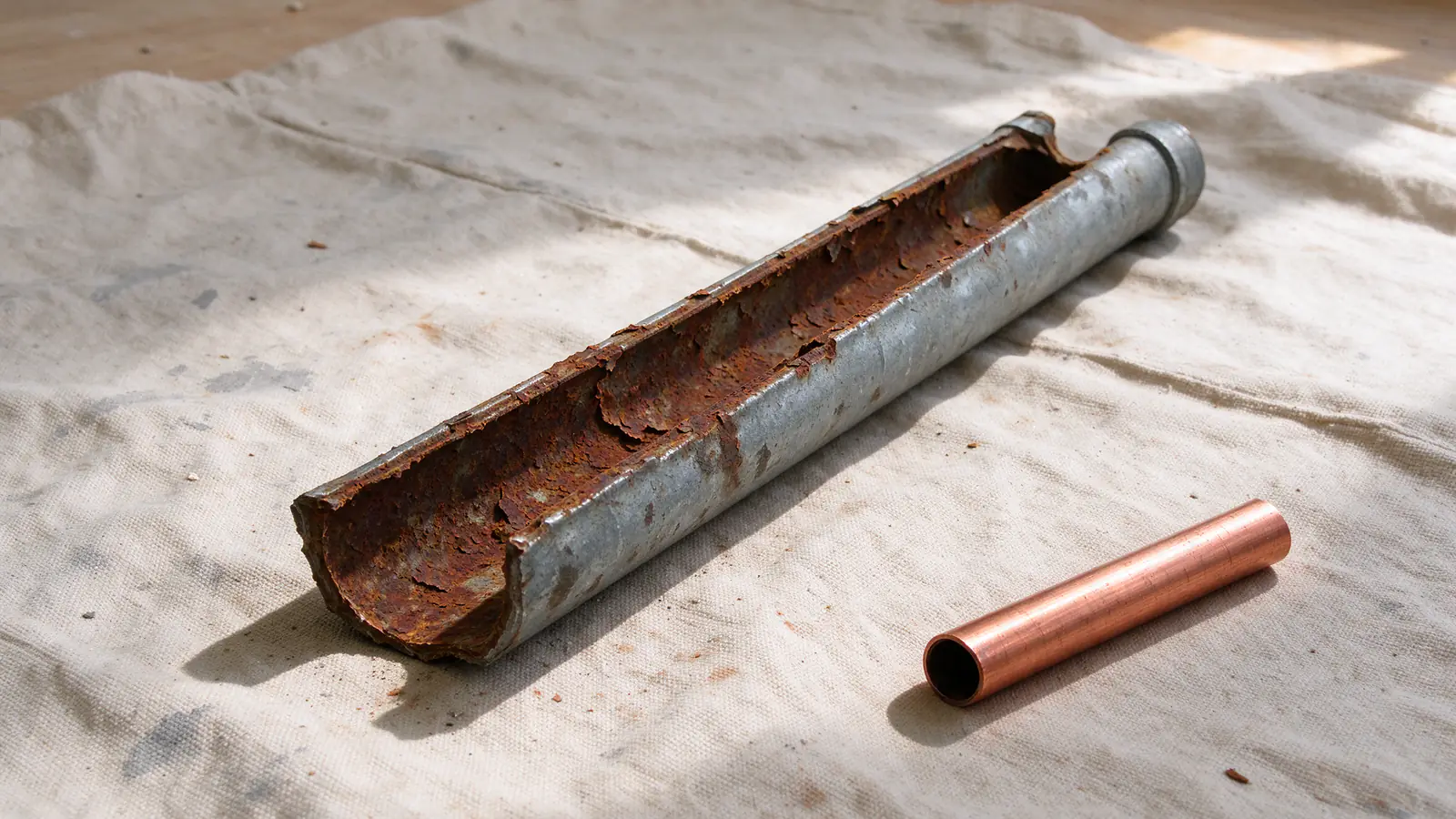
A spot repair fixes one failure, lining coats the inside of the pipe you already have, and a repipe replaces it. Which one fits depends on how much of the old pipe is still sound. A single leak with a local cause is a repair. A system corroding along its whole length is a replacement question, and lining sits between them with conditions that have to be checked for the specific pipe and the specific permit office.
Chicago Lake Repiping offers and manages partial repiping and whole-house repiping across Chicago and nearby Cook County suburbs, with the work done by licensed and insured plumbing contractors. This guide compares all three on how they work, so the choice can be made on the pipe’s condition rather than on which option sounds least disruptive.
Start with the leak, not the method
Every one of these choices starts the same way: finding out what failed and why. A leak in a ceiling can be a pinhole in copper, a rusted-through threaded joint in galvanized, a failed fitting from a past repair or a fixture connection. Each points somewhere different. Leak detection leads to the repair-or-replace decision, not the other way around.
The other evidence comes from the rest of the system. Static pressure read at a hose bibb, flow compared at the lowest and highest fixtures, the color of the first draw of the morning and the material of the pipe on each floor tell you whether the leak was a one-off or a symptom. The low water pressure guide explains why weak flow can come from the service line or a valve rather than the interior pipe, which matters here: neither lining nor a repipe fixes a bottleneck in the buried line from the street.
How a spot repair works, and its limits
A spot repair cuts out the damaged length and joins in new pipe. In copper, that means new copper sweated, brazed or pressed into place. In galvanized, it means cutting into steel that may be thin, especially at the threads, and making a transition. Where new copper meets galvanized that stays in service, the code calls for a brass converter or a dielectric fitting so the two metals do not corrode each other.
The repair is sound when the cause was local: a nail through a line, a joint that was overheated when it was made, a pipe rubbing on masonry. It is weak when the cause runs through the whole system. Galvanized steel corrodes from the inside along its full length, so a repair on one joint leaves the next one just as old. Homeowners report that plumbers are reluctant to repair or warranty small fixes on galvanized, because turning one fitting can crack the next. The copper pinhole leak guide covers how to tell a one-off pinhole from a pattern.
How pipe lining works, and what it depends on
Lining leaves the old pipe in the wall and adds a layer inside it. The pipe is drained and dried, the inside is cleaned of scale and corrosion, and a coating is applied that cures to form a barrier on the inner wall. The appeal is clear: the pipe stays where it is, so fewer walls may need to open. Homeowners who ask about lining describe avoiding wall openings as the reason.
What the coating can do depends on what it is applied to:
- Remaining wall. A coating covers the inside surface. It does not add strength to a wall that is already thin, and threaded galvanized is thinnest at the threads.
- The bore. Scale has to come off for the coating to bond, and the coating itself takes up some of the opening. A pipe that has already lost much of its bore starts from a small opening.
- Joints, bends and branches. Each fitting is a change in shape the cleaning and coating have to reach.
- What stays old. Valves, fixture stops and the fixtures themselves are not lined. Homeowners report that old faucets and stops threaded to galvanized can fail when the pipe around them is worked on.
- Access. Sections are isolated and opened at their ends to clean and coat them, so lining still needs access points, though it may need fewer.
None of these rules lining in or out for a given building. They are the conditions to check, and they decide whether the coating is going onto sound pipe or covering a problem.
How a repipe works, and what it costs in disruption
A repipe takes the old supply pipe out of service and replaces it with new material, either across the whole building or within a defined part of it. Inside the City of Chicago, the replacement is copper, since the code’s table of water distribution materials has no entry for PEX. In suburbs whose code allows it, PEX is an option too.
The cost is in openings and restoration. New pipe has to reach every fixture, so walls open at fittings and turns, and the quote should list each opening and who closes it; the plaster walls guide explains how that is planned. In return, nothing old stays in the supply path except what the scope leaves on purpose, valves and shutoffs are new and labeled, and the system is pressure tested before any wall closes. A typical Chicago-area range for a single-family whole-house repipe is $5,000 to $15,000+, with fully finished two- and three-story homes running higher; the Chicago repipe cost guide breaks it down.
A partial repipe is the middle path among replacements: one bathroom, one riser or the hot side alone, with the boundary between new and old written on the quote.
Not sure which one your pipes need?
A walk-through from the meter shows the pipe on every floor and what each option would leave in service.
Matching the option to the situation
| Situation | What fits | What to watch |
|---|---|---|
| One leak, clear local cause, good flow and clean water elsewhere | Spot repair | Correct the cause, not just the hole |
| Repeat leaks in one run or one bathroom, rest of the system sound | Partial repipe of that run | The quote should say where new pipe ends and old pipe stays |
| Galvanized throughout, weak flow upstairs, brown first draw | Whole-house repipe | Openings and restoration scope |
| Copper with pinholes in several places | Assessment of cause, then partial or whole repipe | Velocity, chemistry and workmanship, not just the material |
| Owner wants to avoid opening walls and the pipe still has sound wall | Lining is one option to evaluate | Permit acceptance, coating listing, joints and bore |
| Leak on the buried service line | Separate project: lead service line replacement | Its own water permit in Chicago |
Questions to ask before choosing lining
If lining is on the table, get these answers in writing:
- Which permit does the work go under at this address, and who inspects it?
- Which standard is the coating listed to for contact with drinking water?
- How is the pipe cleaned, and how is the remaining wall thickness judged before coating, especially at threaded joints?
- What is the inside diameter after coating, compared with the original pipe?
- What happens at valves, fixture stops and fixtures that are not lined?
- Which sections cannot be lined, and what is done with them?
- How is the finished system pressure tested?
- Which openings are still needed, and who closes them?
Ask a replacement quote the matching questions: material and type, the openings and who closes them, the shutoffs, and the water-off windows. Then the two can be compared on the same terms.
Where to start
Gather the leak history, a static pressure reading and what the pipe is made of where it leaves the meter. Those three things narrow the choice before anyone quotes. Call the number on this page or use the estimate form to set up a walk-through; the galvanized pipes guide and the guide to whether repiping is worth it cover the larger decision.