PEX repiping in Chicago suburbs turns on one question before any other: does the plumbing code at the address list it? Chicago Lake Repiping offers PEX repipes in Cook County suburbs whose code allows cross-linked polyethylene for water distribution, and copper everywhere else, with licensed and insured plumbing contractors doing the work. Inside the City of Chicago, PEX is not an option.
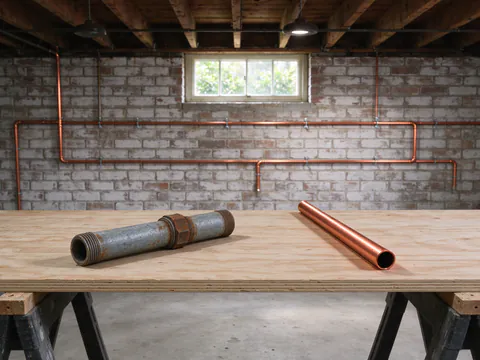
Where it is allowed, PEX changes how a repipe is laid out and how it reaches the fixtures. Flexible tubing can follow paths rigid copper cannot, and a central manifold can feed every fixture on its own line. It also brings its own rules about heat, sunlight, support and fittings. Where the old pipe is steel, the galvanized pipe replacement page covers the cutover and scale; this page covers where PEX is legal, how the choices between tubing types, fittings and layouts work, and where a PEX system meets the copper service at the meter.
Where PEX is allowed, and where it isn’t
Chicago’s plumbing code lists the materials allowed for water distribution in Table 18-29-605.5: brass, copper and galvanized steel. PEX has no entry, and new and replaced supply pipe has to be a listed material, so every repipe inside the city is a copper repipe. The guide to whether PEX is allowed in Chicago explains the history.
The Illinois Plumbing Code, 77 Illinois Administrative Code 890, is different. Its Table A of approved water distribution materials includes cross-linked polyethylene, with listed joints, and the code says PEX shall be installed according to the tubing maker’s instructions. Suburbs that adopt the state code without changing that table inherit the option:
- Oak Park adopts the current Illinois Plumbing Code, and the amendments it publishes touch restroom counts and water-saving fixtures, not water distribution materials.
- Skokie enforces the 2014 Illinois Plumbing Code without local amendments.
- River Forest allows PEX for water distribution in residential buildings above grade only, covered by at least 5/8-inch drywall or other approved protective material.
- Unincorporated Cook County keeps the 2014 state code in its entirety.
Other suburbs wrote copper into their own codes. Evanston’s ordinance replaces the state table with one that lists copper for new water distribution, and Park Ridge’s code bars cross-linked polyethylene for water distribution and calls for Type L copper above ground. Those are what the codes say; the rule for each address is confirmed with the building department before work starts. A mailing address can name a nearby town even when a property sits in another jurisdiction, so the check goes by the property itself.
River Forest’s rule shapes design in a practical way. A basement main below grade stays copper, and the PEX starts above it, behind drywall or another approved cover.
What happens on the first visit
The visit starts at the meter and the main shutoff in the basement, where the service line comes in. The buried service line beyond the wall matters here as much as anywhere: a lead or galvanized service is a separate project, covered in lead service line replacement. Static pressure is read at a hose bibb, and flow is compared at the lowest and highest fixtures with two taps open, so a restricted interior can be told apart from low supply.
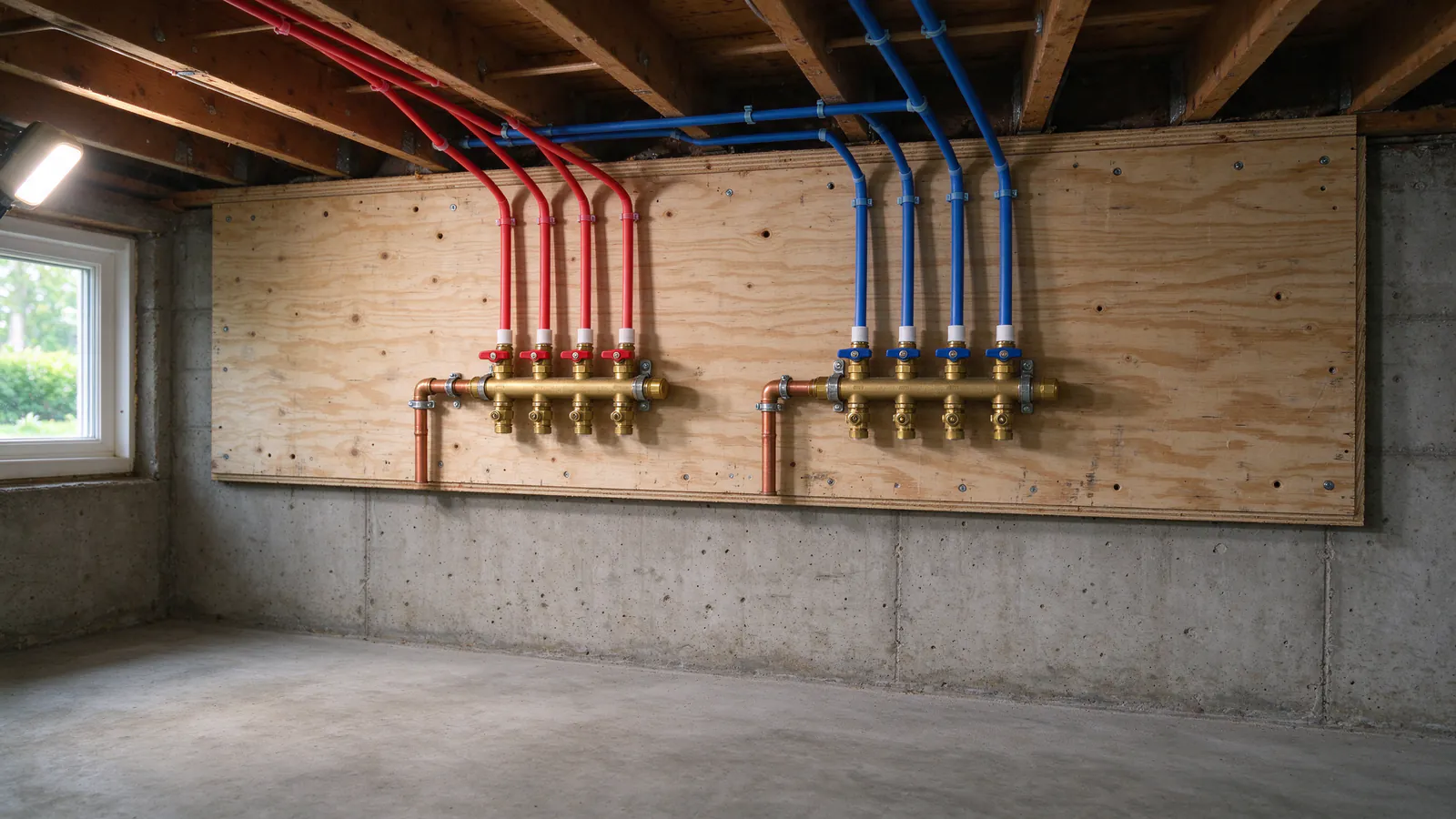
The rest of the walk-through looks for what a PEX layout needs: a wall near the water heater where a manifold could hang, paths from the basement to each bathroom and the kitchen, and the walls, ceilings and tile in the way. It also notes whether the electrical system is bonded to the metal water pipe, because that path goes away when metal pipe is replaced with plastic.
PEX-A or PEX-B
Both are cross-linked polyethylene, listed under the same ASTM standards, F876 and F877. They differ in how the cross-linking is done. PEX-A is cross-linked as the tube is formed, and it comes out more flexible, with a memory of its shape: where the maker allows it, a kink can be restored with heat rather than cut out. PEX-B is cross-linked after it is formed and is stiffer, which some installers prefer for straight runs.
The tubing type ties to the fitting system. PEX-A is the tubing cold-expansion fittings are built around. PEX-B is joined with crimp or clamp rings over insert fittings. Neither tube is better in every house; the installer’s system, the routes and the maker’s instructions decide.
Expansion, crimp and clamp fittings
The state code lists several joint types for PEX, and each works differently.
A cold-expansion joint, ASTM F1960, stretches the end of the tube and a reinforcing ring with an expansion tool, slides the fitting in, and lets the tube shrink back onto it. The fitting sits inside a stretched tube, so the bore through the joint stays close to the tube’s own. In a cold basement the shrink-back is slower, which affects how soon a joint can be tested. F2080 fittings use a cold-expanded tube with a metal compression sleeve.
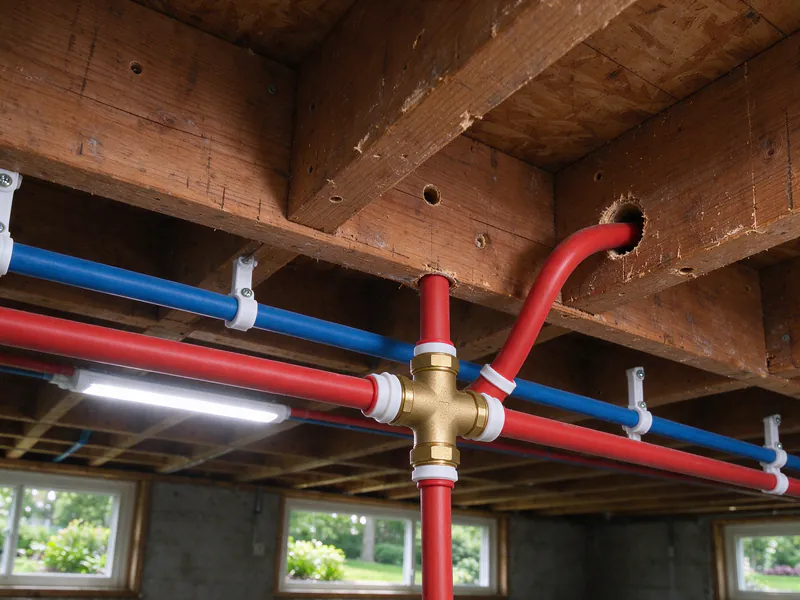
A crimp joint, ASTM F1807, slides a copper ring over the tube and a barbed insert fitting and compresses it with a crimp tool, checked afterward with a go/no-go gauge. A clamp joint, ASTM F2098, does the same with a stainless steel ring tightened by a ratcheting tool. Insert fittings sit inside the tube and narrow the bore at every joint, which is one reason lines to showers and laundry can be sized up in a crimp or clamp system. Listed push-fit fittings, ASSE 1061, are also allowed.
Brass fittings and valves in any of these systems must meet NSF 372, a weighted average lead content of 0.25% or less.
Manifold or trunk-and-branch
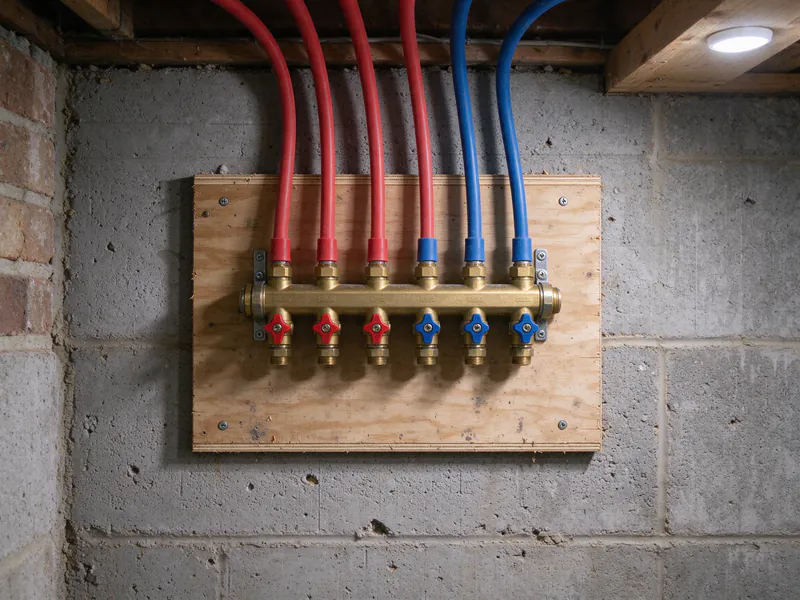
A home-run manifold system runs a separate line from a central manifold to each fixture, with a shutoff for every line at the manifold. Fittings concentrate at the two ends of each run, and one fixture opening affects the others less. The cost is tubing: more of it, and a longer path for hot water to some fixtures.
Trunk-and-branch distribution mirrors a copper layout, with a main line through the house and branches tapping off it. It uses less tubing and fits where routes are tight, but puts more fittings inside walls. A hybrid is possible too: a trunk to a small manifold serving one bathroom group.
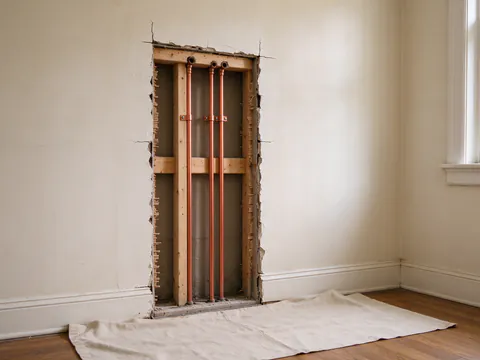
Flexible tubing can be fished through stud bays the way an electrician pulls cable, which can mean fewer openings than rigid pipe. It does not mean none. Fire blocking, top plates, drilled framing that does not line up, and the plaster keys behind lath all get in the way, and every fixture still needs its connection made in an open wall. The plaster walls guide covers how openings are planned and closed.
Is PEX allowed at your address?
A walk-through confirms the code for the property and sketches the layout before any price is set.
Heat, sunlight and support
PEX has limits that copper does not. Sunlight degrades it, so tubing is kept covered on site and is not left where daylight reaches it. Heat matters: tubing makers set distances from a gas water heater’s flue and other heat sources, and the connection at the heater is made with metal pipe or a listed connector for the length the maker requires.
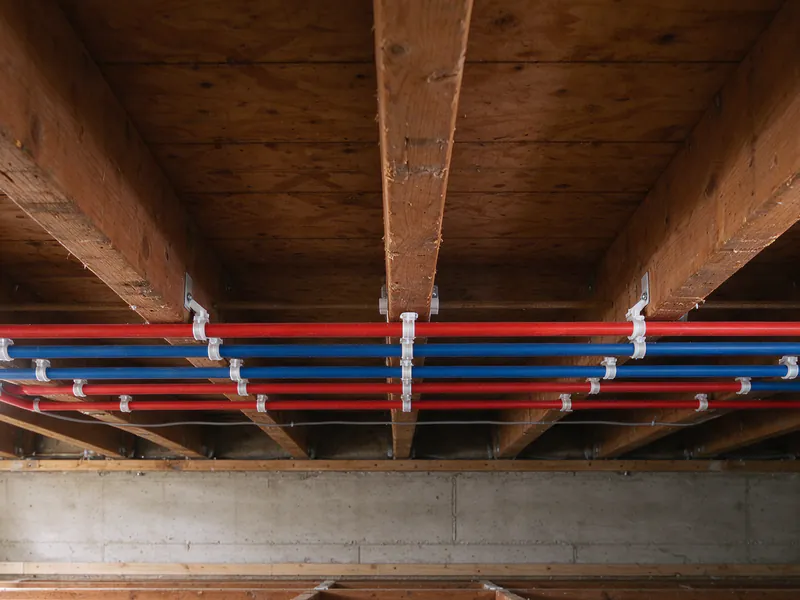
PEX also grows in length when hot water runs through it, far more than copper does. Runs need slack at turns and hangers that let the tube slide, or the pipe bows and the fittings take the strain. Tubing sags between supports, so it is hung closer together than copper, at the spacing the code and maker set. Where it passes through metal studs or near sharp edges, it is sleeved or protected.
PEX tolerates freezing better than copper but is not immune, and the state code keeps distribution pipe out of exterior walls and attics unless it is protected from freezing. New material alone does not fix freeze exposure.
Where PEX meets the copper service
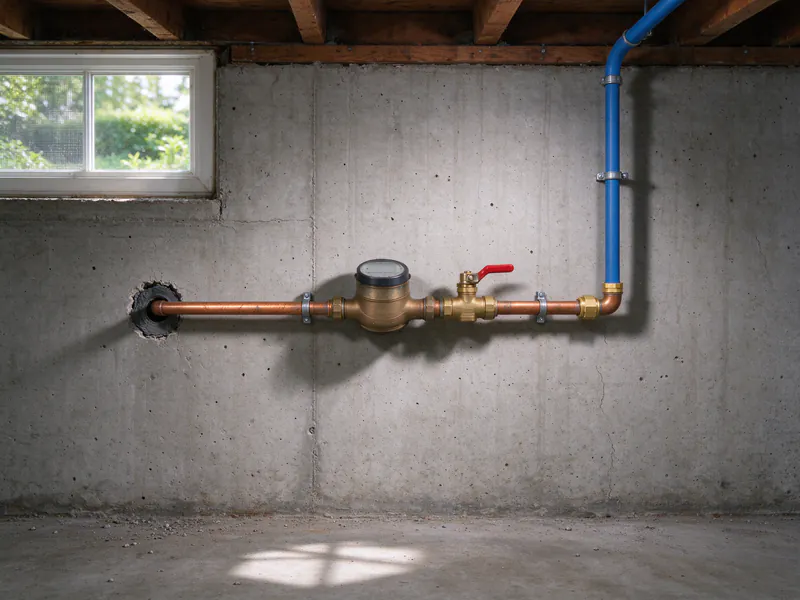
A PEX design starts after the main shutoff. The meter setting and the shutoff stay in metal, held rigid, and a lead-free brass transition fitting joins the copper to the PEX. That point is also where the electrical bonding question lands: if the building’s electrical system is bonded to the water pipe, replacing metal pipe with plastic can break the path, and an electrician should confirm the grounding and bonding after the work.
Replacing a lead service line is its own job with its own permit, and Illinois law has required full, not partial, lead service line replacement since January 2023. Where the service and the interior are both due, planning them together puts the new main shutoff in the right place for the new line.
Plumbers who decline PEX, and what it costs
Homeowners report confusion over whether PEX is allowed in their suburb, with plumbers, neighbors and online threads giving opposite answers, from a county-wide ban to a village-by-village choice. One homeowner who asked a village building department was told PEX is allowed there, and also that plumbers decline to install it. Others report inspectors who “don’t care for it” yet pass it as “not against code.” Confirming the code for the address with the building department before the quote settles the question.
PEX tubing costs less than copper as material, and flexible routes can mean fewer openings. The manifold, the fitting system, the transitions and the walls themselves still shape the price. The typical Chicago-area range of $5,000 to $15,000+ for a single-family whole-house repipe covers all materials, with fully finished two- and three-story homes running higher; the PEX vs copper guide and the Chicago repipe cost guide go through the drivers.