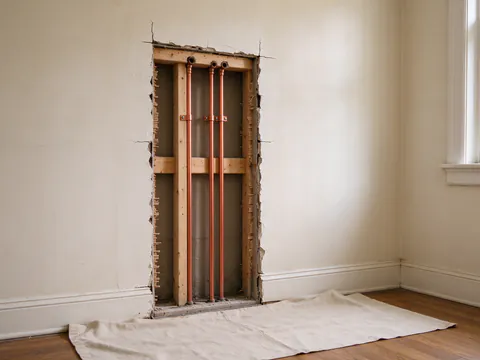
A partial repipe in Chicago replaces a defined part of the water supply piping and leaves the rest in service. Chicago Lake Repiping manages partial repipes in houses, two-flats and condo units across Chicago and nearby Cook County suburbs: one bathroom’s branches, one riser, the hot side only, or one floor. Licensed and insured plumbing contractors do the work. A partial job is only as good as its boundary, so this page is mainly about where that boundary goes and what sits on the other side of it.
The words matter here. After a partial repipe, the building still has old pipe, and some of it still feeds the new pipe. A quote, a listing or a conversation with a buyer should never describe it as repiped. The whole-house repiping page covers the full version, and the guide to galvanized pipes in Chicago homes explains how steel systems age.
Where the boundary goes
There are four shapes a partial repipe can take, and each puts its edges in a different place.
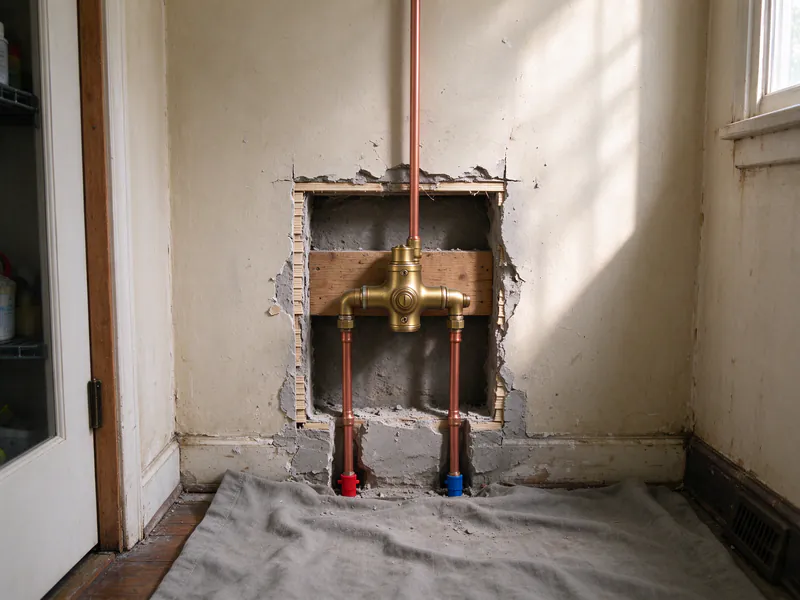
One bathroom. The branches from the riser or trunk to that room’s sink, toilet and tub or shower are replaced. The boundary is the tee where the branch leaves the riser. This is the shape a remodel produces, because the walls are already open.
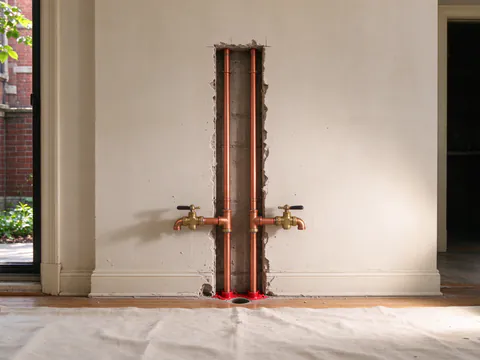
One riser. A riser is the vertical pipe that feeds fixtures stacked above one another. Replacing one riser means new pipe from its base at the basement main to its top, and its branches where agreed. In a Chicago building, riser work under an Express permit needs a contractor’s drawing of the entire riser showing its size and material, and the permit fee rises by $150 per dwelling unit the riser serves. The riser replacement page covers multi-story stacks.
Hot side only. Hot water distribution from the water heater out to the fixtures is replaced, and the cold side stays. Warm water speeds corrosion in steel, so the hot side can narrow first. The cold side keeps its own restrictions. In a two-flat with one heater per unit, the hot side of one unit can be done on its own.
One floor. The branches and trunk sections on one level are replaced. The risers that pass through that floor to the floors above, and the main below, stay old.
What happens on the first visit
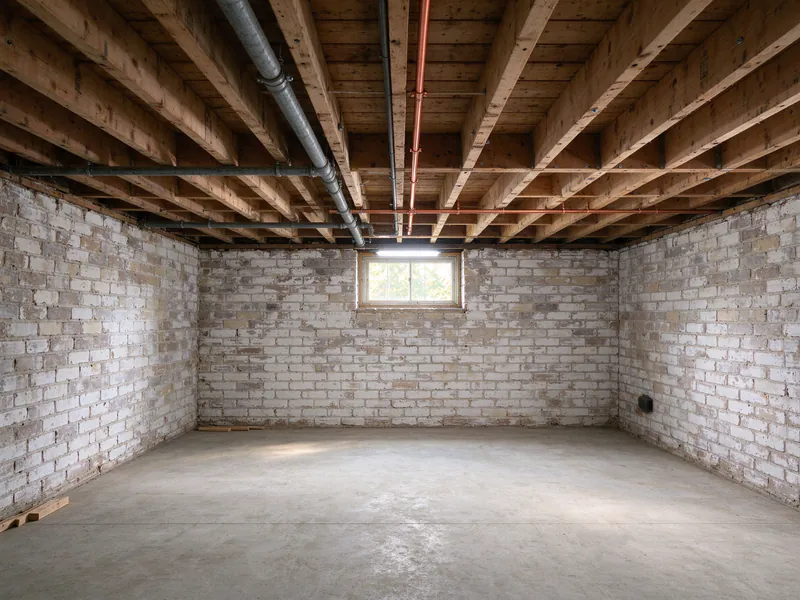
The visit starts at the meter and the main shutoff in the basement, even when the problem is on the third floor, because a partial repipe only works if the pipe upstream of it can deliver. Static pressure is read at a hose bibb with nothing running, and flow is compared at the lowest and highest fixtures with two taps open. Those numbers show whether the restriction sits in the area being replaced or somewhere between it and the street.
The walk-through then traces the path from the meter to the problem area. Every foot of old pipe on that path still sets the flow the new section can get. It marks where each boundary would fall, what the pipe is at that point, whether a valve could go there, and which walls or ceilings would open to reach it.
Every boundary is a transition
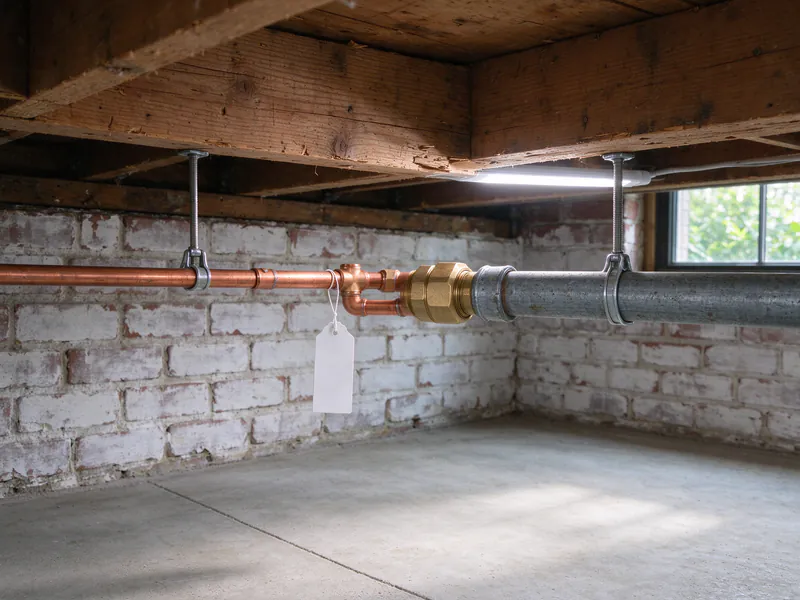
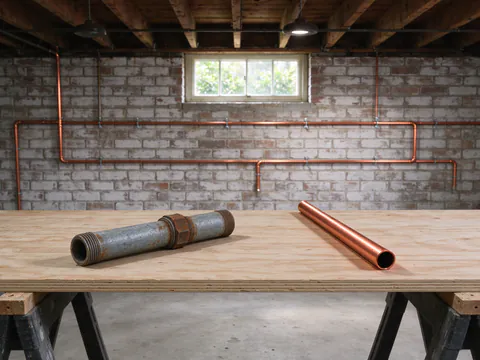
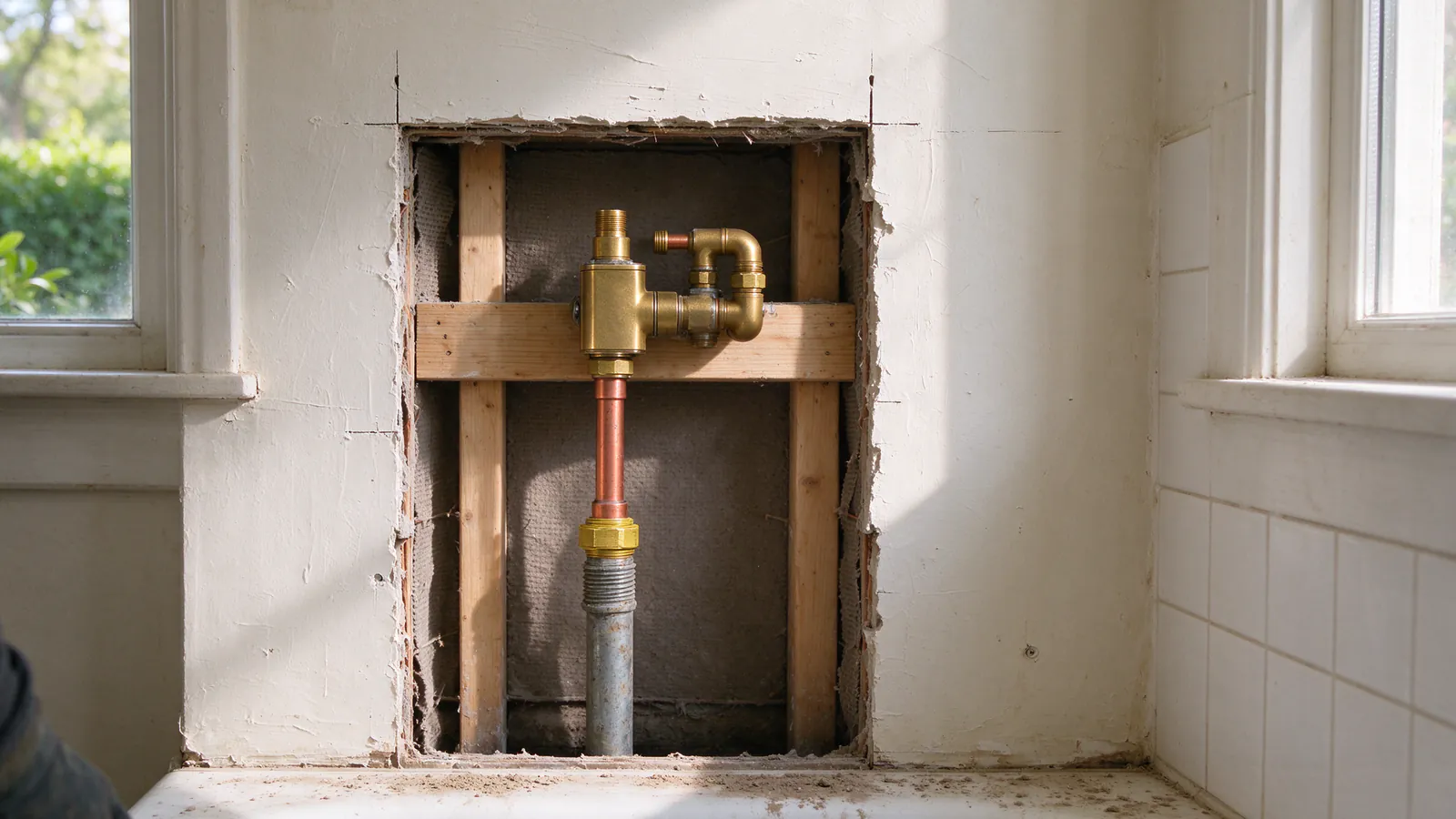
Each place where new pipe meets old is a joint the quote has to name. Where new copper meets galvanized steel, Chicago’s code, section 18-29-605.21.1, requires a brass converter or a dielectric fitting, because copper and steel touching in water corrode each other at the joint. Where new copper meets sound existing copper, the joint is soldered or pressed like any other; the copper repiping page covers the joining methods. Old steel at a boundary may have to be cut back past a rusted fitting to pipe that can take a sound connection.
Testing changes too. The new section is pressure tested before walls close, on its own. Once it is reconnected, the old pipe on the other side of the boundary feels the cutover: the water goes off, comes back, and loose scale moves. Nearby retained joints are checked for weeps after the water is restored, the new lines are flushed, and the aerators and fixture screens are cleaned. Each transition is a place to look first if a leak shows up later, so its location goes on the quote and on a label at the pipe.
When a partial repipe is a poor bet
The plainest case is new pipe downstream of narrowed steel. Replace a bathroom’s branches in copper while the riser and main feeding them are scaled galvanized, and the shower gets no better, because the restriction sits upstream of everything new. The low pressure guide shows how that gets checked before anyone cuts.
Other cases are quieter. If the old pipe is so fragile that every cut cracks a neighboring joint, the boundary keeps moving and the partial job grows anyway. If the rest of the system is in the same condition and will need the same work soon, each stage repeats the openings, the cutovers, the permit and the disruption. And if the real bottleneck is the buried service line, no interior scope fixes it.
A partial repipe makes sense when the trouble is local and the pipe upstream is sound: a copper house with one bad run, a remodel with the walls already open, an area clearly worse than the rest, or a budget that has to be staged with the next stage planned. The galvanized pipe replacement page covers staging on steel systems.
Leaking joints and spot repairs
A single leaking joint is a repair question before it is a repiping one. On copper, a failed joint can be cut out and remade. On galvanized, threads are the thinnest steel in the system, and a joint rusted tight can crack the next one when it is turned. Homeowners report that plumbers are reluctant to repair or warranty small fixes on galvanized lines, and that a corroded joint in a ceiling is hard to get taken at all when the plumbers they are referred to only do large jobs. A short partial replacement back to sound pipe, with a transition at each end, is the steadier fix. The guide to repiping, lining and spot repair compares the options.
Want to know where the boundary should go?
A walk-through traces the pipe from the meter to the problem area and marks each transition.
Condo units
Inside a condo unit, a repipe is partial by nature. The branches from the building’s risers to the unit’s fixtures can be replaced; the risers serve other units and are planned with the association. In Chicago, an Express permit for work on condominium property, including work inside an individually owned unit, needs an approval letter signed by someone authorized to act for the association.
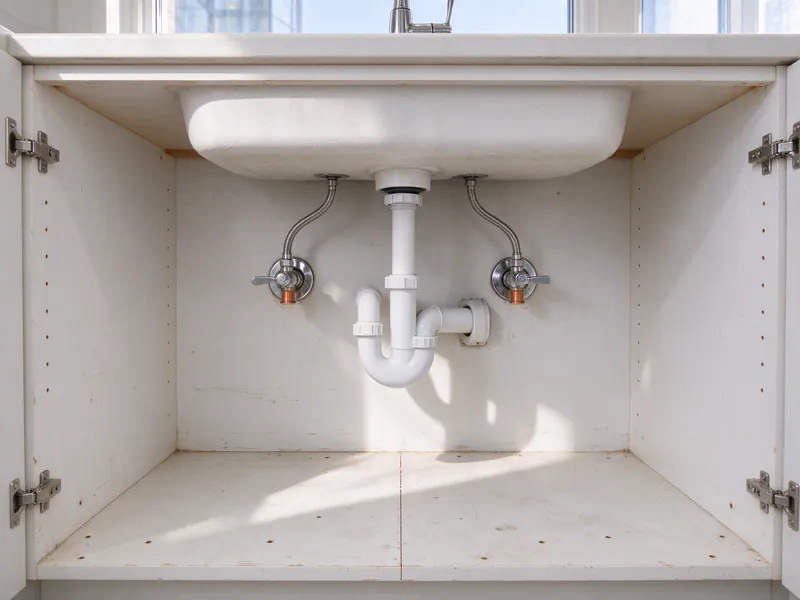
The building’s rules shape the job. A riser shutoff can take water from every unit on the stack, so it is scheduled with management. Homeowners report buildings that ask for the plumber’s certificate of insurance and license before any work, and shutoff rooms that management keeps locked. The Express permit also bars new or expanded penetrations through walls and floors that separate units, corridors or stairways, and new pipe passing through existing openings has to be firestopped. Steel stubs under a kitchen or bathroom sink make a small scope of their own: replaced with copper and new shutoffs while the faucet is off, with a listed transition where they meet pipe still in the wall.
Partial lead service lines are not allowed
The word partial applies only to interior piping. Since January 2023, Illinois law has required full replacement of lead service lines, not partial. If the line from the street is lead, it is replaced end to end as its own project with its own permit; see lead service line replacement.
Permit and price
Inside Chicago, a partial repipe in kind goes through the Express Permit Program at $150 per dwelling unit, with $150 more per unit when risers are replaced and $75 when a water heater is replaced. A layout change moves the job to plan review, which starts with a $600 non-refundable deposit. There is no published range for partial work. The price follows the fixture count, the number of openings, access through basements, closets and chases, the material and the number of transitions. The Chicago repipe cost guide shows how partial and whole-house scopes compare, and the permit guide covers the application.