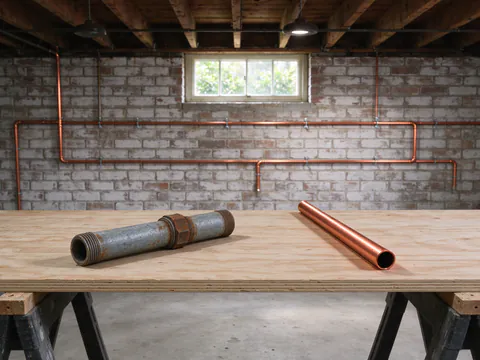
An Oak Park repipe starts with a choice that a repipe a few blocks east, in Chicago, does not offer. The Village enforces the Illinois Plumbing Code, 77 Illinois Administrative Code 890, and that code’s table of materials for water distribution lists PEX alongside copper, so an Oak Park owner can actually weigh one against the other.
Oak Park homeowners can bring that decision to Chicago Lake Repiping, which offers and manages whole-house repiping, galvanized pipe replacement and lead service line replacement in the Village. Licensed and insured plumbing contractors do the work and pull the Village permit.
PEX or copper in an Oak Park house
The Village’s code amendments for permits applied for after January 1, 2026, change the state plumbing code in only two places, restroom fixture counts and WaterSense fixtures. Nothing in that document touches water distribution materials. The amendments are a highlights document, though, and the Village notes that other ordinances may apply, so the material on an Oak Park quote is confirmed with Development Services for the address before work starts.
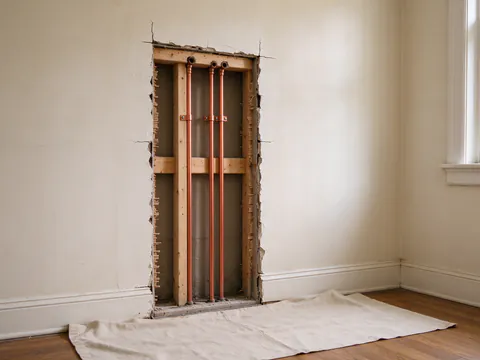
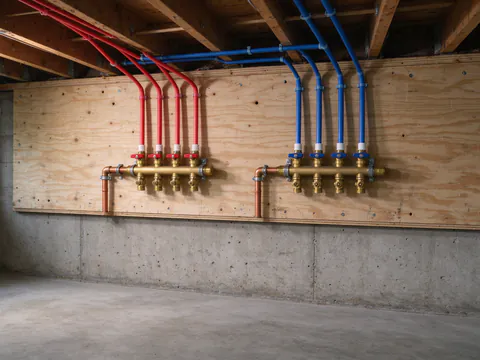
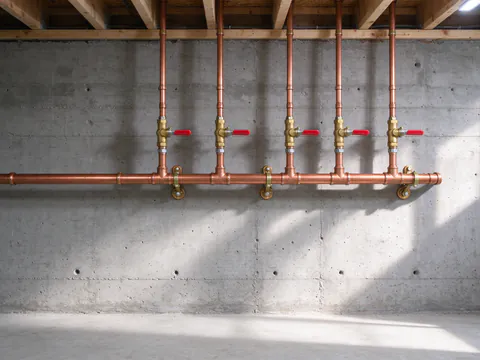
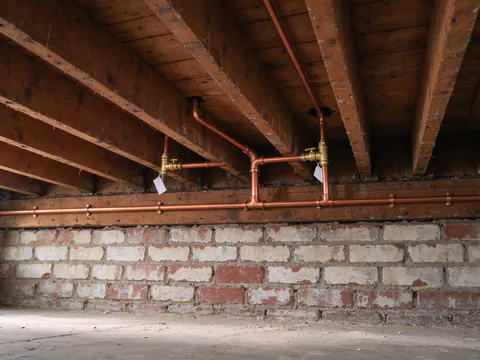
Where both are allowed, the choice turns on the house rather than on a general ranking. PEX is flexible tube, so a run can be pulled through a closed plaster wall from one opening to the next instead of being cut and fitted at every turn. It can be laid out trunk-and-branch like copper or as home runs from a manifold, one line per fixture. Copper is rigid, so it needs more access at turns and fittings, but it handles exposed basement runs well and joins cleanly to copper that is staying. Copper costs more than PEX as material. Labor, wall openings and patching move the total as much as the pipe does, which the PEX vs copper guide covers.
One detail travels with any change from metal pipe to plastic. If the old metal water piping was part of the house’s electrical grounding or bonding, removing it changes that path, so an electrician should confirm the grounding before the job closes. Homeowners also report plumbers who decline PEX even where a village allows it; a copper quote in Oak Park is a preference, not a code requirement.
Permits and fees at Village Hall
Repipe permits in Oak Park come from the Village’s Development Services, not from the City of Chicago, and the fees follow the Village’s own schedule. The current construction fee schedule lists $100 per unit for a standalone plumbing alteration, repair or replacement of piping or fixtures, and $175 per system or unit for installing a new or replacement plumbing system. Which line a whole-house repipe falls under is the Village’s call when the permit is filed. Work started without a permit carries a penalty of at least $300 or twice the permit cost.
Service line work is separate again. The Village’s water service schedule lists a $250 permit for repairing or replacing a water service, waived for emergency leak repairs, and an upgraded service needs a new meter purchased from the Village: $475 for 5/8 inch, $520 for 3/4 inch and $635 for 1 inch, with a 1-inch tap at $950. Permit submittals include a Water Service Upgrade Worksheet. The repiping cost guide sets these next to Chicago’s Express permit fees.
Weighing PEX against copper in Oak Park?
Get both options scoped for the same house, with every wall opening listed.
Oak Park’s pre-war houses and where their pipe runs
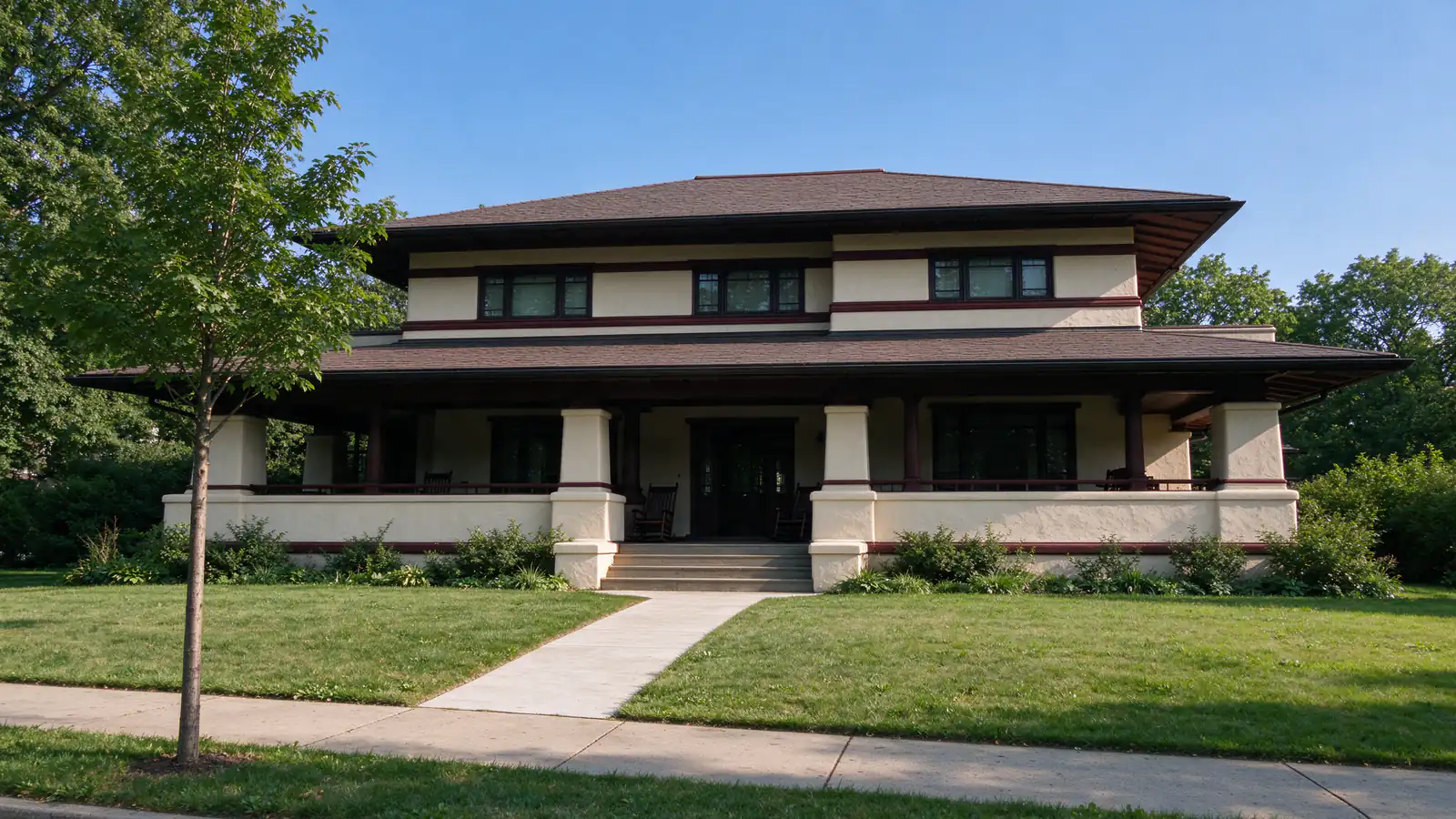
Oak Park’s housing is older than Chicago’s as a whole. By the Census Bureau’s American Community Survey, as compiled by the Chicago Metropolitan Agency for Planning, 59.3% of the Village’s 24,872 housing units were built before 1940, against 38.8% citywide, and the median year built is 1938. About 39.7% are detached single-family houses, while 21.4% sit in buildings of 5 to 19 units and 25.4% in buildings of 20 or more, so a repipe here can mean a single house or a courtyard building with risers. The Frank Lloyd Wright-Prairie School of Architecture Historic District and the Ridgeland-Oak Park Historic District hold blocks of early twentieth-century houses with plaster walls and original trim, where every opening has to be planned and closed well; the plaster walls guide explains how.
Age is context, not proof. A 1910s house near Unity Temple may have been repiped in copper decades ago, and a later house may still have steel. Where galvanized steel remains, it corrodes from the inside, and the restriction shows first at the fixtures furthest from the meter.
The water itself is Chicago’s. The Village’s water quality report says Oak Park’s Lake Michigan water arrives already treated from Chicago’s Jardine Water Purification Plant, with the same corrosion control, so the source does not change the material decision.
The service line under the parkway
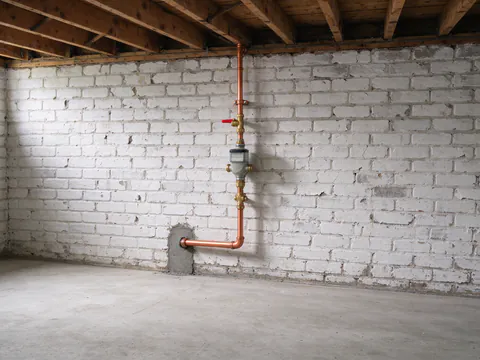
The Village publishes a service line inventory at leadfreeoakpark.com. Its water quality report says lead or galvanized lines are replaced with copper when the Village replaces the water main, or when an owner elects to replace the private side. Illinois has required full replacement of a lead service line, public and private sides, since January 2023, so a partial swap is no longer an option. New one- and two-family houses must get a new water service, a new meter and a new parkway buffalo box. A repipe that ends at the main shutoff can go ahead first, but if the service line is also coming out, planning both lets the new interior pipe meet the new service at a meter sized for it; see repiping after lead service line replacement.
River Forest and Forest Park next door
River Forest, west across Harlem Avenue, also follows the state code but adds its own limit. Its code amendments allow PEX for water distribution in residential buildings only above grade and covered by at least 5/8-inch drywall or another approved protective material. Read plainly, that leaves out exposed basement runs and pipe below grade, so a River Forest job can be PEX in the finished walls and copper in the basement. The Village confirms how the rule applies to each house. River Forest’s 4,680 housing units are 87.7% owner-occupied, and 42.2% were built before 1940.
Forest Park, to the south and west, has a different housing shape: 47.8% of its units predate 1940 and 23.0% sit in buildings of two to four units, including 15.1% in two-unit buildings. For a Forest Park two-flat, the plan is the one on the two-flat repiping page, with the material and permit confirmed with the Village for the address.
How an Oak Park repipe is planned
The first visit begins at the meter and main shutoff. Static pressure is read at a hose bibb, and flow is compared at the lowest and highest fixtures, which separates a supply problem from a problem in the pipe inside the walls. From there the walk-through follows the main to the water heater and each fixture group and marks where pipe can climb.
If the owner is choosing between materials, both are scoped against the same openings so the quotes compare like for like. Plaster is opened in clean rectangles at fittings and turns, and tile walls are reached from the back where possible. New pipe is pressure tested before walls close, the system is flushed after cutover, and aerators and screens are cleaned. Shutoffs are labeled. The quote lists every opening and who closes it, where any old pipe stays, and the working days and water-off windows; water is off only during cutovers. Across the city line, Austin follows Chicago’s copper-only rule.