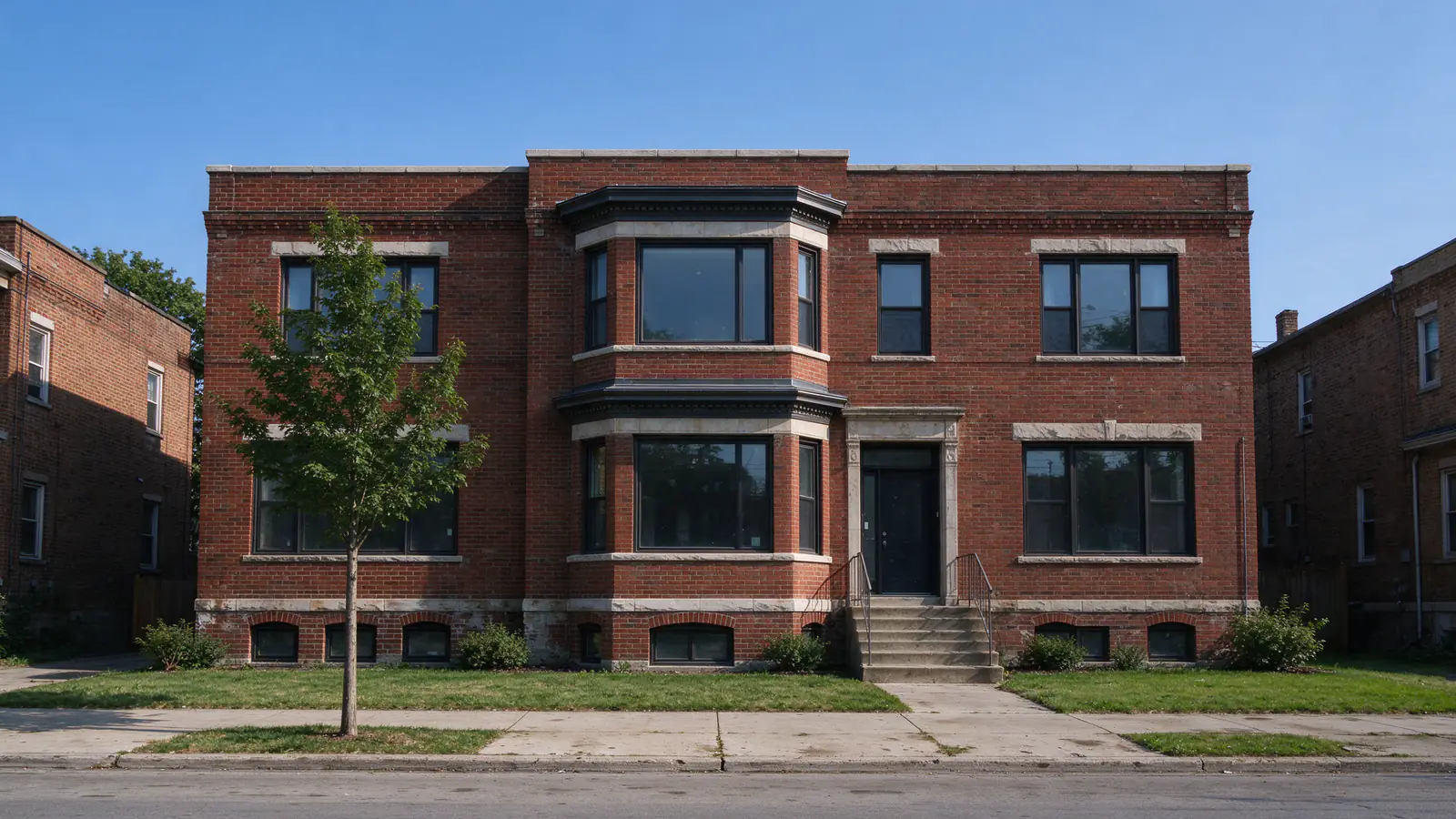
Austin is a neighborhood of two-flats as much as single-family houses. Of its 38,718 housing units, 46.8% sit in buildings of two to four units, and only 26.4% are detached single-family homes, by the Census Bureau’s American Community Survey as compiled by the Chicago Metropolitan Agency for Planning. That shape decides how a repipe here is planned: in a two-flat, one water service and one basement main can feed two households, so the job covers the shared piping as well as each apartment, and the shutoffs are planned for both units at once.
Chicago Lake Repiping offers and manages whole-house repiping, two-flat repiping and lead service line replacement in Austin, with the work done by licensed and insured plumbing contractors who hold the City of Chicago plumbing license the permit requires.
Why an Austin two-flat repipe starts in the basement
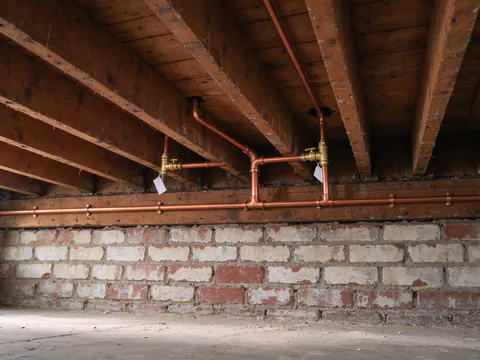
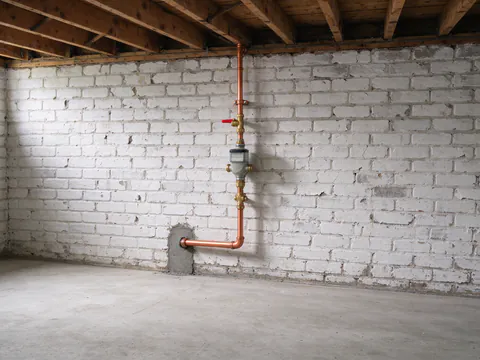
In a two-flat, water enters through one service line, passes the meter and the main shutoff, and runs along the basement as a main. Risers leave that main for the first-floor and second-floor units. Everything upstream of the risers is shared: if the main is corroded galvanized steel, both apartments feel it, and the second floor feels it more because it sits highest and furthest along the run.
Owners of two- and three-flats ask why their upper units get poor pressure. A main sized for one household and narrowed by internal corrosion can be the cause. So can an old service line, a partly closed valve at the meter or a failing pressure-reducing valve, which is why the walk-through reads pressure and flow before anyone prices new pipe. Repiping the apartments while keeping a choked main, or a lead service line that is the real bottleneck, leaves the upstairs shower where it was.
How an Austin job runs
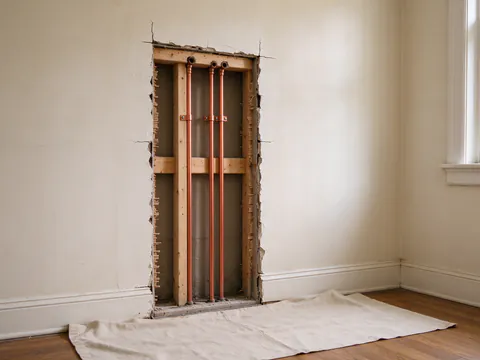
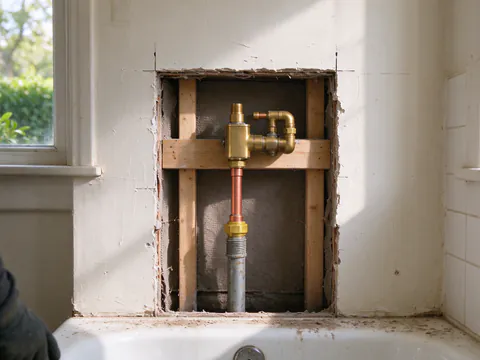
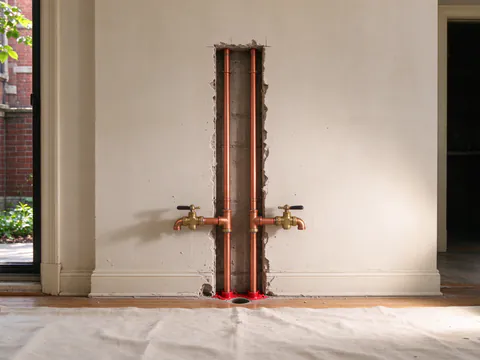
The first visit starts where the service line comes through the basement wall. The material of that line is noted, because a lead or galvanized service line is a separate project with its own City water permit. From the meter and main shutoff, the walk-through follows the main to each riser and each unit’s water heater, counts the fixtures in both apartments and notes where the pipe can climb: stacked kitchens and bathrooms, closets, existing chases.
The repipe then runs through the City’s Express Permit Program, which covers replacing existing piping in kind: $150 per dwelling unit, $150 more per unit when the risers in an existing chase are replaced, and $75 when a water heater is replaced. Work that alters or extends the system goes to plan review instead. New copper is run, connected, pressure tested and flushed before walls close, and the City inspects it. The cutover of the shared main is the one moment both units are without water; the quote should name it in advance. The two-flat repipe cost guide covers how the price is built.
Austin’s housing, piping and permits
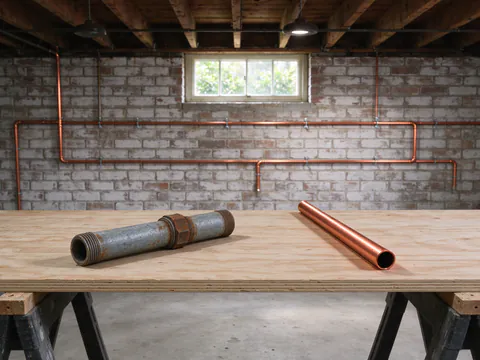
Austin’s housing is older than the city’s as a whole. Its median year built is 1941, and 49.5% of its units predate 1940, against 38.8% citywide. Its designated Chicago Landmarks include houses on Midway Park and Race Avenue, such as the Beeson House and Coach House and the Schlecht House, but the bulk of the stock is the two-flats and small apartment buildings that hold nearly half its units. Building age is context, not proof: a 1920s two-flat that was rehabbed may already have copper, and the basement shows which it is. Where steel supply pipe remains, it corrodes from the inside, and the galvanized pipes guide explains how to tell.
The City’s own records show the work happening here. Since January 2019, 32 Chicago building permits for Austin addresses describe replacing water supply piping in so many words, and since the Express Permit Program launched in late 2023, 57 Austin plumbing permits include repair or replacement of piping. Fourteen Austin permits in that period include replacing plumbing risers in existing chases, tied for the most of any community area. These are permit counts, not a measure of how many buildings need a repipe, but they place Austin second among Chicago community areas for permitted water-piping work.
Water comes from Lake Michigan through the City’s Department of Water Management, the same supply as the rest of Chicago, with corrosion control added to coat pipe interiors. Lead is a separate question from galvanized interior pipe. Lead-Safe Chicago says a house or two-flat built before 1986 has a high likelihood of a lead service line unless it was replaced during a renovation, and Illinois law has required full replacement of a lead line, public and private sides, since January 2023. The City’s lead programs bring new copper to the basement wall but do not pay for the piping inside, so an Austin owner facing both is planning two linked jobs; see repiping after lead service line replacement.
Own a two-flat in Austin?
Get both units and the shared main into one plan, starting from the meter and main shutoff.
Where Austin meets Oak Park
Austin sits on Chicago’s western edge, and Oak Park begins at the city line. The two look alike from the sidewalk, but the rules change. In Austin the Chicago Plumbing Code applies, its table of water distribution materials has no entry for PEX, and the contractor needs a City of Chicago plumbing license. In Oak Park the Village follows the Illinois Plumbing Code, which lists PEX, and permits come from the Village’s own desk at its own fees. A quote that offers PEX for an Austin address is a quote to question; the PEX in Chicago guide explains why.
Why the work is planned this way
The shared main comes first because it serves both units, and replacing branches upstairs while keeping a corroded main leaves the bottleneck in place. The service line is checked before anything is priced because it can be the real restriction and because a City program may replace it. The quote lists every wall and ceiling opening in both apartments and who closes them, since homeowners report that wall repair is their biggest worry and that some quotes leave it out. The Chicago repipe cost guide shows what sits inside the price, and a partial repipe is the narrower option when only one unit or one riser is affected.