Evanston wrote its own list of approved pipe for drinking water, and for new work the list comes down to copper. Ordinance 29-O-22, adopted April 25, 2022, replaced the state code’s Table A with a City version, so repiping in Evanston, IL is planned as a copper job before anything else is decided.
From the City’s own lake plant to the courtyard buildings near the lakefront, Evanston gives a repipe its own set of conditions. For Evanston owners and associations, Chicago Lake Repiping offers and manages copper repiping, riser replacement and lead service line replacement, carried out by licensed and insured plumbing contractors.
What Evanston’s Table A allows
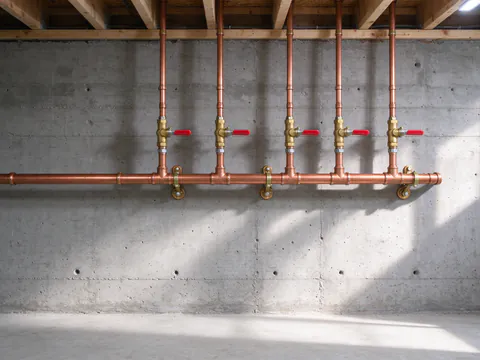
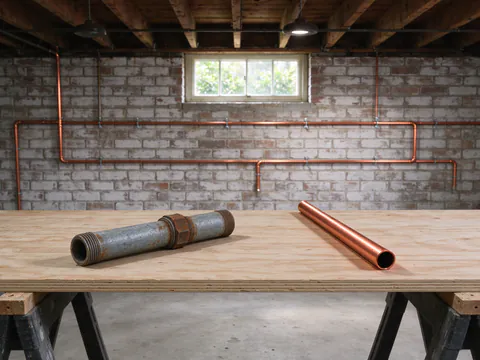
Evanston adopts the 2014 Illinois Plumbing Code by reference, with local amendments in Title 4, Chapter 5 of the City Code. The amendment that matters for a repipe is the materials table. The City’s table of approved water distribution pipe lists three entries: brass pipe, copper or copper-alloy pipe, and galvanized steel pipe, with brass and galvanized marked for repairs only. A note sets Type L as the minimum copper above grade. Underground, the water service list calls for Type K copper at minimum, and the service must be at least 1 inch.
PEX, CPVC, polypropylene and PE-RT are not on the distribution list. That puts Evanston closer to Chicago than to Skokie or Oak Park, which follow the state table. Codes are amended over time, so the rule is confirmed with Building & Inspection Services for each address before work starts.
For the owner, the practical effect is that the decisions shift from which material to how the copper is run and joined. Type L is the minimum above grade, so lighter Type M tube is not an option for that work. Evanston also amended the state code’s section on copper tube joints, so the joining method is confirmed with the City along with the material. Copper’s higher material cost compared with PEX is built into every Evanston repipe, since the code has made that choice.
Water from the City’s own lake plant
Oak Park and Park Ridge buy treated water from Chicago. Evanston treats its own. The City’s water treatment plant draws from Lake Michigan and can produce up to 108 million gallons a day, and it also supplies Skokie, the Northwest Water Commission and the Morton Grove-Niles Water Commission. The City’s water quality report covering 2025 lists an average hardness of 134 mg/L as calcium carbonate, about 7.8 grains per gallon, and a 90th-percentile lead result of 8 parts per billion against an action level of 15.
Those numbers describe the water system, not any one house. Hardness at that level affects water heaters, aerators and fixture cartridges more than it affects new copper, so it is a reason to check the heater during a repipe rather than a reason to change the plan. A lead result is a citywide sampling statistic; it says nothing about whether a given address has a lead service line.
Timing a repipe with the lead line pilot
Evanston runs a Private-Side Lead Service Line Replacement Incentive Pilot. It reimburses $2,500 toward replacing the private side of a lead or galvanized service line and waives the City permit fees, about $450. The work must be done by a licensed plumber under a lead service line replacement permit, with an inspection, and the pilot is first come, first served, limited to 50 participants. Its capacity changes as owners enroll, so confirm it is open.
The City also describes a Homeowner-Initiated program in which it replaces the public side, from the main to the buffalo box, while the owner’s plumber has two days to complete the private side. Illinois has required full replacement of a lead service line, public and private, since January 2023. Neither program pays for pipe inside the house. If the interior piping is also due, scheduling it with the service line means one trench, one meter change and one round of water shutoffs; repiping after lead service line replacement walks through the order, and the lead service line cost guide covers the service side.
Planning copper and a lead line in Evanston?
Get the interior repipe and the service line scoped together, from the meter out.
Evanston’s buildings, from courtyards to lake houses
Evanston’s housing leans further toward apartment buildings than Oak Park’s or Skokie’s. In the Chicago Metropolitan Agency for Planning’s compilation of American Community Survey data, 31.7% of its 34,095 housing units are in buildings of 20 or more units and 17.7% in buildings of 5 to 19, against 32.5% detached single-family homes. 40.3% predate 1940, and the median year built is 1953.
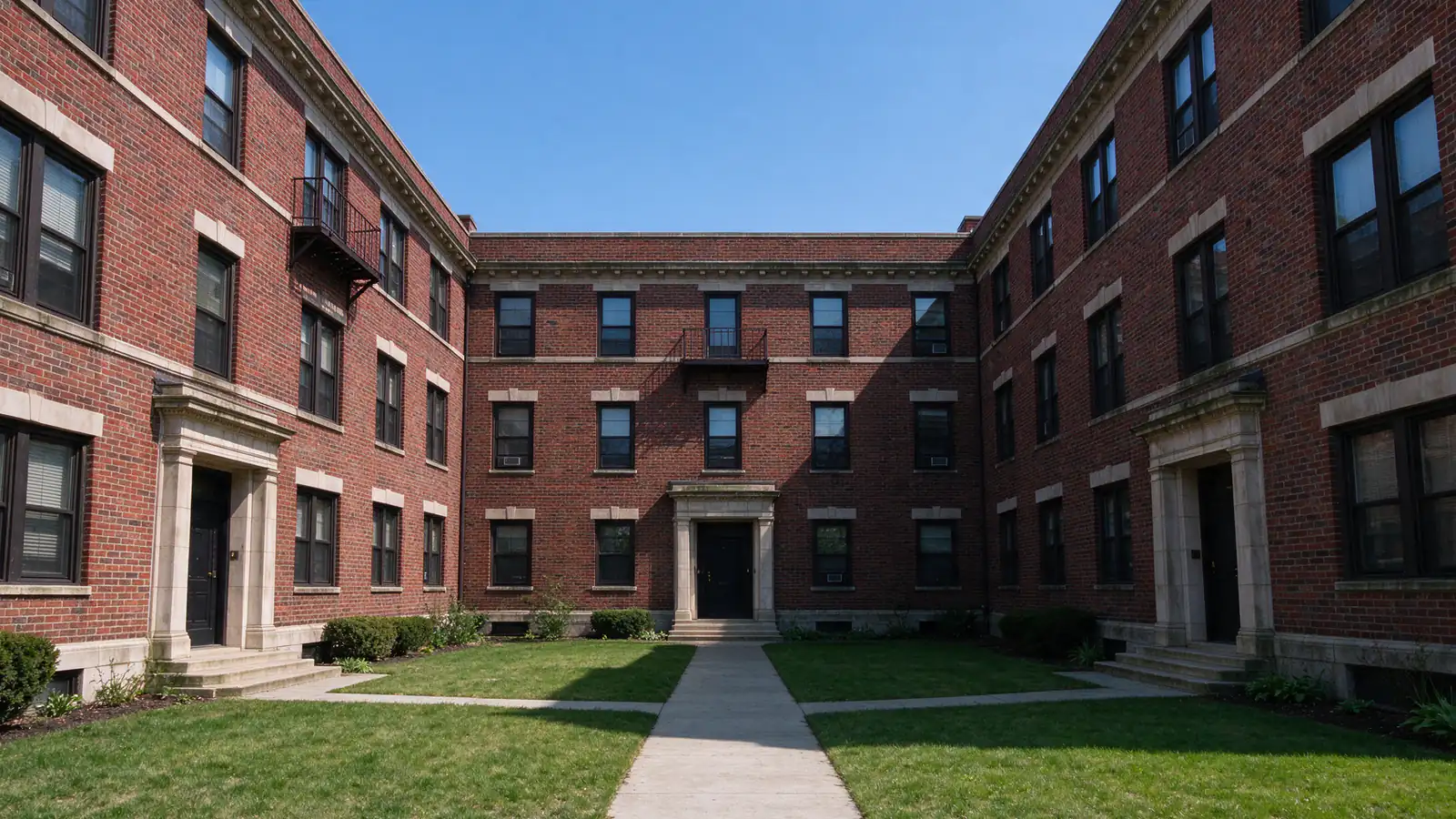
That spread means two kinds of jobs. In a courtyard building like Colonnade Court or the Castle Tower Apartments, water climbs through risers, and replacing them is a building project with an association or owner deciding when each stack is shut off; see riser replacement and commercial repiping for larger buildings. In the houses of the Lakeshore, Ridge and Northeast Evanston historic districts, the work looks more like a whole-house repipe through plaster walls. Age is context in both: a building may have been repiped long ago, and the basement shows what is there. Where galvanized steel remains, it narrows from the inside.
How an Evanston job runs
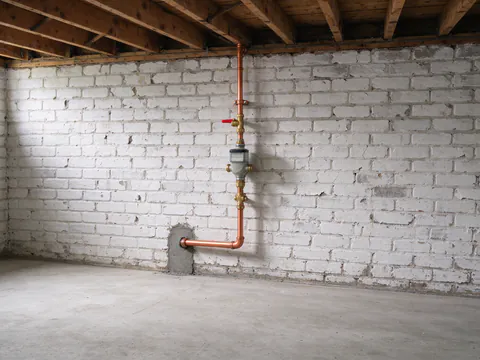
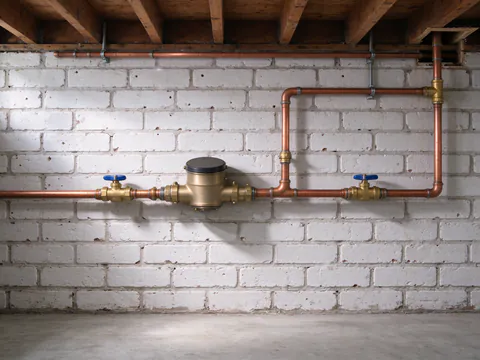
Evanston’s plumbing permits run through Building & Inspection Services, and the permit type and fee for an interior repipe are settled for the address at filing. On site, the meter and main shutoff come first: that is where the service line’s material shows, and where the walk-through begins. Pressure is read static at a hose bibb, and flow at the lowest fixture is compared with flow at the highest.
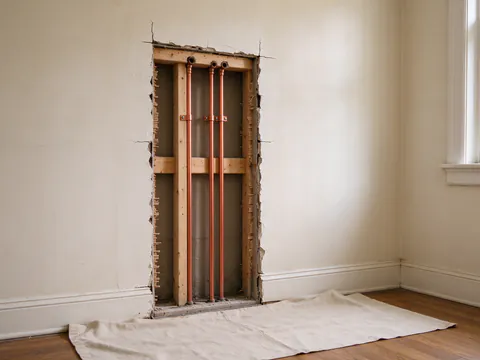
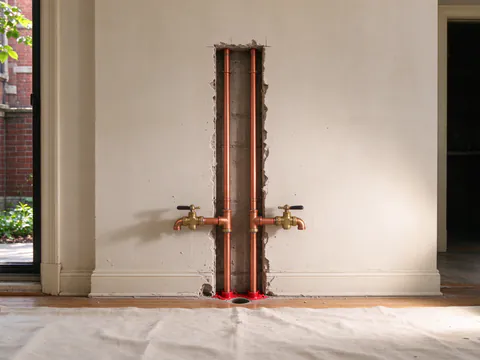
Copper then goes in through clean rectangular openings in the plaster at fittings and turns, with tile walls approached from the back where possible. It holds a pressure test while walls are still open. After cutover the lines are flushed, aerators and screens cleaned and shutoffs labeled, and water goes off only for cutovers. The written quote names each opening and who closes it, which old pipe stays, how many working days the job takes and when the water-off windows fall; the repiping cost guide explains what goes into the price.
Wilmette, north along the lake
Wilmette, just north, also runs its own Lake Michigan water plant, and its Board’s policy has been to fund full lead service line replacement entirely with Village money, though Village minutes record that the long-term funding policy is being revisited. What Wilmette does not share is Evanston’s copper table: Wilmette adopts the Illinois State Plumbing Code under its own Village Code, and whether it limits materials is confirmed with the Village for the address. South and west of Evanston, Skokie drinks Evanston’s water but follows the state materials table.