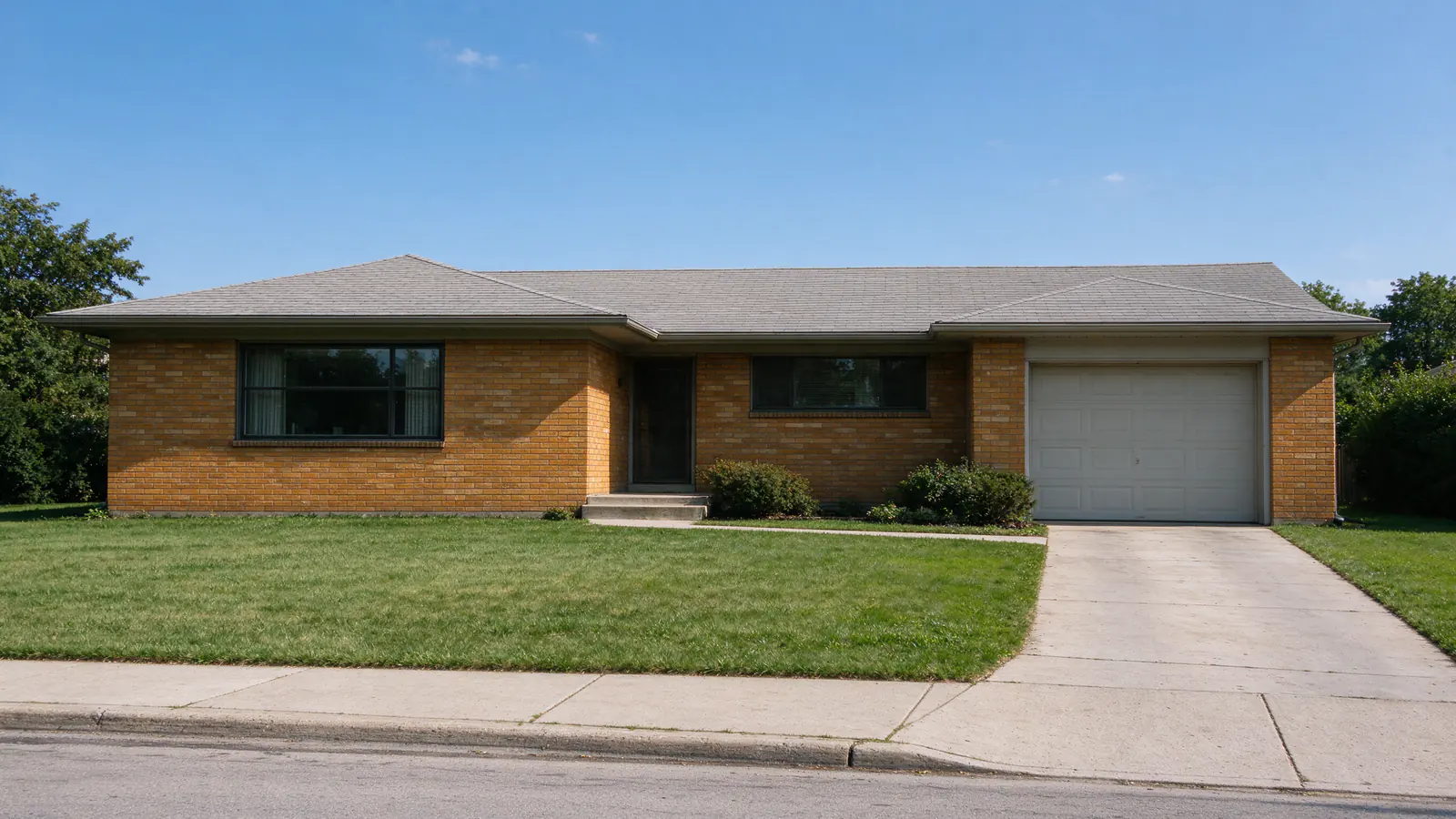
Skokie’s housing came after the war, which sets up a different repipe from the pre-war bungalows and two-flats closer to the lake. Nearly two-thirds of the Village’s 25,159 housing units, 64.7%, went up between 1940 and 1969, and only 6.3% are older; the median year built is 1959 in American Community Survey data compiled by the Chicago Metropolitan Agency for Planning.
Repiping in Skokie, IL, also comes with a choice of material and a lead service line program that caps what an owner pays. Chicago Lake Repiping plans and manages that work across the Village, from whole-house repiping and PEX repiping to lead service line replacement, and licensed and insured plumbing contractors carry it out.
What a mid-century Skokie house may be piped with
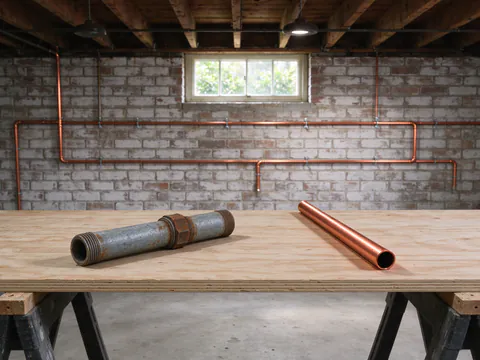
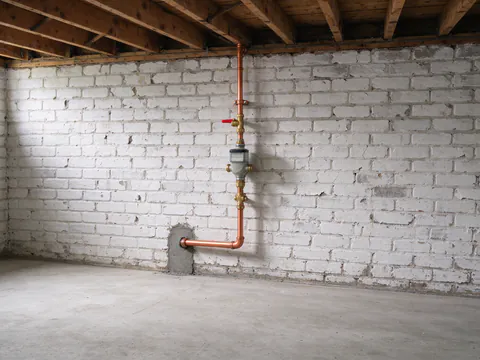
A house from the 1940s through the 1960s sits across the years when water supply pipe changed. Some were built with galvanized steel, some with copper, and a house may have been repaired in sections since, so a basement can show steel on the main and copper on a newer bathroom branch. The pipe is identified at the meter and along the basement ceiling; the guide on how to identify your water pipes shows what to look for.
The age of a house is a reason to look, not a finding. Galvanized steel corrodes from the inside, and the scale it builds narrows the bore until the far fixtures lose flow; the galvanized pipe replacement page covers that failure. Copper from the same decades can be sound or thin-walled depending on the water and the installation. Where only one branch is steel, a partial repipe is the narrower option, and the quote says exactly which old pipe stays.
What Skokie’s code leaves open
Skokie adopts the 2014 Illinois Plumbing Code by reference in Section 22-151 of the Village Code. Ordinance 14-9-C-4089 deleted the Village’s former local plumbing amendments, and the only local plumbing section left concerns WaterSense fixtures. A Village staff report from July 2022, prepared for a code update, says the Village must adopt the state plumbing code by reference and enforce it without local amendments. The Village’s list of adopted codes shows the state plumbing code with no amendments.
The state’s table of water distribution materials lists PEX and copper, so both are code-legal in Skokie, along with CPVC. That sets Skokie apart from Chicago, Evanston and Park Ridge, whose codes leave PEX off their lists of distribution materials. The material on a quote is still confirmed with Building & Inspection for the address, which also handles the permit and the inspection.
PEX or copper on a single floor over a basement
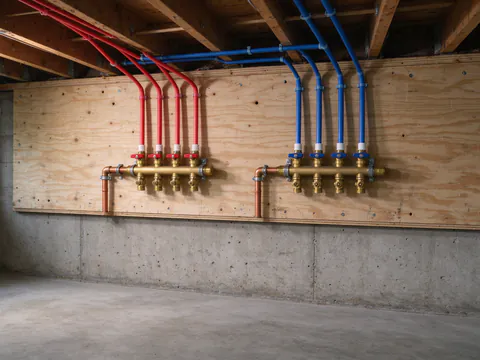
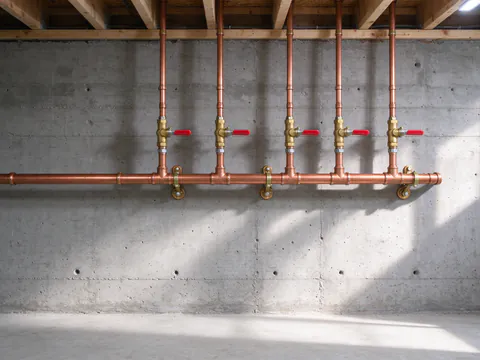
Where a Skokie house is one or one-and-a-half stories over a full basement, the main and most branches can run in the open basement ceiling, and the pipe only has to climb a short way to each fixture. That access narrows the gap between materials. Copper, joined with press fittings or solder, handles exposed basement runs well and ties cleanly into copper that is staying. PEX, joined with crimp or expansion fittings, can be pulled up through a closed wall from the basement with fewer openings above, and a home-run layout from a manifold gives each fixture its own line.
Copper is the pricier material of the two, though labor and patching can shift a quote as much as the pipe itself. If the old metal piping was part of the house’s electrical grounding, a switch to plastic means an electrician should confirm the grounding. The PEX vs copper guide sets the tradeoffs side by side.
Repiping a post-war house in Skokie?
Get PEX and copper scoped for the same house, with the openings listed.
Skokie’s lead line cost share
Skokie’s Lead Service Line Replacement Cost-Share Program caps a private owner’s cost for replacing the private side of a lead service line at $3,090, adjusted each year, and lets the owner finance that share over 15 years at a low interest rate on the water bill. Since December 1, 2025, the program has also been open to households that sign up through the Village’s interest form. The Village owns the line from the main to the buffalo box; the owner owns it from the buffalo box to the meter. When a lead service line is repaired in an emergency, the full line must be replaced within 30 days, or 120 days if weather prevents it.
Illinois has required full lead service line replacement, both sides, since January 2023. The cost share stops at the meter, so the piping inside the house is a separate decision. When both are due, planning them together lets the new interior pipe meet the new service at a properly sized meter; see repiping after lead service line replacement.
Water from Evanston
Skokie buys treated Lake Michigan water from the City of Evanston’s plant, not from Chicago. Evanston’s water quality report covering 2025 gives an average hardness of 134 mg/L, about 7.8 grains per gallon. That level matters more for water heaters and fixture cartridges than for new pipe, so the heater connection gets a look during a repipe.
Walking a Skokie house from the meter up
Before a material is picked, the walk-through reads what the house already has. It begins where the service enters, at the meter and main shutoff, with a static pressure reading taken at a hose bibb. Running the lowest fixture and then the highest and comparing their flow shows whether the restriction sits in the supply or in the branches; a choked service, meter or valve gives the same weak shower as corroded pipe.
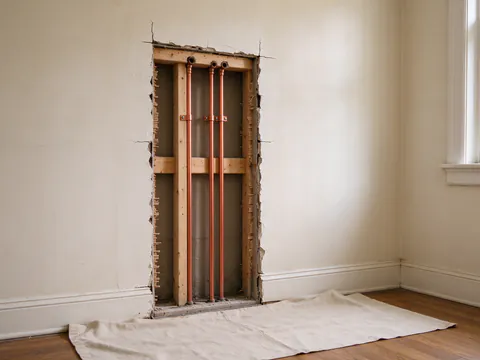
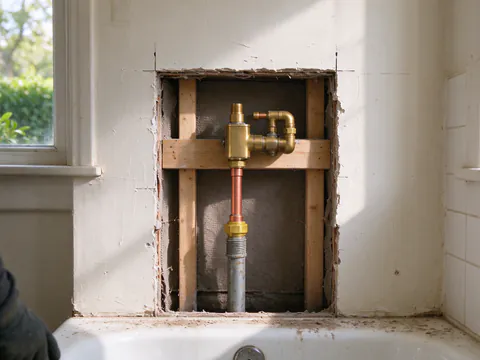
In a single story over a basement, the openings upstairs can be few. Walls are cut in clean rectangles where fittings and turns sit, and a tiled bath wall is approached from the room behind it when the layout allows. The new lines hold a pressure test before any wall closes. After cutover the system is flushed, aerators and screens come off for cleaning, and each shutoff gets a label. Water stays on except during cutovers, and the written quote names the openings, who closes them, any old pipe left in place, the working days and the water-off windows. What sits inside that price is laid out in the repiping cost guide.
Lincolnwood differs
Lincolnwood, on Skokie’s southern edge, has a similar housing stock: 62.1% of its units were built from 1940 to 1969 and 73.5% are detached single-family houses. Its rules are its own. Lincolnwood adopts the 2014 Illinois Plumbing Code as amended by the Village, and its kitchen and bath remodel handout says a permit is required even when plumbing stays in place, with modified plumbing meeting the state code. Because Lincolnwood has local amendments and Skokie does not, Skokie’s open choice of material should not be assumed there; the materials are confirmed with the Village for the address. Nearby cities write their own rules as well: Evanston lists copper for water distribution, and Park Ridge requires Type L copper above ground.