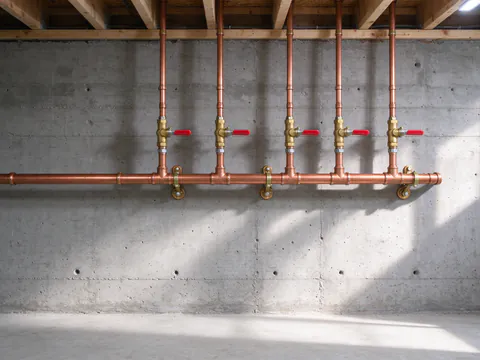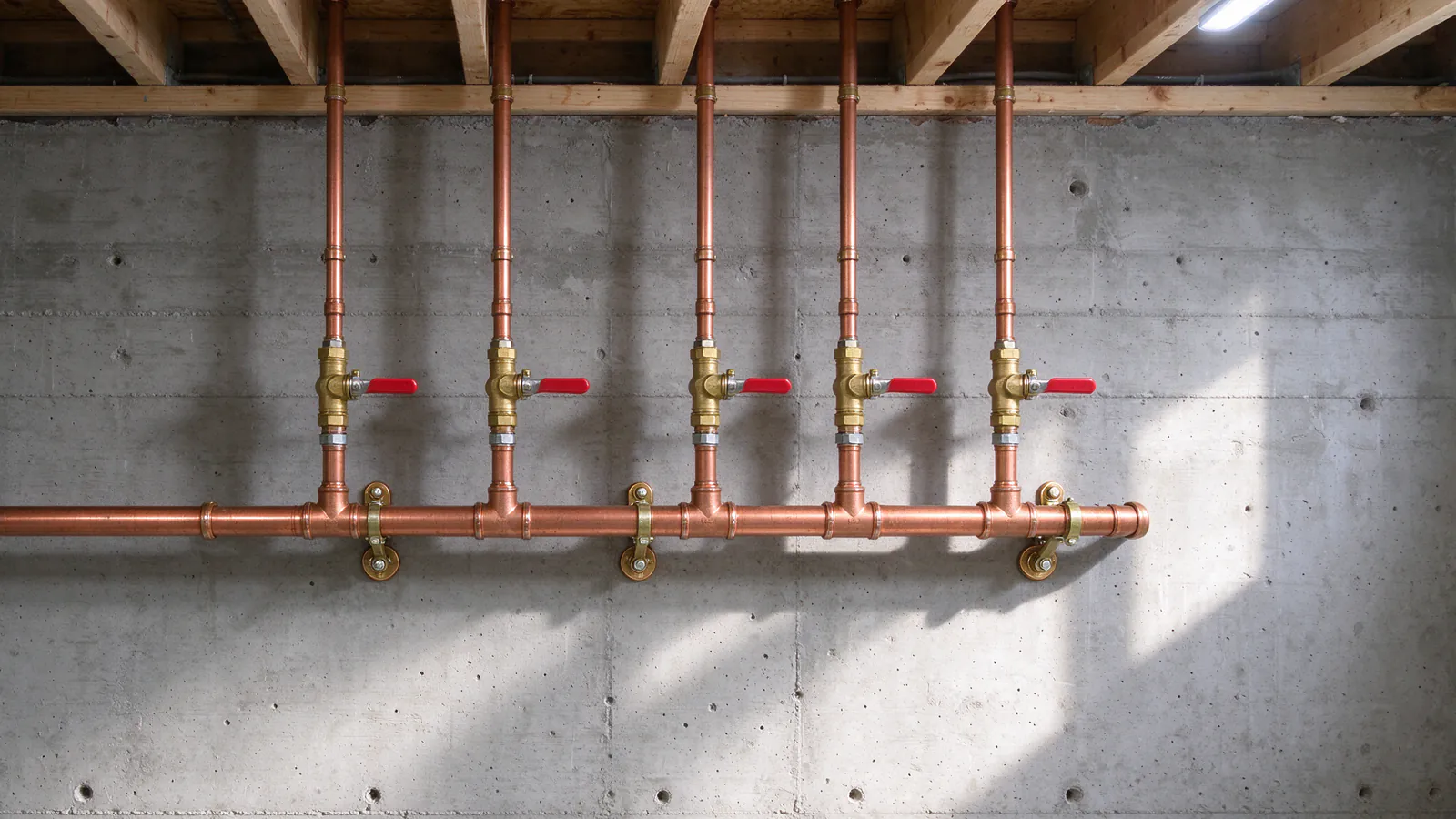
No. Inside the City of Chicago, PEX is not a permitted material for water distribution pipe. The Chicago Plumbing Code’s Table 18-29-605.5 lists brass, copper and copper-alloy pipe and tubing, and galvanized steel. CPVC, polypropylene and PVDF appear only for process water. A repipe inside the city is copper, and several nearby suburbs follow a different code that does allow PEX.
That answer surprises people who have watched PEX repipes on video or priced one in another state. Chicago Lake Repiping offers and manages copper repiping inside Chicago and, where a suburb’s code allows it, PEX repiping, with the work done by licensed and insured plumbing contractors who hold a City of Chicago license for work inside the city. This guide sets out what the code says, what changed recently and what did not, and what the rule means for a homeowner deciding now.
What Chicago’s code table lists
The Chicago Plumbing Code is Chapter 18-29 of the Municipal Code. Its Table 18-29-605.5, “Water Distribution Pipe,” is the list that decides what can carry water from the main shutoff to the fixtures. It names:
| Material | Standard named in the table | Use inside a Chicago building |
|---|---|---|
| Brass pipe | ASTM B43 | Listed for water distribution |
| Copper or copper-alloy pipe | ASTM B42, B302 | Listed for water distribution |
| Copper or copper-alloy tubing, Type K, L or M | ASTM B75, B88, B251, B447 | Listed for water distribution |
| Galvanized steel pipe | ASTM A53 | Listed, though not a practical choice for new work |
| CPVC, polypropylene (PP), PVDF | Plastic pipe and tubing standards | Only “for secondary water used in process applications” |
| Cross-linked polyethylene (PEX), PE-RT | Not listed | Not permitted for water distribution |
Section 18-29-605.4.1 closes the loop: all new and replaced water supply pipes and fittings must be of the materials in the code’s tables. So the question is not whether PEX is banned by name. It is simply absent from the only list that counts, and anything absent is not allowed. The buried water service from the street has its own table, 18-29-605.4, which lists Type K copper and ductile iron.
Why does the code leave PEX out? The table does not explain itself. It works as an approved list, and PEX has never been added to it. Galvanized steel is still on the list because the code also governs repairs to old systems, not because anyone installs it new.
What the 2021 and Phase 3 changes did
The City has revised its plumbing code twice in the last few years, and neither revision opened the door to plastic water pipe.
The 2021 interim amendments (ordinance O2021-4134, adopted October 14, 2021) followed a four-year study of alternative materials with about 3,000 participants. They expanded PVC for drain, waste and vent piping in low- and mid-rise residential buildings. They did not add a plastic water distribution pipe. What they did change for water pipe was how copper may be joined: since those amendments, copper tube can be soldered with lead-free solder and flux, brazed, joined with press-connect fittings pressed by a tool the fitting maker certifies, or joined with listed push-fit fittings. Every pipe, fitting and valve carrying drinking water must meet NSF 372, a weighted average lead content of 0.25% or less.
The Phase 3 Construction Codes Modernization ordinance, which the City Council passed on June 17, 2026, touched the plumbing chapter in several places. It lowered the static pressure above which a pressure-reducing valve is required from 100 psi to 80 psi, mandatory for permit applications from December 1, 2026. It kept the 1-inch minimum water service. In Section 18-29-605.5 it corrected the temperature and pressure rating text for hot water pipe. It did not amend the materials table, and a search of the ordinance text finds no PEX in the plumbing chapter. The post on Chicago’s code modernization and repipes walks through those changes.
The City’s own permit records line up with the code. Among water piping permits issued since 2019, permit descriptions name galvanized pipe being replaced with copper again and again, and one 2022 Easy Permit reads “correct plumbing code violations, replace PEX piping with new copper pipes.” No permit describing a new PEX or CPVC water distribution system turned up in that search.
Should you wait for the City to allow PEX?
Homeowners ask this in so many words: is it worth the risk to install PEX now, or to hold off on a galvanized repipe in a two-unit building, in the hope that Chicago will allow it soon? The honest answer is that nothing in the City’s recent code work points that way. Two rounds of revisions in five years have left the materials table as it was.
Waiting has its own cost. Galvanized pipe narrows from the inside, so flow at the top floor keeps dropping and the threaded joints keep thinning whether or not the code changes. The cornerstone guide to galvanized pipes in Chicago homes explains that mechanism.
Installing PEX anyway is the worse bet. Plumbing work inside Chicago needs a permit and, for anyone other than the owner of a detached single-family home doing their own work, a Chicago-licensed plumbing contractor. A contractor cannot pull a permit for a material the code does not list. Work done without a permit can bring a stop work order with a penalty of $1,000 or more, and the permit fee after a stop work order is in most cases tripled, by the Department of Buildings’ own account. A non-conforming system can also surface at sale, when a buyer’s inspector or plumber looks at the basement.
If the pipe is failing, plan the copper repipe on its merits. The repipe cost guide shows what the work runs, and who can repipe in Chicago covers the license that has to be on the permit.
What a previous owner’s plastic repair means
Older Chicago houses sometimes turn up a length of plastic in the supply piping: a PVC section a previous owner spliced in, a run of PEX from a remodel, or flexible tubing with push-on fittings. Homeowners and home inspectors ask whether it is acceptable. Under the code, it is not, because none of those materials is on the water distribution table. Its age does not make it compliant.
That does not make it an emergency. A plastic section may hold for a long time. The practical risks are that it gets flagged when the house is inspected or sold, and that the joints where it meets old galvanized were not made with the transition fittings the code calls for. Section 18-29-605.21.1 requires a brass converter or a dielectric fitting where copper meets galvanized steel; a homemade plastic splice can skip that step entirely.
The fix is a section of copper under a City permit. Where the plastic sits in an otherwise sound system, that can be a small partial repipe. Where it sits in galvanized that is failing anyway, it is a reason to look at the whole system. Either way, the quote should say exactly where the new copper ends and what it connects to.
One more check when metal pipe is replaced with anything else: older electrical systems sometimes used the metal water pipe for grounding or bonding. If you can see a clamp and wire on the water pipe near the meter, leave it alone and ask an electrician whether the bond needs to move before that section of pipe comes out.
Copper in practice: what changes with modern joints
PEX gets its reputation from speed: long flexible runs and few joints. Inside Chicago the comparison that matters is between copper methods. Press-connect fittings make a joint with a tool instead of a torch, and homeowners report contractors describing press copper as nearly as quick to install as PEX. The flameless joint also matters inside an old wall with dry framing behind the plaster.
Copper tube comes as Type K, the heaviest wall, which the code lists for the buried service; Type L, the middle weight, used for interior supply; and Type M, the thinnest. Ask which type the quote specifies and why. The copper repiping page covers the material, the joint methods and the standards in more depth, and PEX vs copper for a repipe compares the two where both are allowed.
Suburbs follow their own codes
The copper rule is Chicago’s. Each suburb adopts a plumbing code of its own, and the answer changes at the city limit:
| Jurisdiction | Code it follows | PEX for water distribution |
|---|---|---|
| City of Chicago | Chicago Plumbing Code, Chapter 18-29 | Not listed |
| Oak Park | Illinois Plumbing Code (77 Ill. Adm. Code 890); local amendments do not touch water distribution materials | Listed in the state code |
| Skokie | Illinois Plumbing Code, adopted without materials amendments | Listed in the state code |
| Evanston | State code with the City’s own materials table (Ordinance 106-O-24) | Not listed; the ordinance lists copper, with Type L as the minimum above grade |
| Park Ridge | State code with Section 15-6-2 | Banned with CPVC and polybutylene; Type L copper above ground |
| River Forest | State code with local amendments | Allowed in residential buildings above grade, covered by at least 5/8 inch drywall or another approved material |
| Unincorporated Cook County | 2014 Illinois Plumbing Code | Listed in the state code |
These are what each code’s text says. Village codes change, so the rule is confirmed for the specific address before work starts. Homeowners report getting opposite answers about PEX from plumbers, neighbors and online forums, and some report plumbers declining to install it even where their village allows it. Where PEX is an option, the choice still depends on routing, access and preference, which the PEX vs copper guide works through.
Repiping inside Chicago?
A walk-through from the meter sets out the copper route, the openings and the permit for your building.
What to do next
If your house is inside the city and the supply pipe is galvanized, the material question is settled, and the useful questions are about scope: whole house or part, which openings, which copper type and joint method, and what happens at the main shutoff. The Chicago repiping permit guide explains the Express permit a repipe goes through, and whole-house repiping covers the full job. If you are in a suburb, start by confirming what your village’s code lists for your address. Call the number on this page or use the estimate form to set up a walk-through that starts at the meter.