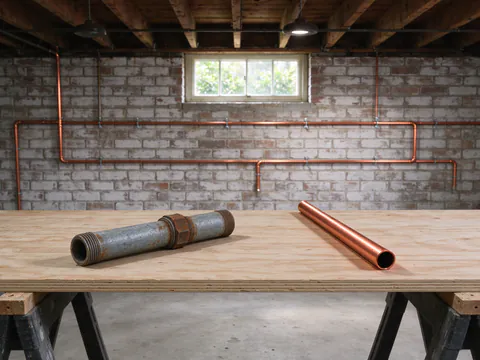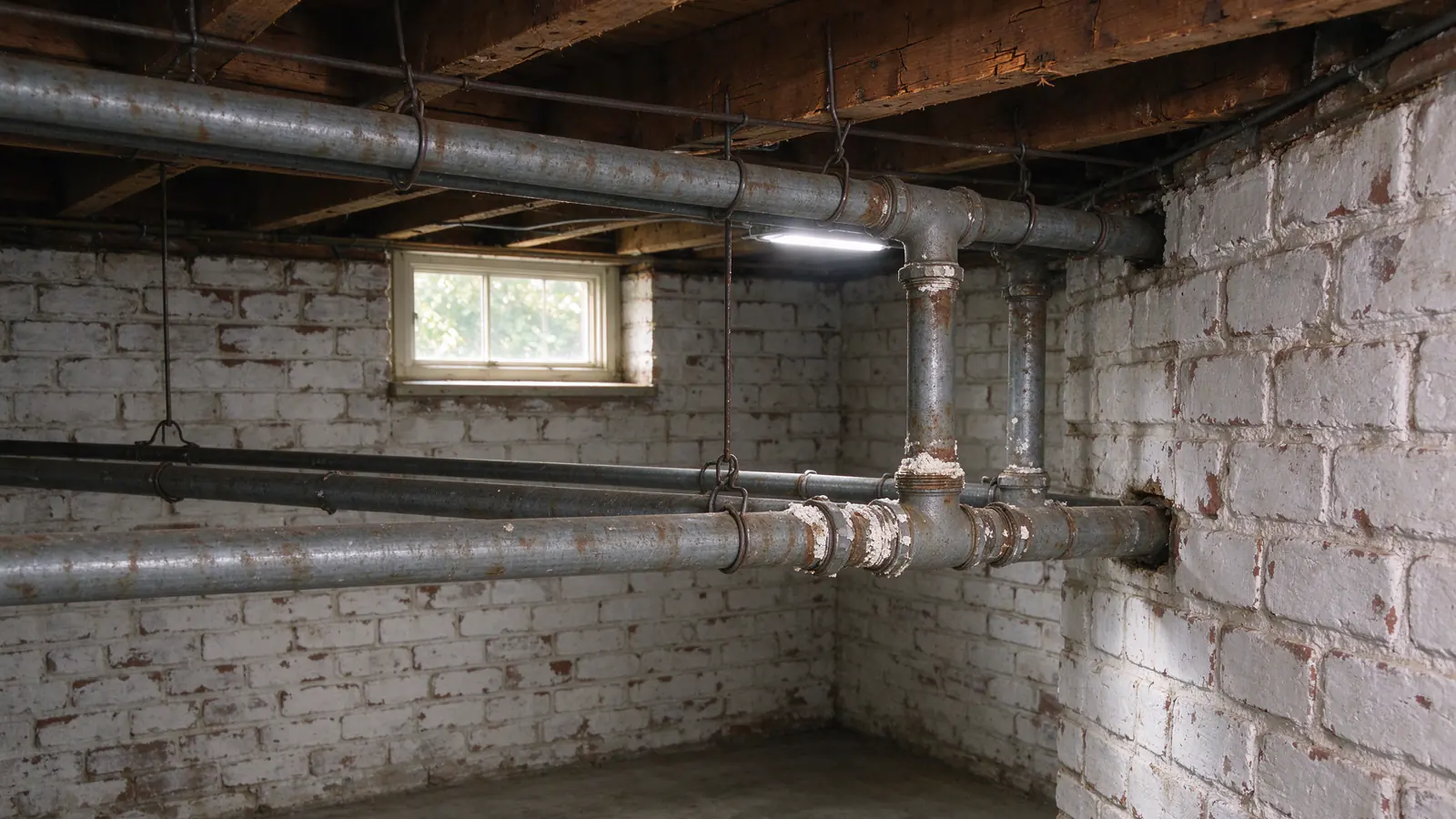
“Galvanized requiring replacement” means the City’s inventory lists your water service line, the buried pipe from the main to your meter, as galvanized steel that is or may have been connected downstream of a lead pipe. The category comes from federal lead rules. A line in it is slated for full replacement like a lead line. It says nothing about the pipes inside your walls.
Chicago’s service line inventory sorts addresses into four groups: lead, suspected lead, galvanized requiring replacement and non-lead. Chicago Lake Repiping offers and manages galvanized pipe replacement inside homes and lead service line replacement from the street, across Chicago and nearby Cook County suburbs, with licensed and insured plumbing contractors doing the work. This guide explains what the label means, why it exists, and how it fits with the rest of your plumbing.
Where the term comes from
The phrase is federal. The U.S. Environmental Protection Agency’s Lead and Copper Rule Revisions of 2021 required every water system to build an inventory of its service lines, and introduced galvanized requiring replacement as one of the categories. EPA’s 2024 Lead and Copper Rule Improvements kept it. In EPA’s words, a galvanized requiring replacement line is a galvanized service line that is currently or ever was downstream of a lead service line, is currently downstream of a line whose material is unknown, or that the water system cannot show was never downstream of lead (EPA, Lead and Copper Rule Improvements FAQ). “Downstream” means in the direction the water flows.
The burden sits with the water system. If it cannot prove a galvanized line was never fed by lead, the line goes into this category. For an older Chicago address, that test is hard to pass: Lead-Safe Chicago, the City’s lead program, says service lines here were made primarily of lead until the federal ban in 1986, so a galvanized line on an older building may well have been spliced onto, or fed from, a lead line at some point.
Why galvanized is treated like lead
Galvanized steel is not lead. It is steel pipe coated with zinc, and that coating wears through from the inside over decades. What is left is a rough, rusty inner wall. EPA’s reason for replacing these lines is that they can adsorb lead particles coming from upstream lead pipe and keep contributing lead to drinking water even after the original lead source has been removed. The rust acts like a sponge for what flowed through it.
That is also why replacing only the lead part of a line would not settle the matter, and why Illinois law has required full replacement of lead service lines, public and private sides, since January 2023. A new copper line upstream of old galvanized leaves the galvanized holding whatever it collected.
What the label tells you, and what it does not
The inventory label is a statement about one pipe: the water service, which runs from the main under the street, through the parkway and yard, and through the foundation to the meter or main shutoff. It does not rate anything beyond the meter.
| What the label covers | What it does not cover |
|---|---|
| The material of the service line, as the City’s records show it | The hot and cold supply piping inside the house |
| Whether that line is treated as needing full replacement | The condition of the line, its size or its pressure |
| The City’s planning for lead and galvanized line replacement | Fixtures, valves and solder inside the home |
Records can also be wrong. The City asks residents to check their own line and upload what they find to help build the inventory. If the label does not match what you see at the meter, report it.
The opposite case matters as much. A non-lead label does not mean the plumbing inside is fine. Lead-Safe Chicago notes that lead can also be present inside the home in old faucets, in solder used to join pipe, and sometimes in interior lead piping, and that brass faucets and fittings made before January 1, 2014 were allowed to contain more lead. Interior galvanized pipe narrows and rusts on its own schedule, whatever the service line is made of, and replacing it is a whole-house repiping or partial repiping decision. The cornerstone guide to galvanized pipes in Chicago homes covers the interior side.
Notices and the inventory lookup
Federal rules require water systems to notify the people served by lead and galvanized requiring replacement lines, and EPA’s 2024 rule adds an annual notice and a publicly accessible inventory as its requirements take effect. In practice, notices have lagged. In July 2025, Grist reported that City letters had gone only to homes with confirmed lead lines, and described a Southeast Side resident whose records showed a galvanized steel line and who had received no notice at all.
Do not wait for a letter. The City’s service line inventory lookup is linked from the Lead-Safe Chicago water page, and returns lead, suspected lead, galvanized requiring replacement or non-lead for an address. A public analysis of the inventory by Grist and Inside Climate News estimated that about 84% of service lines citywide are confirmed or suspected to contain lead, so an older building with any of the first three labels is in large company.
What to do if your address shows the label
Check the pipe yourself. At the basement wall, find the pipe that comes in from the street to the meter or shutoff. Galvanized steel is dull gray, threaded and magnetic. The guide to identifying your water pipes shows how to tell it from lead and copper without damaging anything.
Test the water. Any Chicago resident can request a free lead test kit through 311 or the City’s water quality site. A test shows what reaches the tap, which the label cannot.
Follow the City’s precautions in the meantime. The City’s guidance is to run the water for at least five minutes after it has sat six hours or more, use only cold water for drinking and cooking, and clean faucet aerators regularly, since sediment, rust and metals collect there.
Look at the replacement options. The City’s Equity program replaces the full line free for income-qualified owner-occupants of a house or two-flat, and Breaks and Leaks replaces a leaking lead line reported through 311. Two-flat owners can see how the programs sit beside an interior repipe in the two-flat repipe cost guide. The City describes its Homeowner-Initiated permit fee waiver in terms of removing a lead service line; confirm with the Department of Water Management whether a galvanized requiring replacement line qualifies before counting on the waiver. The lead service line replacement cost guide covers each program and what a private replacement involves.
Got the label on your address?
A look at the meter confirms the service line and the pipe inside before you plan either project.
Plan the service line and the interior together
If the service line is galvanized, check the pipe leaving the meter as well; a building with an old galvanized service may still have galvanized supply pipe inside. That is a reason to look at both before either is replaced. The new service decides where water enters, where the main shutoff and meter sit, and what the interior piping connects to. Replacing the service and leaving narrowed galvanized inside can leave pressure upstairs no better than before, and doing the interior first can mean moving a shutoff twice.
The guide to repiping after a lead service line replacement covers the sequence and the two permits. If you are already seeing rusty water or weak pressure upstairs, those guides help sort out which pipe is responsible. Call the number on this page or use the estimate form for a walk-through that starts at the meter.