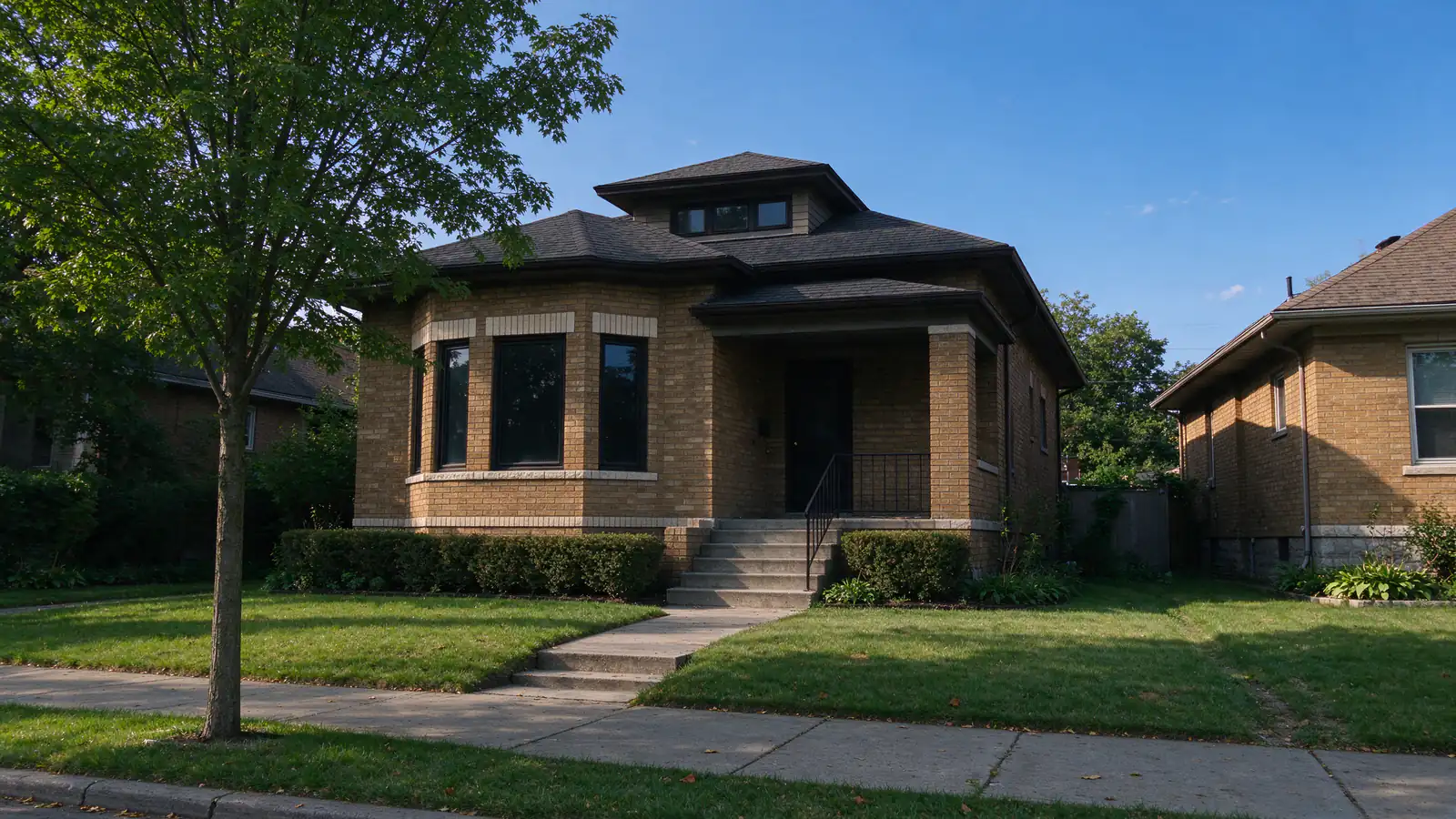
Greater Grand Crossing has more City permits for replacing water piping, per home, than any other Chicago community area. Between January 2019 and October 2026, 41 permits for addresses here described replacing water supply piping outright, about 26 for every 10,000 housing units, against 2.4 in Lake View and 8.3 in Austin.
Read the permit descriptions and a pattern shows: buildings being brought back, with new drywall, windows and kitchens, and the water piping replaced under the same permit, sometimes to correct building violations. Chicago Lake Repiping offers and manages that supply side of a Greater Grand Crossing rehab, galvanized pipe replacement and whole-house repiping in copper. Licensed and insured plumbing contractors, Chicago-licensed as the permit requires, do the work.
What the permits here describe
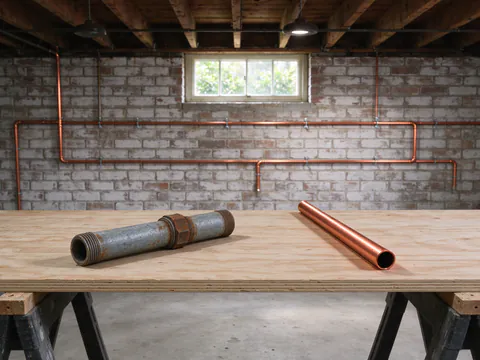
The descriptions are specific. A 2020 permit replaced “galvanize water pipes with new Type M copper same as existing” and fixtures in both units of a building. Another that year replaced all water supply piping in the kitchens and baths of a single-family house, galvanized to copper. A 2021 permit reads “run new copper water piping per violations.” Another replaced copper water piping “that had been stolen,” in the same location. Two-unit rehabs in 2022 list drywall, flooring, kitchens and baths alongside replacing the existing water piping, with no floor plan changes.
Those last words matter. Work that puts copper back where the old pipe ran, to the same fixtures, is in-kind replacement. Since late 2023 that goes through the City’s Express Permit Program at $150 per dwelling unit, plus $75 for a replaced water heater. The free-text descriptions above all come from the earlier Easy Permit years; Express permits now use a template sentence, so the recent record here is thinner on detail: 19 Greater Grand Crossing plumbing permits since late 2023 include piping repair or replacement, and 6 include risers in existing chases. A rehab that moves a kitchen or adds a bath is altering the system and goes to plan review, starting with a $600 non-refundable deposit. The Chicago repiping permit guide sets out both paths.
Water pipe and drain pipe are separate scopes
Violation-correction permits here bundle “D,W,V and water piping” in one line, and so do inspection lists. They are two different systems. The supply side is pressurized copper or steel that carries water in from the meter. Drain, waste and vent piping is unpressurized cast iron or PVC that carries it out to the sewer. A failing drain and a failing supply line show different symptoms, pass different tests and carry separate prices.
This company replaces the supply side only. Drain and sewer work is a separate trade it does not offer, so a rehab with both kinds of findings needs both scopes written up, and where they share an open wall the two jobs have to be scheduled around each other. The guide to whether a repipe includes drains draws the line in detail.
Rebuilding supply piping in a building that sat empty
Two things happen to water pipe in a vacant building. Copper gets cut out, which permit records here and in South Shore describe directly. And pipe left full of water in an unheated building can freeze: Chicago Midway’s 1991 to 2020 climate normals record about 106 days a year with a low at or below freezing. The Chicago Plumbing Code requires pipes exposed to low temperatures to be protected from freezing, but insulation alone does not keep standing water from freezing in a building with no heat.
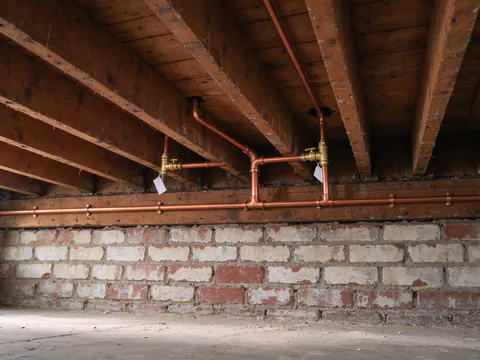
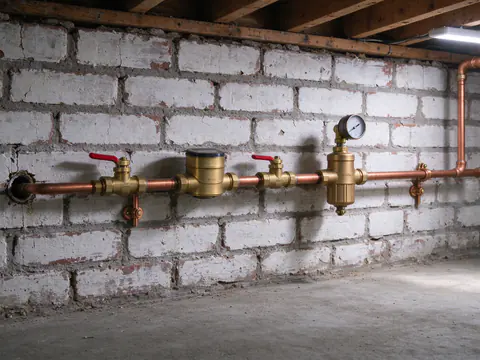
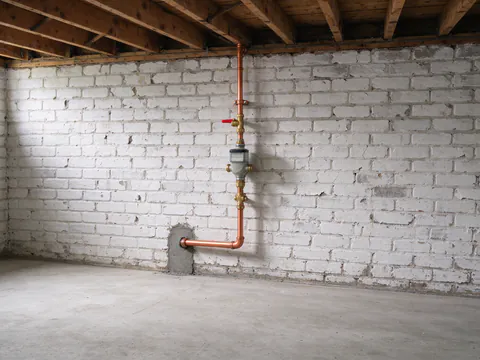
Either way, the job is a rebuild from the main shutoff out. The first visit starts at the meter and main shutoff, because a valve that sat unused can seize, and checks the service line material where it enters the basement. Then each fixture location is mapped against the old pipe routes. A split section of retained galvanized or copper can sit inside a wall that looks fine, which is why the whole system is pressure tested before walls close rather than only the new runs. After cutover the system is flushed and aerators and screens are cleaned of loosened debris.
Older than the city around it
Among the Chicago community areas on this site, Greater Grand Crossing has the oldest housing. Of its 15,620 housing units, 53.2% were built before 1940, against 38.8% citywide, and the median year built is 1937, according to Census Bureau survey estimates compiled by the Chicago Metropolitan Agency for Planning. Another 39.9% of units sit in buildings of two to four units, 28.8% are detached houses, and 36.3% of occupied units are owner-occupied. The Gwendolyn Brooks House on Evans Avenue, a designated Chicago Landmark, is one of those pre-war homes.
Age is context, not a diagnosis. A building rehabbed in the last two decades may already have copper, and only the basement and the risers show it. Where steel supply pipe remains, it narrows from the inside, and the galvanized pipes guide explains how to tell. The service line is a separate question: an analysis of the City’s inventory by Grist and Inside Climate News found that the nine community areas with the highest share of service lines needing replacement are all on the South Side.
Rehabbing a building in Greater Grand Crossing?
Get the supply side scoped from the meter out, with the drain work kept on its own line.
How a rehab repipe here is sequenced
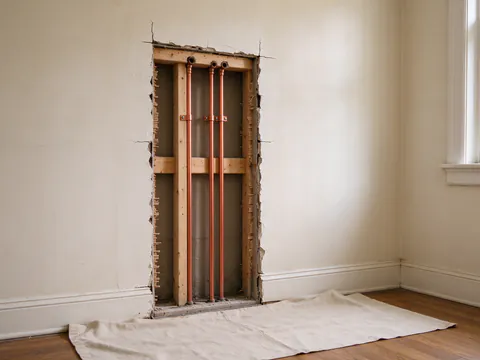
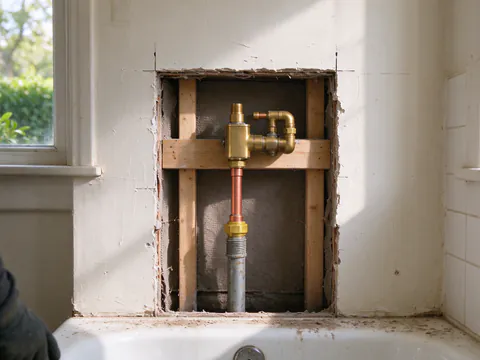
The repipe fits between demolition and drywall. With the walls open, copper runs to the planned fixture locations, the shared basement main in a two-flat is replaced along with each unit’s branches, and every unit gets a labeled shutoff. The City inspects the work before it is covered. Where some walls stay closed, they are opened in clean rectangles at fittings and turns, and the quote says who closes them.
A lead or galvanized service line is its own project under a City water permit, and it pays to settle it during the rehab so the new copper inside connects to a new line at the wall. Since January 2023 Illinois law has required full replacement, never a partial one. The lead service line replacement page explains the City programs, the two-flat repipe cost guide shows how a building price is built, and South Shore, next door to the east, shares the Grand Crossing neighborhood and much of the same permit pattern.