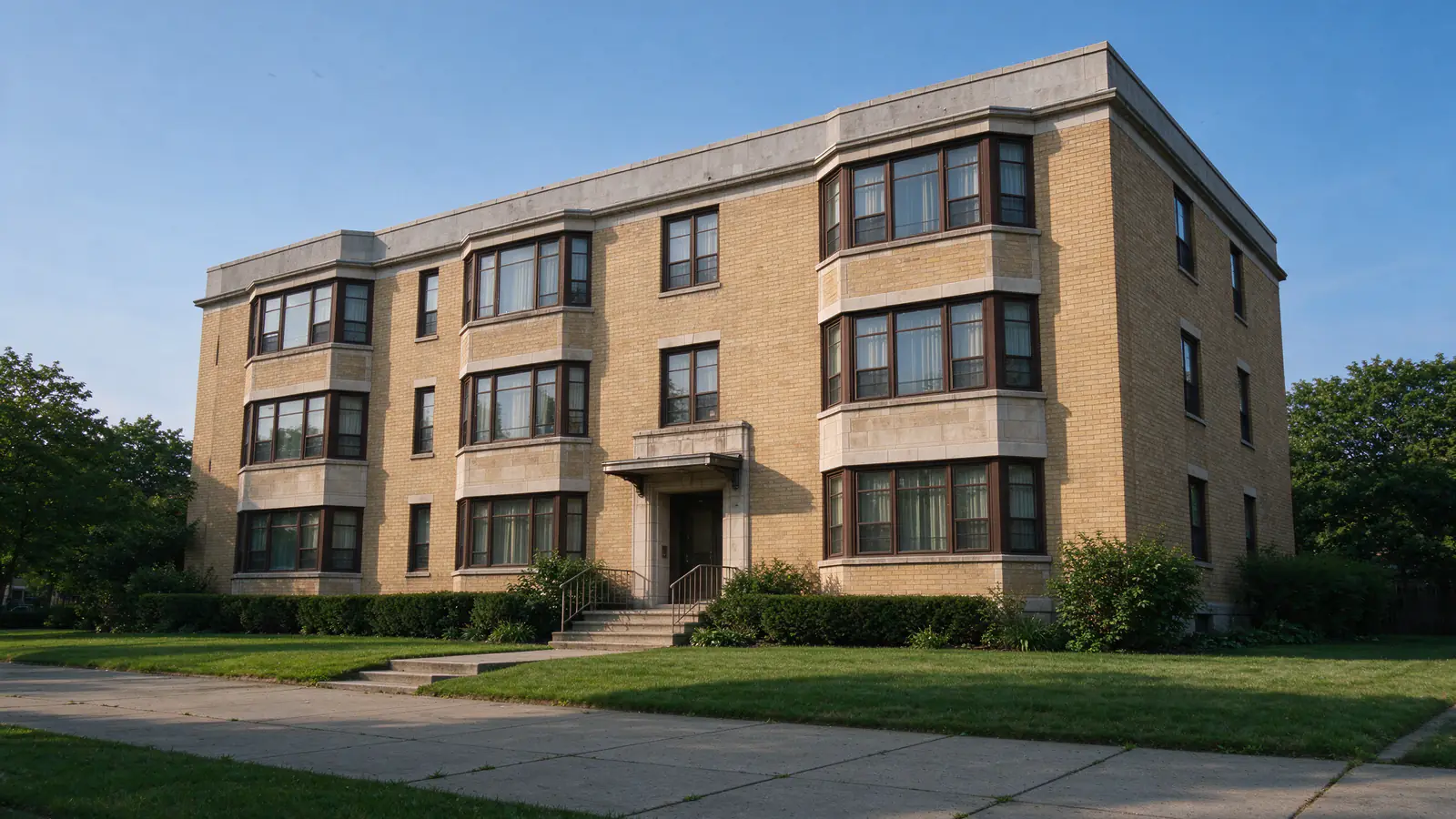
South Shore is where riser work and house repipes meet on the same map. One job can be a brick apartment building with stacked kitchens whose hot and cold risers are replaced floor by floor, with residents at home; the next can be a single-family house that needs every line from its basement main to its top-floor bath.
City records put a number on the first kind. Since the Express Permit Program launched in late 2023, 14 plumbing permits for South Shore addresses include replacing risers in existing chases, tied with Austin for the most of any community area. Chicago Lake Repiping offers and manages riser replacement, whole-house repiping and galvanized pipe replacement here, with licensed and insured plumbing contractors, each holding a City of Chicago plumbing contractor license, doing the work.
One stack at a time
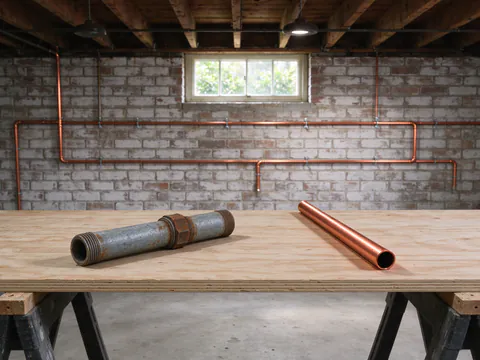
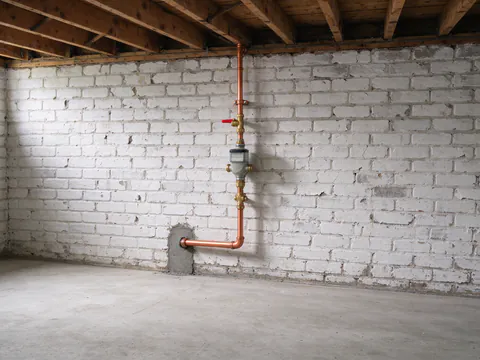
A riser is the vertical pipe that carries hot or cold water up through a building, feeding units stacked one above another. In a walk-up or courtyard building, each set of stacked kitchens or baths can have its own pair. When those risers are galvanized steel, they narrow from the inside like any steel pipe, and the units at the top of the stack feel it first because they sit highest and furthest along the run.
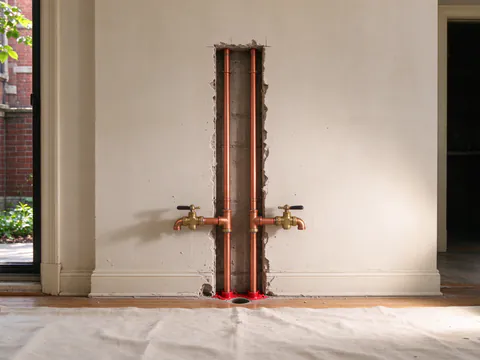
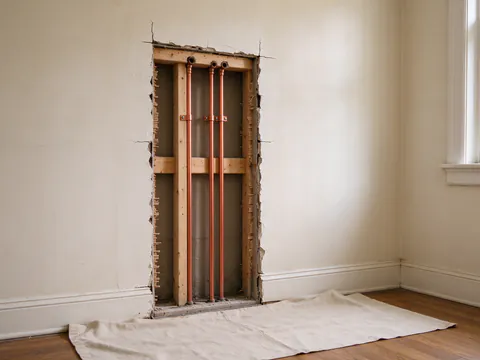
Replacing them stack by stack is what keeps a building livable during the work. Each stack is isolated, drained and opened at the chase, new copper is run and joined at each floor’s branch, and the stack is pressure tested before the chase closes. A 2022 permit for a South Shore building with one unit per floor across three floors describes exactly that scope: remove and replace the plumbing supply risers. A 2019 permit covered repairing damaged galvanized supply “in unit and riser.” The useful upgrade at each floor is a shutoff where the branch leaves the riser, so a later repair in one unit does not take down the stack.
Risers, branches and the basement main
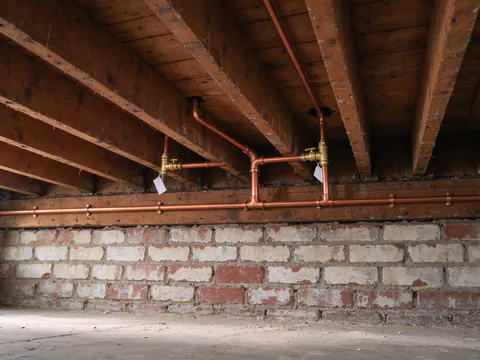
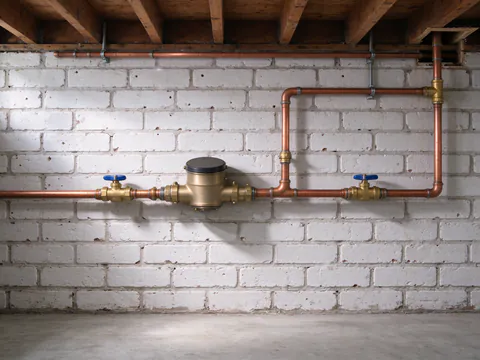
A building’s supply has three layers, and a riser job touches only the middle one unless the scope says otherwise. Below the risers sits the basement main that feeds them from the meter and main shutoff. Above them, inside each apartment, are the branches to each sink, tub and toilet. New copper risers fed by a corroded galvanized main still get only what the main delivers, and new risers feeding old galvanized branches leave the narrowest pipe in the building at the fixtures.
So the walk-through traces all three before anything is priced. Where the main is steel, replacing it before or with the first stack keeps every new riser from inheriting its restriction. Where the branches are steel, the owner can replace them unit by unit while each stack is open, or leave them and have the quote list them as retained pipe. Both are honest scopes; the difference is that a riser-only job is a partial repipe, and the paperwork should call it one. In a two- or three-flat, the two-flat repiping page covers the shared main in detail.
Why a riser is drawn before it is replaced
The City’s Express rules for riser work require a plumbing contractor’s drawing of the entire riser, in two dimensions or as an isometric diagram, with its size and material. That drawing is more than paperwork. It shows which units each stack serves, where it ties to the basement main, and where branch valves already exist, which is what decides the cutover plan and how many units lose water at each tie-in.
The fee follows the units: $150 per dwelling unit for the piping, plus $150 per unit when risers in an existing chase are replaced. Express permits also forbid new or enlarged openings through walls or floors separating units, corridors or stairways, and require firestopping where new pipe passes through existing openings, so the new copper follows the old chase rather than a new path. A riser reroute is an alteration and goes to plan review. The Chicago repiping permit guide covers both routes.
Residents in place
In South Shore, only 25.8% of occupied homes are owner-occupied, against 46.0% citywide. That makes the water-off windows the part of a riser job residents notice. Work runs with the stack drained only for cutovers, and the quote names each window in advance so the owner can tell residents ahead of time. Openings in occupied units are cut in clean rectangles at fittings and turns, and the quote says who closes them. Tiled walls are reached from the back where the chase allows. The living through a repipe guide covers what the days look like from inside a unit.
South Shore’s buildings and permit record
Of South Shore’s 30,761 housing units, 30.1% are in buildings of 20 or more units and 21.2% in buildings of two to four units, while 13.1% are detached houses, by the Census Bureau’s American Community Survey as compiled by the Chicago Metropolitan Agency for Planning. The stock is old: 46.1% of units predate 1940, against 38.8% citywide, and the median year built is 1944. Its designated Chicago Landmarks include the 6901 Oglesby Cooperative Apartment Building and the Kenna Apartments on 69th Street, apartment buildings of the kind that carry risers, alongside the Allan Miller House on Paxton Avenue and the South Shore Cultural Center on South Shore Drive.
Since January 2019, 30 permits for South Shore addresses state outright that water supply piping was replaced, and since late 2023, 49 plumbing permits include piping repair or replacement, the third-highest count among the 77 community areas. Some describe single-family work: a 2020 permit to “replace all water pipes with copper pipes,” and a 2019 permit to replace stolen hot and cold water lines in a house. Permits count permitted work, not the condition of any one building.
Risers due in a South Shore building?
Get the stacks drawn and the cutovers scheduled before the first chase is opened.
The houses between the apartment blocks
A single-family repipe in South Shore follows the same Chicago rules as anywhere in the city. The walk-through starts at the meter and main shutoff, reads static pressure at a hose bibb and compares flow at the lowest and highest fixtures, because a weak top floor can come from the service line or a valve rather than the pipe. The new piping is copper, since the Chicago Plumbing Code lists no PEX for water distribution, and the owner living in a detached house may do their own plumbing under permit and inspection. Lead-Safe Chicago says a house built before 1986 has a high likelihood of a lead service line unless it was replaced; that line is a separate project, covered on the lead service line replacement page. The low water pressure guide sorts out the possible causes, and Greater Grand Crossing, to the west, shares the Grand Crossing neighborhood.