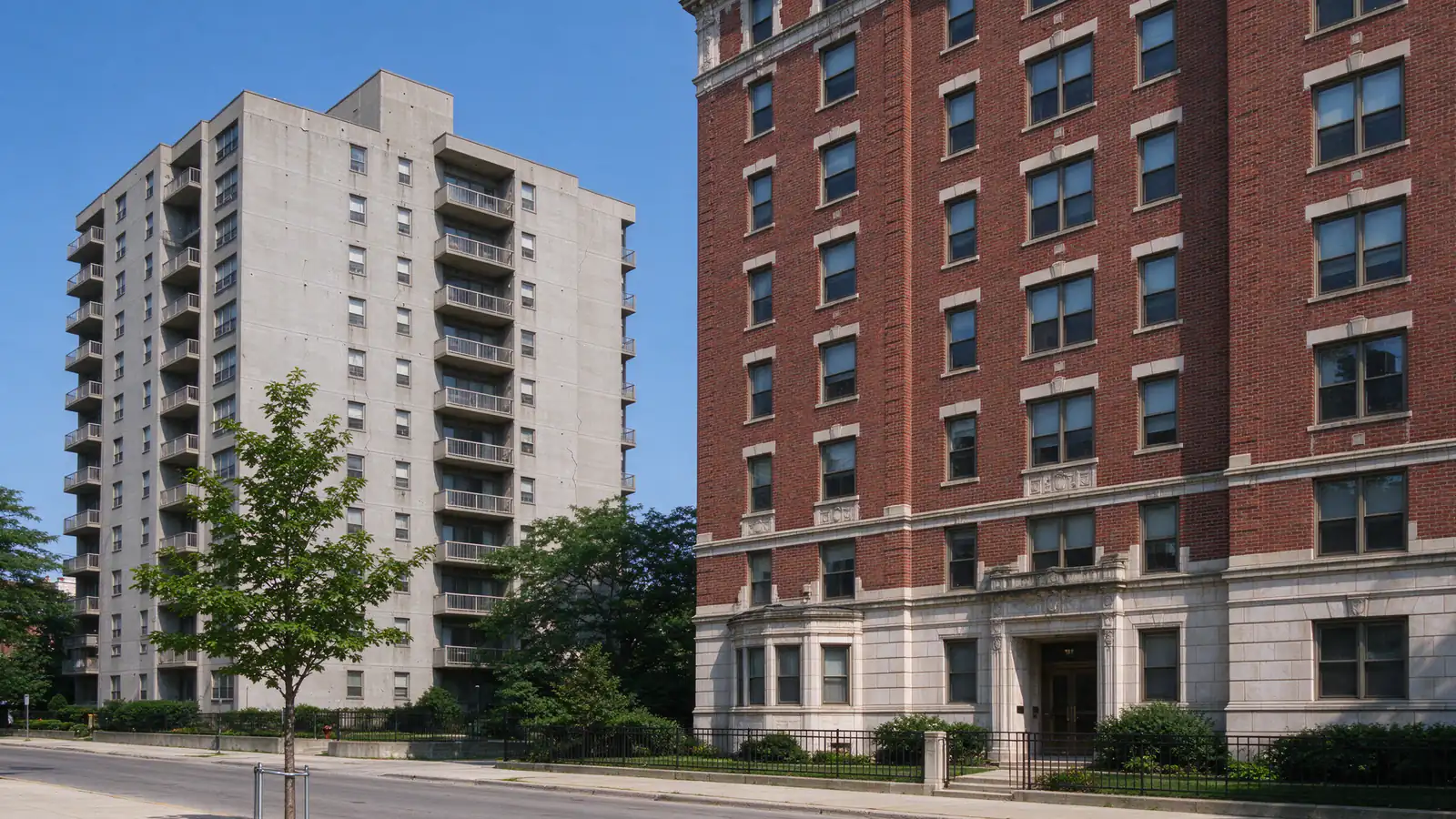
Nine in ten homes on the Near North Side sit in buildings of 20 or more units, so a repipe here is a building decision before it is an owner’s. Water reaches a Gold Coast or Streeterville condo through risers the association controls, and replacing them means the association’s approval, a drawing of every riser and a cutover schedule for each stack.
Chicago Lake Repiping offers and manages riser replacement, unit-level partial repiping and commercial repiping for condo and rental buildings across the Near North Side. Each job is carried out by a licensed and insured plumbing contractor holding the City of Chicago license that a riser permit requires.
Whose pipe is it: unit branches and building risers
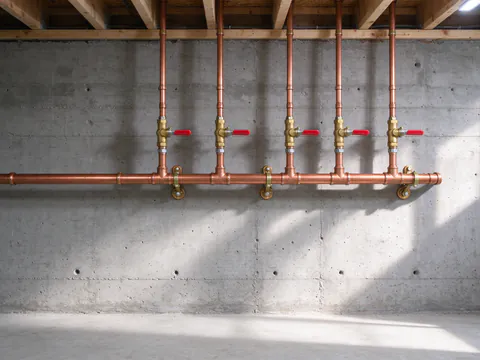
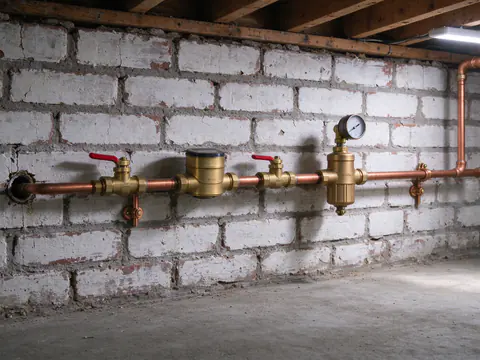
A high-rise supply system has three parts. Equipment near the base of the building, pumps and the valves that set each zone’s pressure where a tower has them, feeds vertical risers, and each riser serves a tier of stacked kitchens or baths. At every floor, a branch leaves the riser, ideally through a shutoff valve, and runs to that unit’s fixtures. The riser is shared; the branch serves one home.
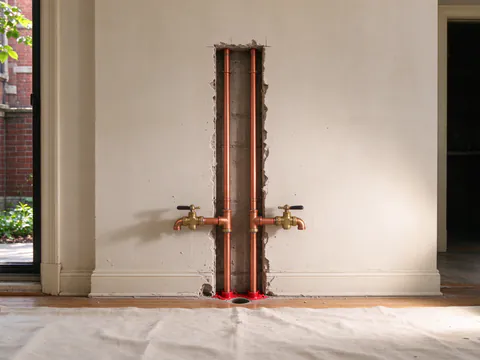
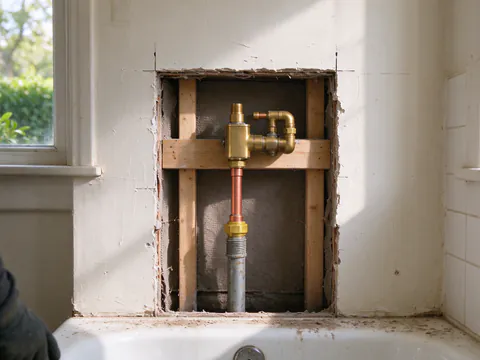
That split decides what a unit owner can do alone. Replacing the branches from the riser valves to the fixtures is a contained job, with a transition where new copper meets the existing riser. It is a partial repipe, because the riser stays. Replacing the riser touches every unit on the stack and is the association’s call. A 2022 permit for a Near North Side unit reads “replace galvanized steel water pipe from risers to the fixtures. Straight change out.” Several 2023 permits here show the larger version: hot and cold kitchen risers replaced from the 31st to the 34th floor with new shutoff valves to each unit, and galvanized risers taken to copper from the 32nd floor to the 36th.
The paperwork a tower riser job needs
The City’s Express Permit Program covers repairing or replacing existing risers inside a building, and two uploads matter here. Work on condominium property needs an approval letter signed by someone authorized to act for the association, even when the work is entirely inside one unit. Riser work needs the plumbing contractor’s drawing of the entire riser, in two dimensions or as an isometric diagram, showing its size and material. Express permits also bar new or enlarged openings through floors or walls separating units, corridors or stairways and require firestopping where new pipe passes existing openings, so the new copper follows the existing chase.
The largest projects take the plan review route. A 2023 permit filed that way describes “direct materials replacement galvanized to copper for thirty 30-story conditioned water risers,” with no change in size, location or configuration. Another replaced the domestic water risers in one tier of a 21-story, 126-unit building, with a line for repairing wall damage from the plumbing work. Plan review starts with a $600 non-refundable deposit. The Chicago repiping permit guide compares the two routes.
Pressure zones and the 80 psi line
Water pressure in a tall building rises with every floor you descend, a little over 4 psi per 10 feet of height. To keep upper floors supplied without overloading lower ones, a tall building can be divided into pressure zones, each fed at its own pressure; a 2020 permit here replaced domestic water valves in “high zone A, high and low zone B” of a residential building. Within a zone, the lowest floors see the most static pressure.
Chicago’s updated plumbing code lowers the threshold for a pressure-reducing valve from 100 psi to 80 psi of static pressure at any fixture or outlet, reducing it to 80 psi or less, for permit applications started on or after December 1, 2026. For a riser project designed after that date, the pressure on the lowest floors of each zone becomes a design question, not just a comfort one. New risers do not change what the pumps deliver, and they do not raise pressure at a fixture that is restricted by its own valve or aerator. The Chicago water pressure and PRV guide explains the rule in full.
Riser project ahead for your building?
Get every stack drawn and every cutover scheduled before the first chase is opened.
What the Near North Side’s permits show
The Near North Side leads the city in permitted water-piping work by count. Since January 2019, 49 permits for its addresses describe the replacement of water supply piping explicitly, the most of any of the 77 community areas, and six of the twelve explicit domestic-water-riser permits citywide are here. Since the Express Permit Program launched in late 2023, 112 plumbing permits include repair or replacement of piping, also the most, and 10 include risers in existing chases. With 77,532 housing units, the rate per home is moderate; the volume comes from the size of the buildings.
The stock is far newer than the city as a whole: the median year built is 1989, against 1953 citywide, and 12.5% of units predate 1940, against 38.8% citywide, according to American Community Survey estimates compiled by the Chicago Metropolitan Agency for Planning. Only 2.0% of units are detached houses, and 36.5% of homes are owner-occupied. Landmarks such as the Three Arts Club on Dearborn and the McCormick Double House on Rush sit among towers whose galvanized risers are the subject of these permits.
Lining, part of a stack, or the whole riser
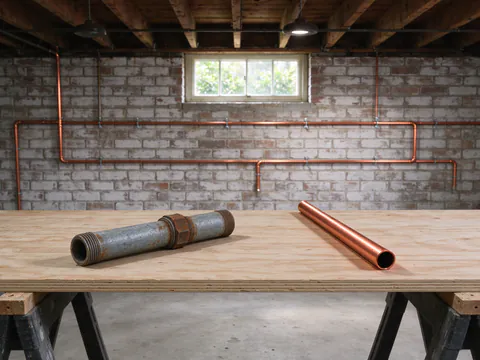
Three approaches show up in the records. Replacing a whole riser in copper removes the old steel and its fittings, at the cost of opening the chase at every floor. Replacing part of a stack, as several permits here do for a run of floors, targets the worst section and leaves a transition to the old pipe. Lining coats the inside of the existing pipe: a 2019 permit covered epoxy lining for one riser’s drain and potable piping with no wall openings. Each leaves something different behind, and the repipe vs pipe lining guide compares them.
How a riser stack is cut over
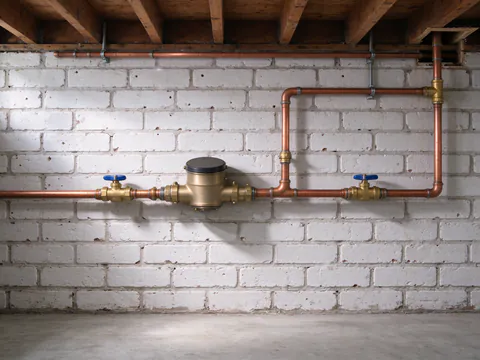
The walk-through starts at the meter and main shutoff and the building’s pressure equipment, then follows each stack. The quote lists the openings in every unit, who closes them, the working days and the water-off windows; water is off on a stack only during its cutovers. Each new riser is pressure tested before the chase closes, flushed after cutover, and fitted with labeled shutoffs at the unit branches, so a later repair in one home does not drain the tier. Where stacks are valved separately, units on other stacks keep water throughout. The living through a repipe guide covers the days in between, and copper repiping covers the joints. Lake View, up the lakefront, has its own share of condo towers.